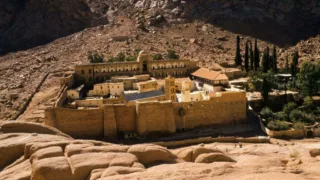
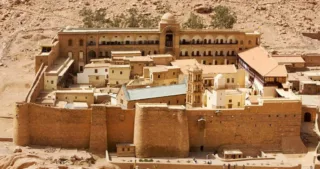
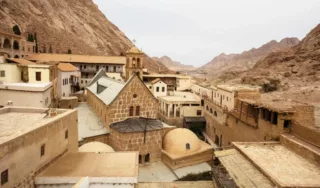
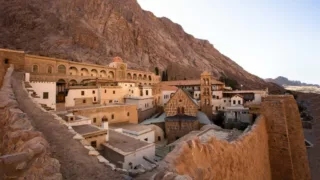
Negotiations over the status of St. Catherine’s Monastery on Mount Sinai have reached an impasse
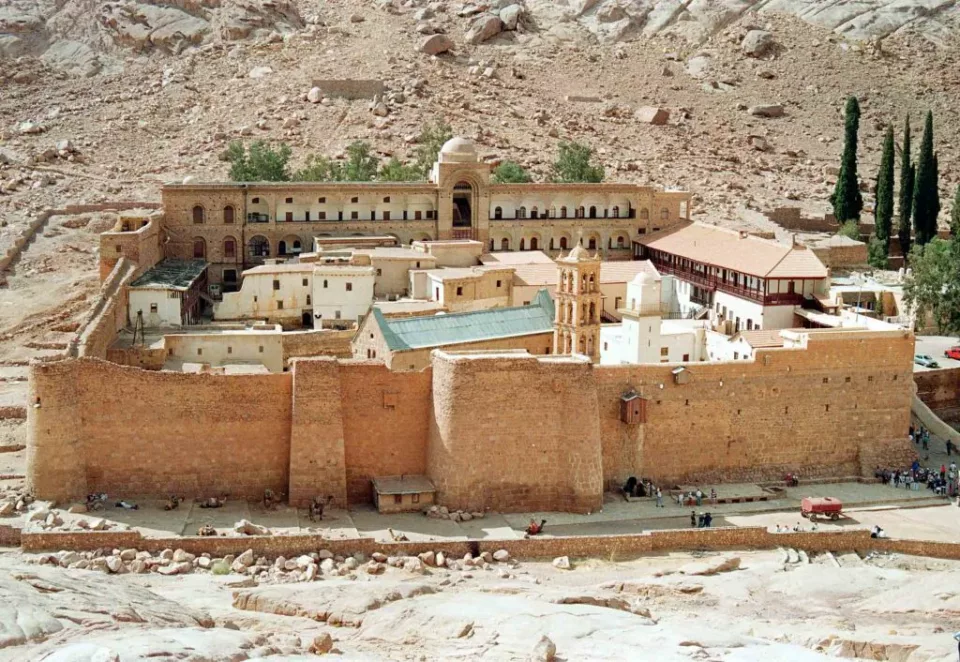
Negotiations between the Sinai Brotherhood and the Egyptian government regarding the legal and institutional framework governing the future of St. Catherine’s Monastery have reached an impasse, with no clear prospects for the near future. Despite progress made by the end of July, discussions on key issues, including rights to agricultural property, were suspended following the latest counterproposals from the Egyptian side in early August.
According to the news portal Romfea.gr, the current situation is causing serious concern in Athens and Cairo, although both sides are trying to maintain a framework of constructive bilateral relations. Archbishop Simeon of Sinai, drawing on a strong team of experts, managed to draft an agreement considered advantageous for the monastery; but it is precisely this success, according to sources, that has provoked resistance from certain forces seeking to weaken his position.
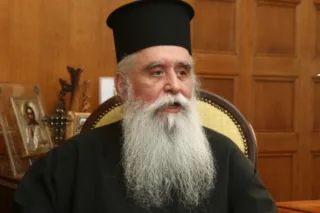
The internal situation at the monastery is complicated by the absence of Archbishop Simeon, who has been undergoing medical treatment in Athens for several weeks. In his absence, the day-to-day management of the monastery is carried out by the Monastic Council, headed by Father Niphon. Diplomatic and church sources note that external factors with political undertones took advantage of the monastery’s “silence” in August and the abbot’s illness to influence certain members of the monastic community and change their initial positions.
The crisis in Sinai has drawn the close attention of the major Orthodox centers. Last week, a delegation from the Patriarchate of Jerusalem visited Athens, reaffirming Patriarch Theophilos’s unwavering interest in the monastery’s fate. There are also reports of intervention by the Holy Kinot of Mount Athos, which sent a letter calling for the monastery’s historical and canonical status to remain unchanged. The monks of Mount Athos insist that the introduction of a “dual ownership” regime is unacceptable, emphasizing that, under current rulings by Egyptian courts, ownership rights are effectively vested in the state. For his part, former Archbishop Damian of Sinai described the monastery’s current situation as being caught in a “strangling noose” and under the influence of “severe blackmail.”
Read also