The Estonian Orthodox Church failed to resolve the dispute with the state in court
The Estonian Orthodox Church (EOC-MP) and the Pühtitsa Stavropegic Monastery failed to have the Estonian Parliament’s statement declaring the Moscow Patriarchate an organization supporting the military aggression of the Russian Federation declared illegal in May 2024. In this way, the GOC hoped to get out from under the anti-church law, which is planned to be adopted in the Riigikogu in the near future. This is reported by ERR.EE.
It is reported that the Estonian Orthodox Church and the Pühtitse Assumption Stavropegic Monastery of the Holy Dormition in their complaints to the court stated that the Riigikogu unreasonably and illegally recognized the Moscow Patriarchate as an organization that supports the military aggression of the Russian Federation, without excluding either the GOC of the MP or the monastery from this definition. The MP MP and the Pyukhtitsa Monastery also stated that they do not support the military aggression of the Russian Federation.
In its turn, the Tallinn Administrative Court concluded that the Riigikogu’s statement was not an act of executive power, but rather a political expression of the parliament’s will, which is not subject to judicial control in an administrative manner. A situation in which an administrative court would review the content of political positions expressed in parliamentary statements and could order the legislative assembly to change or abandon such positions would contradict the principle of separation and balance of powers and the principle of parliamentary democracy, which are derived from the Constitution, the administrative court added. Thus, the court recognized that it had no jurisdiction to consider such complaints. Both church organizations continued the dispute in higher courts, but to no avail.
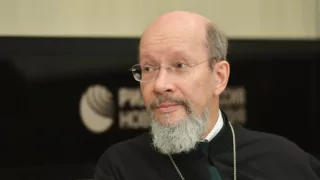
Earlier, the hierarch of the Estonian Orthodox Church (EOC MP), Bishop Daniel of Tartu, vicar of the Diocese of Tallinn, said that pressure on the Church in Estonia continues, despite the fact that the Estonian government could not name which laws were violated and why the Parliament of the Republic is moving to ban the EOC. The bishop believes that the actions of the authorities against the Estonian Church are dictated by political rather than legal reasons.
Read also