Why the OCU Is Not Considered a Church — Opinion of a Greek Theologian
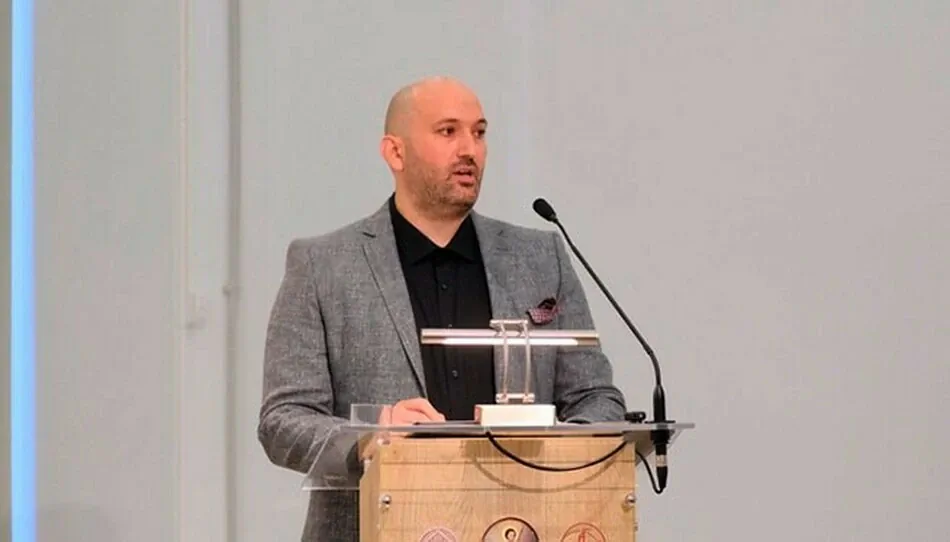
Greek theologian Vasilis Touloumtzis strongly criticized the granting of autocephaly to the Orthodox Church of Ukraine (OCU), calling it an organization that possesses a Tomos “but is not a Church,” according to the Union of Orthodox Journalists (UOJ).
Speaking at a theological conference in Piraeus, Touloumtzis emphasized that the group which received the Tomos from the Ecumenical Patriarchate in January 2019 included not only former canonical bishops but also representatives of schismatic structures and self-proclaimed “bishops” who, in all likelihood, do not possess divine grace.
According to the theologian, recognizing all these individuals as hierarchs through a single procedure contradicts traditional canonical norms. He stressed the fundamental difference between an administrative act — such as granting autocephaly — and the conferring of priesthood, which cannot occur through a “magical” or merely formal decision.
Touloumtzis stated that for a Church to be recognized as autocephalous, it must first possess genuine sacramental priesthood and grace. The mere presence of a Tomos does not guarantee true ecclesiastical status.
He was especially critical of attempts to justify the recognition of the OCU by referencing the Seventh Ecumenical Council. Touloumtzis pointed out that the Council dealt only with the reinstatement of bishops who had been canonically ordained but later fell into heresy, while the situation with the Ukrainian schismatics is fundamentally different.
The Greek theologian also described the approach to the Ukrainian issue as a manifestation of the “branch theory” — a concept common in post-Vatican II Catholicism, where the validity of sacraments outside the one true Church is acknowledged. Such thinking, he stressed, is unacceptable in Orthodoxy as it blurs the distinction between the true Church and schism.
In conclusion, Touloumtzis emphasized that the Ukrainian ecclesiastical crisis will remain unresolved as long as Orthodox ecclesiology is sidelined in favor of political agendas, with decisions being made at geopolitical levels rather than through true spiritual discernment — where no genuine ordinations or restorations take place, only commands are issued.
It should also be noted that during the same theological conference in the Metropolis of Piraeus (Greece), Metropolitan Seraphim of Piraeus criticized Constantinople’s decision to rehabilitate leaders of the UOC-KP and UAOC — Filaret Denysenko and Makariy Maletych. He stated that these decisions were made in violation of the canons and without the required repentance from those involved.
Read also