ОCU representative on why there is no dialog with the UOC: “This is part of Moscow's special operation”
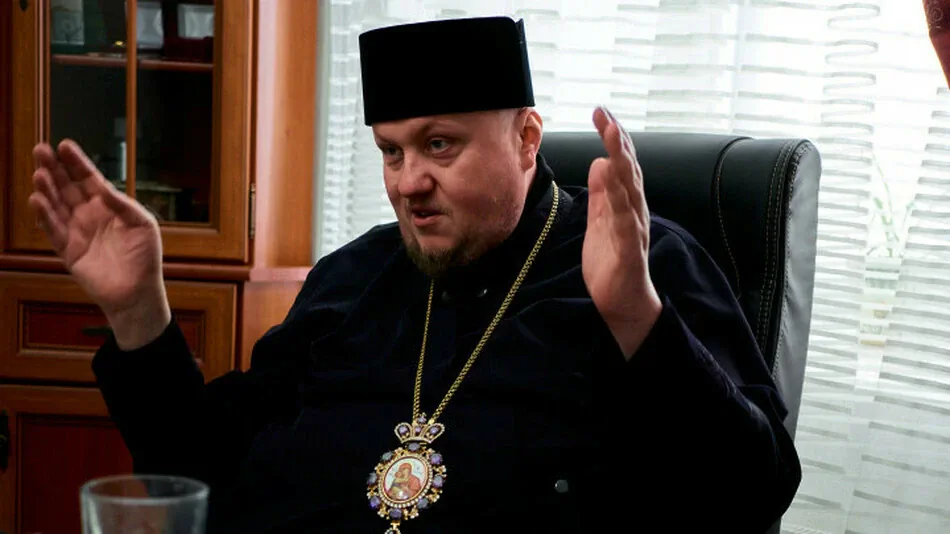
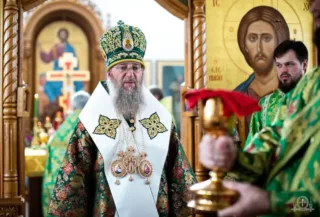
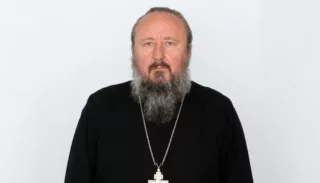
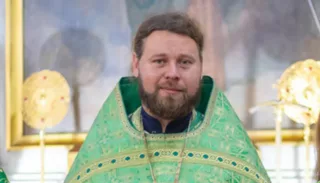
In his public address, OCU hierarch Matfey Shevchuk commented on the issue of relations with the believers of the Ukrainian Orthodox Church, emphasizing that the OCU is supposedly open to dialogue and mutual understanding, but, according to him, “the lack of unity” is caused by Moscow’s influence. He spoke about this on the YouTube channel of the Volyn media project Insider Media Group.
The OCU representative acknowledged that after the OCU was granted the Tomos of autocephaly by the Ecumenical Patriarch of Constantinople, the unification of all Orthodox structures in Ukraine was expected. However, this did not happen — according to him, because “Moscow did not give up its claims to Ukrainian believers” and continues to consider Ukraine “its canonical territory.”
Shevchuk stated that the OCU repeatedly addressed representatives of the UOC with calls to begin dialogue, create commissions, and establish contact. However, this did not happen — primarily, he believes, because the UOC remains under the influence of the Russian Orthodox Church: “Everything is happening according to the FSS’s plan, and we’re talking about how there is no mutual understanding, no love, attaching labels… So what does that mean — that we should also give in to the FSS’s directives?” Shevchuk said, commenting on the UOC’s refusal to engage in dialogue.
At the same time, in his words, the OCU representative acknowledges that in reality, the so-called dialogue takes place amid insults, accusations, and humiliation, referring to UOC rhetoric regarding the lack of grace of the OCU.
Nevertheless, the OCU representative himself resorts to rather sharp assessments of the UOC: he talks about “FSS agents,” about “handlers in Lubyanka,” accuses the UOC of sympathizing with the “Russian World” and allegedly expecting the arrival of the “Russian boot.” He compares UOC parishioners to people who are in a “fanatical state” and “bang their heads against the wall,” and their desire to maintain their church affiliation — to the result of disinformation: “To show fanaticism, to make faces, to bang their heads against the wall like they do, and then to scream that these are seizures, that these are power saws, crowbars and everything else — that is still untrue. People are defending their rights. But such a reaction is already a state of fanaticism.”
At the same time, he does not hide that the OCU considers itself “the only legitimate Orthodox jurisdiction in Ukraine,” while others are “a temporary phenomenon” and the result of “a Moscow special operation.”
In conclusion, the clergyman claims that the OCU’s strategy is “peace, unity, and adherence to canonical order,” but acknowledges that this strategy yields no results, in his words, due to resistance from the UOC.
Let us recall that the head of the Volodymyr-Volyn diocese of the OCU, Matfey Shevchuk, believes that despite all efforts, the state will not be able to completely destroy the Ukrainian Orthodox Church. In his opinion, the UOC will still retain its clergy, parishes, and believers, and therefore the state can only maximally limit the canonical Church in rights.
Read also