"Bessarabian Metropolis" attempts to justify conflict in Grinauti
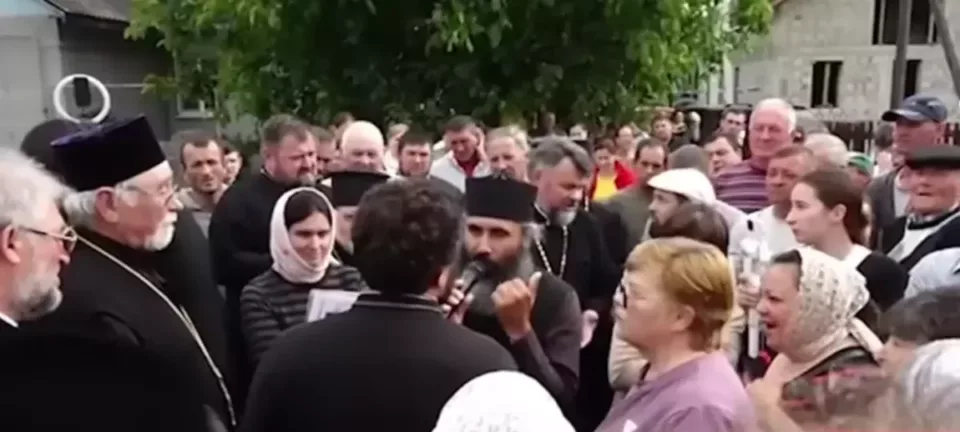
Following the incident in the village of Grinauti, where representatives of the so-called “Bessarabian Metropolis” attempted to seize a local church, structures affiliated with the Romanian Patriarchate launched an informational offensive. In response to the outrage of the faithful of the Orthodox Church of Moldova, the Balti “diocese” issued a statement attempting to present the events as a “lawful return to the canonical Church.” This was reported by the Telegram channel “Orthodox Moldova and the World.”
The conflict arose after the former rector of the Nativity of the Most Holy Theotokos Church in Grinauti, Constantin Turturianu, decided to leave the Orthodox Church of Moldova and join the Romanian Patriarchate. This step prompted the intervention of the “Bessarabian Metropolis,” which attempted to impose a new church order contrary to the will of much of the local community.
In its statement, the “diocese” claims that the Grinauti parish allegedly belonged to the “Bessarabian Metropolis” until 1944, and that its return to the Romanian jurisdiction is, therefore, a restoration of historical justice. The statement also emphasizes that the actions of Turturianu and his supporters are in line with Moldovan law and the Constitution.
Furthermore, the “Bessarabian Metropolis” dismissed the church sanctions imposed on Turturianu, calling them “invalid” and originating from the “non-canonical structure of the Russian Patriarch.” The Primate of the Orthodox Church of Moldova is denied recognition in the same statement, being referred to as the “so-called Metropolitan of Chișinău and All Moldova.” The “Metropolis” itself is declared “the only canonical Church in this territory,” while believers of the Orthodox Church of Moldova are labeled “unjustly alienated sons” held in the “ecclesiastical captivity of the Russian Patriarchate.”
At the same time, the disturbances in Grinauti, triggered by forceful interference in parish life, are blamed by the “Metropolis” on the clergy of the Orthodox Church of Moldova.
The statement concludes by declaring the jurisdiction of the Russian Orthodox Church in Bessarabia to be “foreign” and “illegal,” allegedly imposed by the tsarist and Stalinist occupations of 1813, 1940, and 1944.
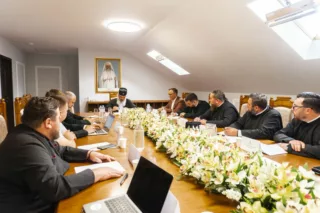
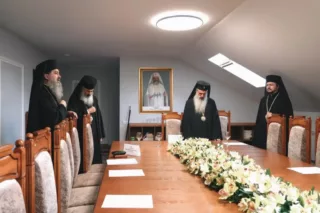
Previously, it was reported that the Synod of the Romanian Orthodox Church decided to continue financial support and development of the Bessarabian Metropolis in Moldova. The ROC Synod approved new funding mechanisms following the cessation of international financial assistance.
Read also