Earlier, we reported that Estonian President Alar Karis had again vetoed amendments to the state law “On Churches and Parishes,” through which the republic’s parliament planned to ban the activities of the Estonian Orthodox Christian Church. The head of state noted that the law, despite having been repeatedly revised in parliament, still contradicts certain articles of the Estonian Constitution.
The Estonian Church and Pühtitsa Monastery have filed complaints with the ECHR over violations of the rights of believers by the Estonian parliament
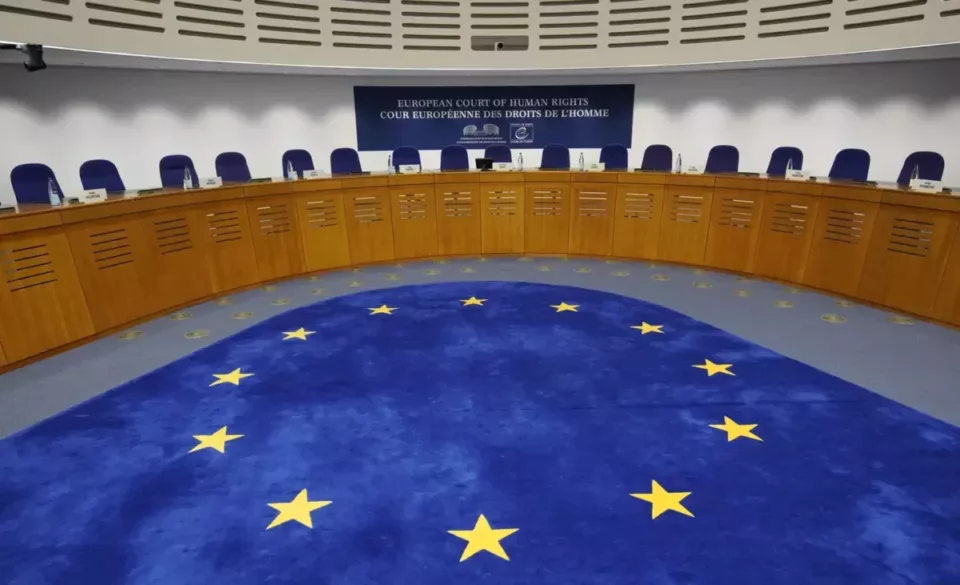
The Estonian Orthodox Christian Church (EOC) and the Pyhtkitsa Stavropegic Convent have filed complaints with the European Court of Human Rights over violations of the rights of Orthodox believers by the Estonian parliament. The EOC’s lawyers noted that, within the framework of the current state policy towards the Church, the clergy and believers have exhausted all possibilities for legal settlement of the disputes that have arisen within Estonia. This was reported by Postimees.ee.
«If the Riigikogu, by making such a statement (a statement adopted by the Riigikogu on May 6, 2024, in which the Moscow Patriarchate was declared an institution supporting the aggression of the Russian Federation — ed.), has not ensured that it does not affect religious associations registered in Estonia that operate under the laws of the state and does not provoke hostility towards them, and the judicial system has not recognized itself as competent to consider the merits of complaints about the parliament’s political statement, this creates a dangerous situation in which a person has no means of legal protection against unfair and hostile political statements,» — explain Steven-Christos Evestus and Artur Knyazev, attorneys representing the church and monastery.
In their complaints to the ECHR, the applicants allege violations by the Republic of Estonia of Articles 9 (freedom of thought, conscience, and religion) and 11 (freedom of assembly and association) of the European Convention for the Protection of Human Rights and Fundamental Freedoms in connection with the Riigikogu’s statement of May 6, 2024, and subsequent clarifications, which directly mentioned the Estonian Church and the Pühtitsa Monastery.
«After preliminary examination of the case, the ECHR not only found the complaints admissible, but also ruled that they raised important questions of interpretation and application of the Convention that required urgent consideration. The court classified these complaints as potential cases of serious public importance (impact cases). The Republic of Estonia was invited to present its position on the case and to express its opinion on the possibility of concluding a friendly settlement,» — the lawyers added.
Read also