U.S. Lawyer Links Creation of the OCU and Persecution of the UOC to Initiatives by Nuland and Pyatt
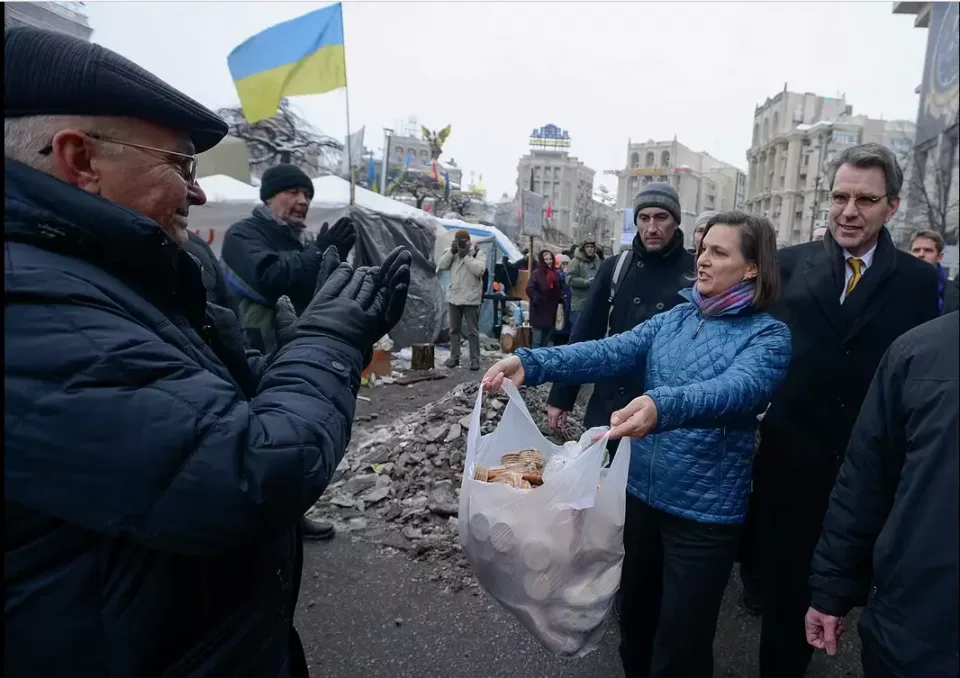
During a meeting with young Republicans in New York on August 5, 2025, Ukrainian Orthodox Church attorney Robert Amsterdam stated that plans to establish a new religious structure in Ukraine and weaken the canonical UOC allegedly originated in 2014 with the involvement of senior U.S. officials. According to him, then-Assistant Secretary of State for European and Eurasian Affairs Victoria Nuland and U.S. Ambassador to Kyiv Geoffrey Pyatt proposed an initiative aimed at removing the UOC in order to diminish Russia’s influence. The report comes from the UOJ in America.
Amsterdam said he had received this information from reliable sources but could not guarantee its absolute accuracy. He claimed that Pyatt was tasked with establishing contact with Ecumenical Patriarch Bartholomew to transfer control of the UOC from Moscow to Istanbul. Later, as U.S. Ambassador to Greece, Pyatt allegedly continued working to prepare the creation of the OCU.
According to the lawyer, the UOC had enjoyed internal self-governance since the 1990s while maintaining canonical ties with the Moscow Patriarchate, in accordance with church law. In the U.S., however, Amsterdam believes such ecclesiastical considerations were ignored, with the situation viewed purely through a political lens.
He also claimed that in 2018–2019, a financial agreement involving “millions of dollars” was concluded between Patriarch Bartholomew and U.S. representatives. Amsterdam emphasized that he did not have information about the exact amounts.
Speaking about the original plan, Amsterdam linked it to former Secretary of State Mike Pompeo, explaining that it was not intended to completely eliminate the UOC but to create a structure uniting “patriotically minded” believers. However, after the war began and Donbas was lost, President Volodymyr Zelensky, according to Amsterdam, shifted his political focus and began relying on ultranationalist forces.
Amsterdam described Ukrainian radical nationalists as groups ideologically rooted in Stepan Bandera’s legacy and noted the spread of rhetoric about “religious and linguistic cleansing.” As an example, he cited a statement by MP Mykyta Poturaiev, who himself used the term “religious cleansing.” In conclusion, the lawyer said that in conversations with U.S. officials he stressed the importance of freedom of religion and questioned the legitimacy of U.S. interference in the religious life of other nations.
Amsterdam also recalled earlier attempts by supporters of President Zelensky to block his speech at the New York Young Republicans Club. Despite strong pressure from pro-Zelensky activists demanding the event’s cancellation, the young Republicans managed to withstand the pressure and hold the meeting.
Read also