“Thought crimes and reposts”: why and for what are priests of the Ukrainian Orthodox Church being tried?
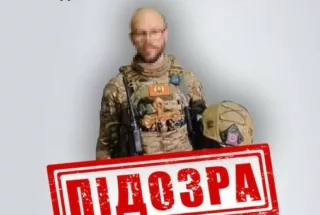
Ukrainian media outlets are once again full of headlines about how many criminal cases the Security Service of Ukraine (SBU) has opened against priests of the Ukrainian Orthodox Church (UOC). “180” is the result of the work of the special services, which has been written about for more than a month. Moreover, even with such a biased attitude towards the UOC, the authorities admit that only 38 cases have been brought to court, and that is since 2022. What lies behind these loud statements and what is the actual quality of the investigations against UOC clergy?
The authors of the Telegram channel “Black and White” noted that the notorious 38 convictions represent only 0.3% of the total number of UOC priests, which in 2022 numbered more than 12,500. In other words, if we calculate how many, for example, law enforcement officers in the occupied territories have defected to the Russian side, then this percentage will undoubtedly be higher.
Not ten or twenty, but many more former deputies of regional branches of the pro-presidential party Servant of the People are now involved in politics in United Russia somewhere in Mariupol, Melitopol, or Skadovsk. This is known for certain. So what? Is the Servant of the People party already banned in Ukraine? No. It’s, as they say, something else…
However, are all of these unfortunate 180 criminal cases brought against priests of the UOC, as reported in the media, so seditious that they can be used as an argument for banning a multi-million-strong Church? As the media points out, most of the proceedings (45) are classified under Article 436-2 – justification of Russia’s armed aggression against Ukraine. What do we consider to be “justification”? We will tell you now.
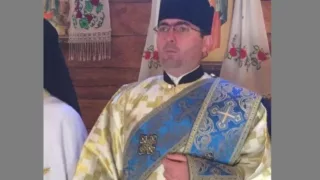
For example, a priest of the UOC in Odessa was recently tried under Article 436-2. According to the investigation, – ATTENTION! – during 2024-2025, the priest “in conversations with his wife and other people” justified the actions of the Russian Federation, called Ukraine “Ukropia,” Ukrainian activists “Nazis,” and humiliated the Ukrainian Armed Forces. In other words, the priest expressed his disapproval of what was happening in the country in private conversations, and that was all — he “justified the aggression of the Russian Federation.”
Furthermore, in Volyn, an indictment was sent to court against a 26-year-old resident of the city of Volodymyr (a subdeacon of the Ukrainian Orthodox Church), who, according to the prosecutor’s office, systematically distributed posts on social media with “anti-Ukrainian content” and “justification of Russia’s armed aggression against Ukraine.” What did he do? Between June 2024 and May 2025, he posted on his Facebook page publications which, according to the investigation, contained “justifications for Russia’s armed aggression against Ukraine.” In simple terms, he reposted.
And unfortunately, there are dozens, if not hundreds, of such examples. Someone said something “bad” about “activists,” someone responded incorrectly in a messenger to the greeting “Glory to Ukraine!” or reposted a “Happy Victory Day!” postcard. In other words, even among the 38 court rulings mentioned, there are hardly a dozen real crimes.
However, this is how statistics are formed, which the Ukrainian authorities then present both domestically and in the international political arena. They say, “How can you say we are banning them? Look at how many criminal cases there are! Most of them are for justifying Russian aggression and betraying the motherland!”
They reinforce “public opinion” with new “opinion polls” claiming that 60% of the country’s population wants to ban the UOC. At the same time, bribed experts accuse the Church day and night of not “cooperating with the state,” and some even mock it, saying, “You wanted to pray in the catacombs? Here you go!”.
What is the result? The state’s anti-church strategy has become much more developed than it was a few years ago. The “Overton window” has widened so much that the media are openly talking about the BENEFITS of exchanging convicted UOC priests for prisoners of war, because “for one, they give ten.” It is quite likely that at this rate, we risk living to see the moment when priests of the canonical Church begin to be detained and exchanged simply for the fact that they exist in principle.
Read also