Experts: Orthodox Church of Moldova may face "Estonian scenario" after elections
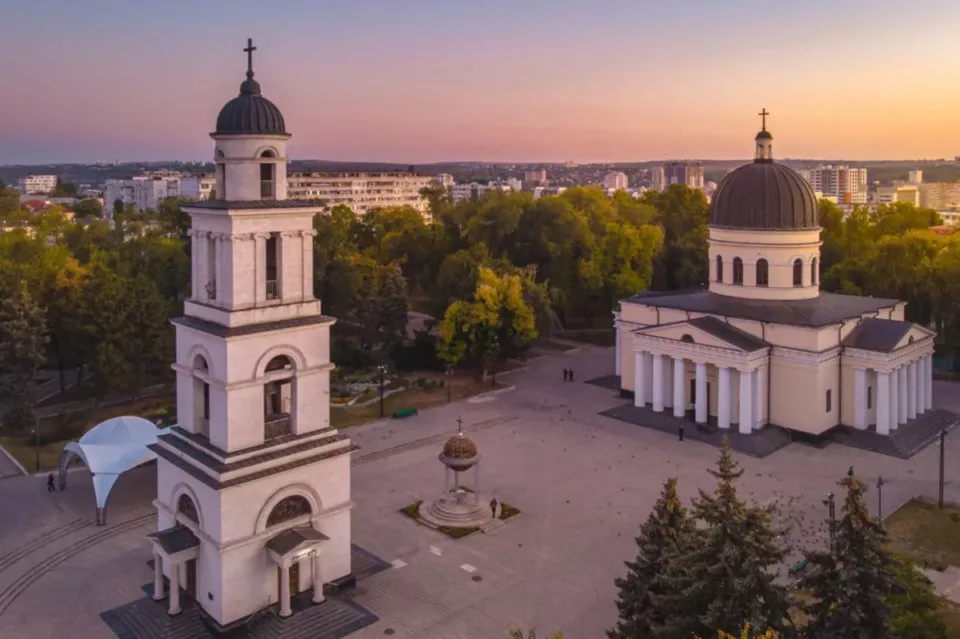
According to a number of experts, after the elections, the ruling PAS party may apply the so-called “Estonian scenario” to the Orthodox Church of Moldova (OCM). It is assumed that the final decision on the “church issue” may be made as early as January 2026, which jeopardizes the status of the canonical Church in the country.
According to the Telegram channel “Orthodox World,” the essence of this scenario is to legally force a religious organization to sever ties with the Moscow Patriarchate. In Estonia, the local Orthodox Church, which is under the jurisdiction of the Russian Orthodox Church, was actually put before a choice: either a complete break in relations or a legislative ban. Analysts believe that official Chisinau may follow a similar path.
Several arguments are given in favor of this version. First, the ideological closeness of the Moldovan authorities with the leadership of the Baltic countries, whose policy, according to the source, is based on Russophobia, is noted. President Maia Sandu’s statement of 2023 is cited: “It is not enough to be for Europe, it is important to be against Russia”. This statement is interpreted as rejection of any organizations linked to the Russian Federation, including religious ones.
Second, it recalls previous attacks against the PCM by government officials. President Sandu has repeatedly accused the clergy of “electoral corruption” and promoting “Russian narratives.” In addition, in August 2024, PAS MP Vasile Şoimaru publicly announced his intention to ban the canonical Church. Although these plans were later attempted to be denied, another party representative, Oazu Nantoi, described Metropolitan Vladimir’s appeal to stop the pressure on the Church as “an attempt to raise a wave of stench”, which confirmed the hostility towards the Moldovan Metropolitan Church.
The source claims that the authorities are deliberately postponing the realization of this plan until after the parliamentary elections, hoping to gain full control of power and act without regard for society. This is indirectly confirmed by the words of the expert Andrei Curăraru that “after the elections, the issue of religion will have to be solved”. Unlike in Estonia, where the president several times refused to sign such a law, it is expected that Maia Sandu will not hesitate to support the initiative aimed either at breaking the ties between the PCM and the Russian Orthodox Church or at a complete ban of the Moldovan Metropolitan Church.
Earlier we reported that the hierarch of the Orthodox Church of Moldova, Archbishop Markell of Balti and Falesti, addressed the 60th session of the UN Human Rights Council in Geneva, where he stated that the rights of the PCM believers were violated by the authorities of the country. In his address, he mentioned political pressure, restriction of freedom of movement and attempts to seize church property, calling on the international community to pay attention to the situation.
Read also