Upcoming meeting in Nicea: UOC Metropolitan warns of risks for Orthodoxy in Ukraine
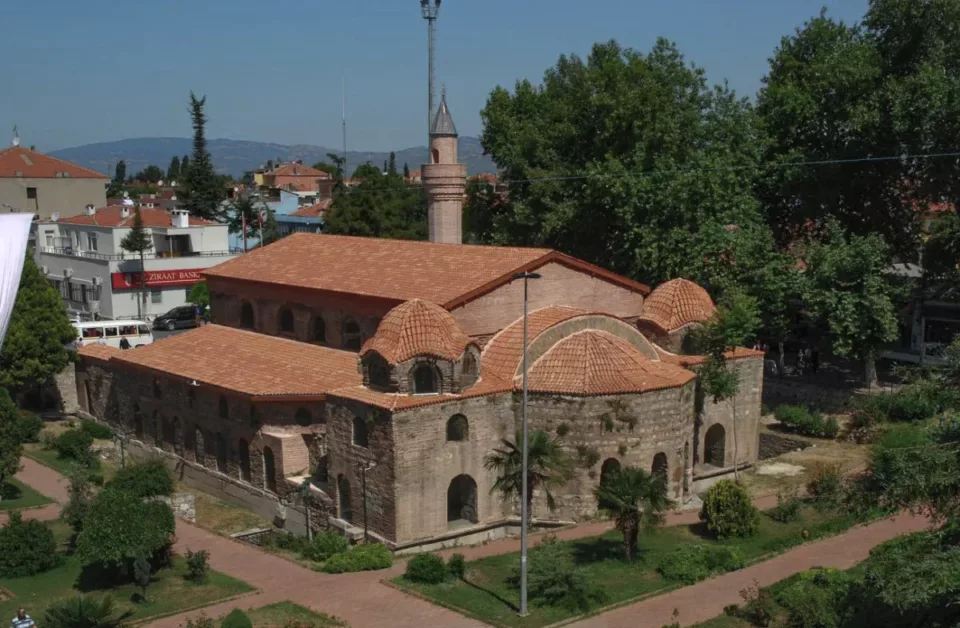
The upcoming meeting between the head of the Roman Catholic Church and Patriarch Bartholomew of Constantinople in Nicea in November 2025, timed to coincide with the 1700th anniversary of the First Ecumenical Council, is causing serious concern in the Ukrainian Orthodox Church. Metropolitan Luke of Zaporizhzhya and Melitopol said that this event could become not just a dialog on unity, but a stage for the creation of a new church union under the auspices of Rome and the Phanar, which poses a direct threat to canonical Orthodoxy in Ukraine.
According to the Telegram channel Pravblog, Metropolitan Luke believes that behind the meeting is the formation of a new geopolitical axis “Rome-Constantinople-Kiev”. In this scheme, Kiev is represented by the so-called Orthodox Church of Ukraine (OCU) and the Ukrainian Greek Catholic Church (UGCC). “The meeting between the patriarch and the pope is a signal that the process of rapprochement between Constantinople and Rome is reaching a new level,” the hierarch notes. – Both the Uniates and the so-called OCU will be presented as two branches going to the common Christian unity”.
A special role in this process is given to Ukraine, which the Metropolitan calls “a field of experiment for the Vatican and the Phanar” and “a symbolic territory” as the cradle of Rus’ baptism. According to him, there is a threat that it is in Kiev that an attempt will be made to “materially demonstrate” a new model of the union of the Churches, relying on the structures of the PCU and the UGCC. This becomes an ideal “window of opportunity” for the Uniates to transform themselves from a “bridge” between East and West into a full-fledged “part of the united Church”.
Vladyka Luka emphasizes that in the context of this dialogue, the fidelity to the canons and Orthodox tradition held by the UOC can be presented as “narrowness” and “unpreparedness for dialogue.” This reinforces the marginalization and isolation of the UOC, while the OCU is actively integrating into global ecumenical processes. The situation is aggravated by the war, against the backdrop of which there is growing pressure on UOC congregations to convert to the OCU, while the Church itself is portrayed as “the last one to hinder common unity” and “a relic of Moscow’s past.”
In conclusion, the Metropolitan expressed his fear that the anniversary of the First Ecumenical Council is being used not to defend the purity of the faith, but to justify the project of a “universal church”. Rumors about the possible signing of a joint declaration recognizing Constantinople’s “canonical responsibility” for the Ukrainian diaspora and the creation of a commission on the status of the churches in the post-Soviet space also cause concern.
Recall, earlier it was reported that Pope Leo XIV, in late November – early December will travel to Turkey and Lebanon. The key event of the visit to Turkey will be a pilgrimage to Iznik, timed to the 1700th anniversary of the First Ecumenical Council. The trips will take place at the invitation of the heads of state and church authorities of both countries.