New law puts Ukrainian Orthodox Church at risk of ban amid criticism from European Commission - German media
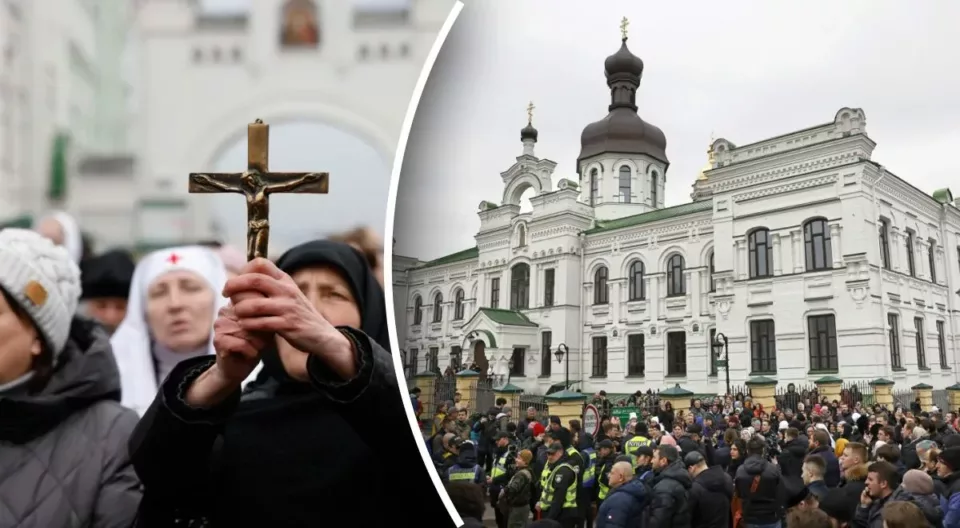
The Ukrainian Orthodox Church (UOC) is facing the real prospect of having its activities banned after a new law comes into force in September 2024. The situation has attracted the attention of the European Commission, which in its report on Ukraine’s progress as a candidate for EU membership expressed concern, calling on Kyiv to ensure that its legislation complies with international standards of religious freedom. Ukrainian state authorities, in turn, are actively initiating legal proceedings to ban the church, claiming its connection to the Russian Orthodox Church (ROC).
In early November, the European Commission published its annual report, which, along with praising Ukraine’s efforts to fulfill the conditions for EU accession, also contained criticism. According to noek.info, the document emphasized: «Ukraine must ensure that the implementation of the law … remains in line with international standards of freedom of religion or belief». The law in question is Law No. 3894-IX «On Protection of the Constitutional Order in the Sphere of Activities of Religious Organizations,» which allows the state to ban religious associations affiliated with the Russian Orthodox Church through the courts.
The conflict between the state and the UOC centers around the issue of its status. Despite the fact that the UOC declared its complete independence from the Moscow Patriarchate at a council in May 2022, the Ukrainian authorities do not recognize this break. The State Service of Ukraine for Ethnopolitics and Freedom of Conscience (DESS), headed by Viktor Yelensky, initiated an expert examination that confirmed the existence of a church-canonical connection between the UOC and the Russian Orthodox Church. On the basis of this conclusion, the SES filed a lawsuit with a demand to ban the activity of the UOC’s governing body, the Kyiv Metropolitan Church. Court sessions on this case have been repeatedly postponed.
Pressure on the UOC occurs not only at the national, but also at the regional level, which was also noted in the report of the European Commission. Cases of forced conversions of communities from the UOC to the Orthodox Church of Ukraine (OCU) have been recorded, sometimes with the use of force. Local councils adopt decisions to ban the activities of the UOC in their territories, which, according to lawyers, contradict the constitution. In addition, the Security Service of Ukraine (SBU) and local prosecutors’ offices initiate cases against individual clergymen, which human rights activists regard as arbitrary.
The situation is aggravated by an internal split within the UOC itself and a tense public atmosphere. Within the church there is a heated discussion between bishops about the expediency of declaring autocephaly, but its leader, Metropolitan Onufry, has so far failed to reconcile the opposing sides. At the same time, as the newspaper notes, the UOC is often presented in the media as an «agent of Moscow,» and its representatives are rarely given the floor on the central TV channels. Despite this, thousands of parishes continue their activities, and many priests and believers are actively involved in supporting the Ukrainian army.
According to experts, the likelihood of a judicial ban of the UOC is very high. This could lead to a significant part of believers going underground and further deepen the split in world Orthodoxy. International organizations, including the UN and the EU, continue to observe the situation critically, pointing to the danger of restricting fundamental rights even in conditions of war. Such steps, according to analysts, may harm Ukraine itself and its democratic development in the long term.
It should be noted that against the background of the ongoing division in Ukrainian Orthodoxy and political interference in church affairs, Greek theologian Paul (Pavel) Lieberman put forward a proposal to create a temporary exarchate under the auspices of the Patriarchate of Constantinople. In his opinion, this structure could become a transitional canonical space for communities and dioceses of the Ukrainian Orthodox Church (under the omophorion of Metropolitan Onufriy), which wish to finally break with the Moscow Patriarchate, but for various reasons are not yet ready to join the OCU.
Read also