Digital Renaissance: How the Internet Led to a Record Increase in Conversions to Orthodoxy in the U.S
There has been a noticeable surge of interest in Orthodoxy in the United States, especially among young adults and families. It is reported that digital platforms such as video and social media have become a key factor in bringing new parishioners to churches. Since the 2020 pandemic, conversions have reached record numbers, nearly doubling from previous years. Euronews reports that.
Although the number of annual conversions to Orthodoxy in the US had remained relatively stable in the previous 10 years (about 90 people), the 2020 pandemic caused a temporary drop, followed by a sharp increase in 2022, reaching almost 200 new parishioners. Most are young people under 40, predominantly from Protestant backgrounds, whose decision is driven by deep theological convictions. Among men, there has been a marked increase in conversions, with an increasing number of new converts being baptized.
The Internet serves as a first step for many who are introduced to the Orthodox faith. abia Eileen, 28, who was baptized in April 2024, confirms, “I think, like most people, I learned about Orthodoxy through the Internet. It’s true.” However, the transition from digital information to live congregational life requires adaptation. Churches like St. Sophia Cathedral in Los Angeles are developing “a culture of humility, acceptance of mistakes and vulnerable participation,” and converts actively participate in informal but meaningful “Dinner and Discussion” meetings to deepen their faith and find support.
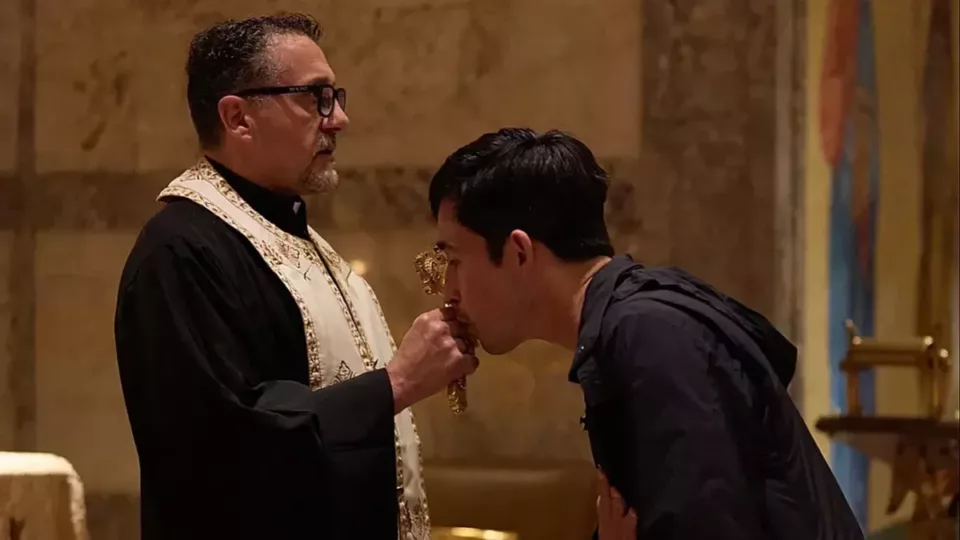
An example of this transition is Justin Braxton, a Los Angeles firefighter who became Orthodox a year and a half ago. He recalls his first experience in the temple: “The service was half Greek and half English, but I couldn’t stop crying. I cried the whole hour and a half.” For Justin, Orthodoxy is a source of deep joy and a spiritual challenge, which he compares to the physical training that gives a sense of fulfillment after a hard workout.
Matthew Nammy, executive director of the Institute for Orthodox Studies, notes two waves of interest in Orthodoxy after the pandemic. The first wave, coming during and immediately after the pandemic, focused on single young adults. The second, observed in the last 18 months, reached a broader audience, including married men and married women, young families, and members of various religious and ethnic groups, demonstrating the diversification of the new wave of parishioners.
While the Internet has greatly expanded the influence of Orthodoxy, it cannot replace in-person engagement. Creators of popular online content, such as Canadian Jonathan Pageau, emphasize, “A lot of Orthodox people are told on the Internet to go to church. (We explain that you can’t live your faith only in your mind).” The growing online presence also creates new challenges, such as mentoring converts, preventing misunderstandings, the risk of extremism, and the need to balance tradition and modern methods of communication.
Nevertheless, as events in churches such as Hagia Sophia Cathedral demonstrate, the heart of the Orthodox tradition remains alive. Community, personal involvement, and deep spiritual experience continue to draw people in, proving that Orthodoxy in the U.S. can retain its essence and dynamically evolve in a rapidly changing world, using digital tools as a bridge to faith, not a replacement for it.
Recall, American Congressman Eli Crane from Arizona on December 16, 2025, made a call to stop persecution of Christians and the Ukrainian Orthodox Church (UOC) in Ukraine. In the congressman’s opinion, the country is showing alarming authoritarian tendencies, which are in sharp contrast to the fundamental principles of Western civilization and are of particular concern.
Read also