Speaker of the Verkhovna Rada: Transfer of church and state holidays in Ukraine is a matter of ideology and the country's place in the civilized world
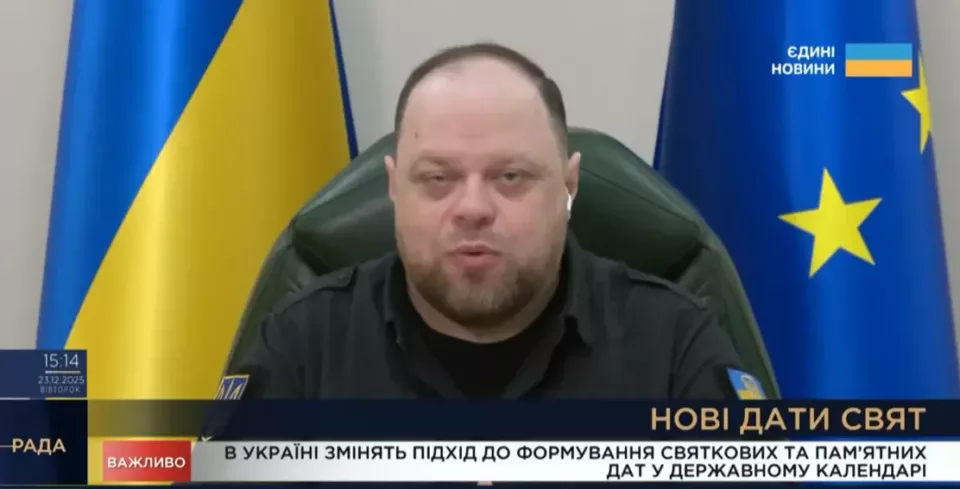
The Chairman of the Verkhovna Rada of Ukraine Ruslan Stefanchuk said that the changes in the calendar of church and state holidays are deeply ideological. According to him, these reforms are intended to define Ukraine’s place in the civilized world and revise the national identity.
During the telethon, Stefanchuk emphasized that any historical calendar is a kind of “calendar map of the state.” He emphasized that calendar dates are not just days, but markers that determine “who we are with and who is against us,” which makes them an important ideological component.
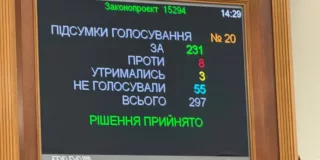
Ruslan Stefanchuk reminded that the calendar date reform was initiated by President Volodymyr Zelenskyy. As part of these changes, Christmas was moved from January 7 to December 25, Intercession Day was moved from October 14 to October 1, and St. Nicholas Day is now celebrated on December 6 instead of December 19. Also, the Day of the Ukrainian Cossacks was moved to October 1, and the Day of the Armed Forces of Ukraine now coincides with St. Nicholas Day on December 6.
The parliamentary speaker noted that the war has revealed a number of “problematic calendar coincidences” when “the days of national tragedy fall on professional holidays.” In addition, according to him, the calendar contains several dates inherited from both the Soviet era and the first years of independence, which needs to be streamlined.
Ruslan Stefanchuk plans to convene a large-scale meeting on December 26 to further discuss the logic behind the law on the new calendar system. It will be attended by representatives of the government, the President’s Office, the National Academy of Sciences, the Institute of National Memory, and the public.
As reported, three parishes of the OCU in the Ivano-Frankivsk region decided to celebrate Christmas on January 7, 2025, continuing to follow the old style. This comes amid a general transition of the Church to the New Julian calendar, which provides for the celebration of Christmas on December 25.
Read also