"Exclusively on canonical grounds": UOC Chancellor names conditions for unification with OCU
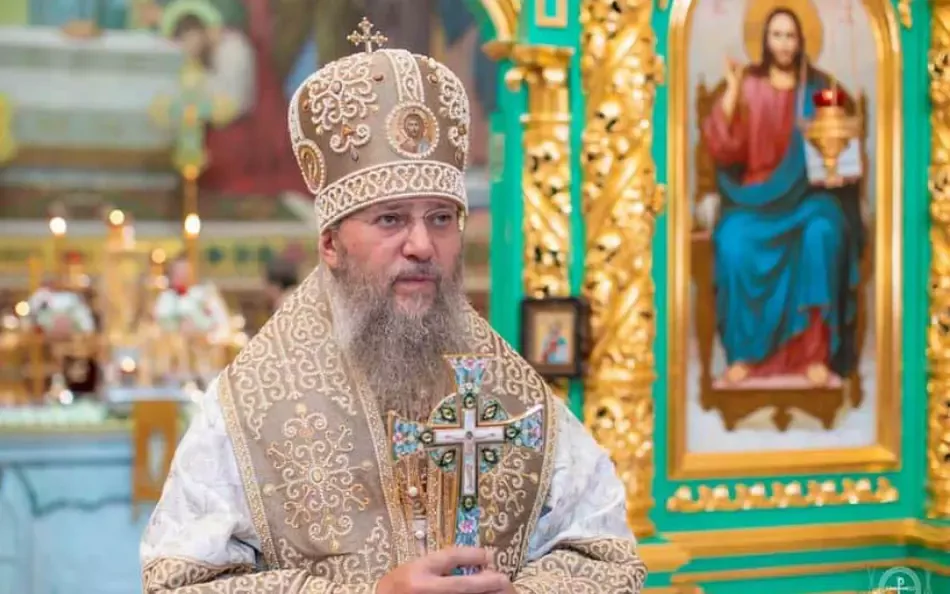
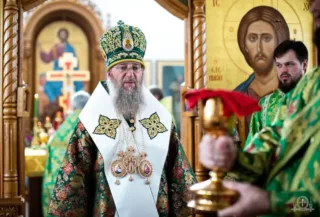
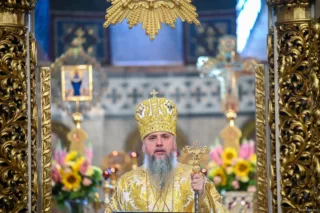
Metropolitan Anthony (Pakanych), Chancellor of the Ukrainian Orthodox Church (UOC), has expressed his official position on the possibility of uniting the UOC with the so-called Orthodox Church of Ukraine (OCU). He emphasized that such a unification requires not a political or rational, but primarily a church, canonical and spiritual approach. According to the UOC statement, true unity is possible only through the restoration of canonical and Eucharistic communion based on the recognition of canonical principles and mutual love in Christ.
According to the Serbian publication Novosti, Metropolitan Anthony explained that in Orthodox theology, the unification of the Churches is not an administrative act or a merger of structures. It is “becoming a true unity in spirit and truth.” In Orthodoxy, unification is possible only as a restoration of canonical and Eucharistic unity, not as a compromise between religious structures or an administrative merger of organizations, since the Church is the Body of Christ.
Metropolitan Anthony emphasized that unification is possible only on canonical grounds. The history of the Church shows that true reunification has always occurred through a return to canonical communion, the restoration of apostolic succession, and repentance of church divisions and iniquities. Without these conditions, we can only talk about an external agreement, but not about church unity.
From the point of view of the canon law of the Orthodox Church, the OCU emerged “outside the canonical order, without legal apostolic succession, on the basis of previously condemned schismatic structures.” The UOC Chancellor recalled that until 2018, the so-called Ukrainian Orthodox Church of the Kyiv Patriarchate and the Ukrainian Autocephalous Church, which united to create the OCU, were considered schismatic by all local Orthodox churches, including the Patriarchate of Constantinople. No canonically prescribed action was taken in accordance with the spirit and tradition of returning schismatics to the bosom of the Church. Instead of “overcoming the schism,” he said, “legalization was carried out.”
Thus, it is incorrect to talk about the “unification of the two Churches” in the strict Orthodox sense, since the Church cannot unite with something that is not in its canonical and mysterious being. The scenario of unification, which is sometimes discussed in the media as a compromise or mutual recognition without a canonical solution to the problem, is lifeless and unacceptable to the Orthodox Church, as it contradicts the very foundations of the Church’s existence. However, Metropolitan Anthony emphasized that the UOC desires and prays for a unified Church within the country, but only the one “founded by Christ the Savior, for which the commandment of love is the cornerstone, and canonical norms are the main tool in solving both simple and complex issues.”
Recently, the head of the Department for External Church Relations of the Moscow Patriarchate, Metropolitan Anthony (Sevriuk) of Volokolamsk , named three key motives behind the creation of the OCU by the head of Phanar. According to him, these are external pressure on Patriarch Bartholomew of Constantinople, his personal resentment and sense of revenge, as well as “papist” ambitions.
Read also