The Estonian State Court will examine the constitutionality of the Churches and Parishes Act
The Estonian State Court is preparing to examine the constitutionality of the amendments to the Churches and Parishes Act adopted by the Riigikogu in June 2025. The Constitutional Review Board will consider a petition by President Alar Karis, who believes that the law disproportionately restricts freedom of association and religion. The session will take place in Tartu in early February 2026. This is reported by ERR.EE.
The oral proceedings are scheduled for February 3, 2026 at 10:15. The matter will be examined by the Constitutional Review Board of the State Court, which will consist of the President of the State Court, Villu Kõve, as well as judges Julia Laffrank, Vahur-Peeter Liina, Haley Sepp and Margit Wutt.
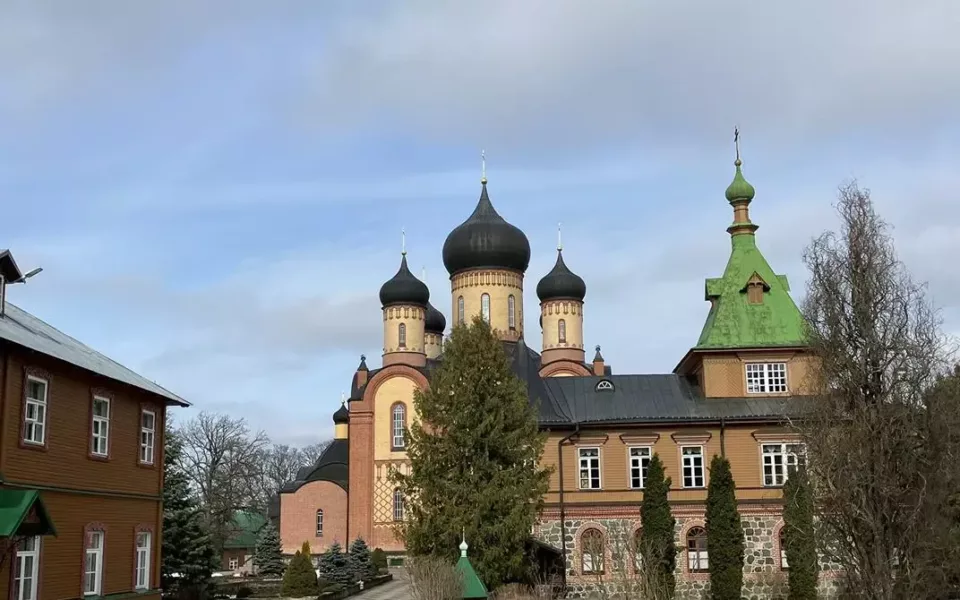
The key parties invited to participate in the trial are representatives of the Riigikogu, the Estonian Government, the Chancellor of Law and the Minister of Justice and Digital Affairs. In addition, representatives of religious organizations, including the Estonian Council of Churches, the Orthodox Church and the Pühtitsa Stavropigial Nunnery of the Assumption of the Blessed Virgin Mary, have been involved in the discussion, which underlines the significance and scope of the issue at hand for the religious life of the country.
The initiative to revise the law comes from President Alar Karis, who sent the relevant amendments to the State Court in early October. In the assessment of the Head of State, the law continues to contradict Articles 40, 48 and 11 of the Constitution of the Republic of Estonia. These articles concern freedom of association and religion, as well as the principle of equality. The President believes that the adopted amendments disproportionately restrict these fundamental rights.
It should be noted that Alar Karis has already twice refused to proclaim the law amending the Law on Churches and Parishes – on April 24 and July 3 this year, which shows his consistent position on this issue.
Let us recall that earlier we reported that United Nations experts expressed serious concern about the escalation of legislative and administrative measures taken by the Estonian authorities against the Estonian Orthodox Christian Church (EOCC). These actions, according to the UN, pose risks of violating religious freedom and the rights of national minorities in the country, especially in light of the EOCOC’s canonical ties with the Moscow Patriarchate. At the same time, the UN welcomed Estonian President Alar Karis’ decision to refer the controversial amendments to the law to the Supreme Court for constitutional review.
Read also