Ukrainian state does not demand anything from UOC that would burden the conscience of believers - head of DESS
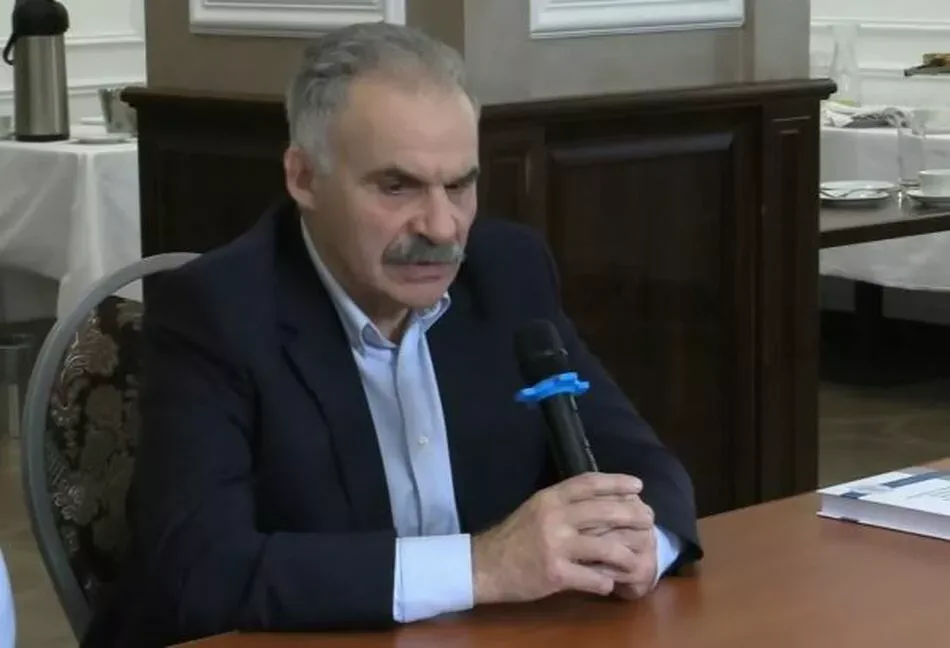
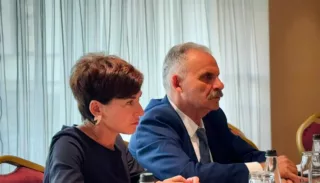
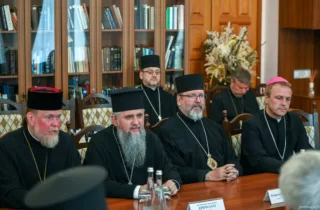
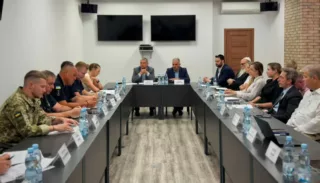
Viktor Yelenskyy, head of the State Service of Ukraine for Ethnic Policy and Freedom of Conscience (DESS), said at a roundtable discussion “Dialogue of Church, State and Society: Ways to Understand” that the Ukrainian state does not impose requirements on the Ukrainian Orthodox Church (UOC) that could burden the conscience of its believers. The main demands relate to severing ties with the Russian Orthodox Church (ROC). According to Religion in Ukraine, the event was organized by the NGO Sophia Brotherhood with the support of the Center for Humanitarian Dialogue.
During his speech, Viktor Yelenskyy emphasized that church-state relations in Ukraine are much broader than just interaction with the UOC. They include support for large-scale humanitarian work, chaplaincy, international advocacy and accommodation of hundreds of religious communities displaced from the occupied territories. He emphasized that in a democratic society, the media often focuses on conflicts and disputes rather than on charity and mercy, which is the norm.
The central topic of the speech was the so-called “Law on the Protection of the Constitutional Order in the Field of Religious Organizations” aimed at banning the UOC. Yelensky reminded that Ukraine has always been proud of its high standards of freedom of conscience, outperforming many Western European democracies in terms of state interference in religious affairs, and until now there have been no banned religious organizations or hierarchies in the country.
The situation changed when Ukraine faced the “instrumentalization of religion and the desire to use religion by the aggressor country,” which became stressful for the entire system. In these conditions, when local councils made (albeit unconstitutional) decisions to ban the UOC, the ideas that formed the basis of the new law were formed. The head of the DESS emphasized that, despite the criticism of certain provisions, the law complies with democratic principles, since the final decision on the existence or non-existence of a religious organization is allegedly made by the court.
The law does not introduce radical norms and, according to Yelensky, “does not impose a burden on the conscience of a believer, because submission to the Moscow Patriarchate is not part of the Orthodox faith.” It prohibits the activities of the Russian Orthodox Church in Ukraine as “an ideological continuation of the Putin regime involved in crimes against humanity” and does not allow religious organizations to affiliate with it. The DESS conducts investigations and, if signs of affiliation are found, issues an order to the religious organization to eliminate them.
Within the framework of the law, the State Department of Economic and Social Services issued an order to the Kyiv Metropolis of the Ukrainian Orthodox Church. Yelenskyy explained that the UOC, like other religious associations in Ukraine, is not a legal entity, which excludes collective punishment, as each religious organization is considered separately. The order, addressed to the Kyiv Metropolis as the governing center of the UOC, contains the following requirements:
- Ensure the decision to withdraw parishes, diocesan administrations, brotherhoods, sisters and religious educational institutions of the UOC from the Russian Orthodox Church.
- For the Primate of the Ukrainian Orthodox Church to withdraw from the Holy Synod of the Russian Orthodox Church.
- Ensure that the governing bodies of the UOC decide to annul the Statute of the Russian Orthodox Church, which “tightly binds the Ukrainian Orthodox Church to the Moscow Patriarchate.”
- Ensure a decision annulling the annexation of the UOC dioceses by the Moscow Patriarchate in the East, South of Ukraine and Crimea.
Viktor Yelenskyy emphasized that the order does not require proclaiming autocephaly, changing the calendar or language of worship, joining the OCU or appealing to the Moscow Patriarch.
In conclusion, the head of the GESS emphasized that the Ukrainian state does not demand anything that could become a burden to the conscience of believers. According to him, the leadership of the UOC is waging a “desperate struggle” in the courts and in the international arena (involving lobbyists) to “remain part of the Russian Orthodox Church, which is waging war against Ukraine and whose leadership openly declares the goal of destroying Ukrainian culture, statehood and the Ukrainian identity itself.”
Earlier, the head of the Synodal Information and Education Department of the Ukrainian Orthodox Church, Metropolitan Klyment (Vecheria) , said that the State Service of Ukraine for Ethnic Policy and Freedom of Conscience (DESS) continues to ignore the official statements of the UOC regarding the severance of relations with the Russian Orthodox Church. The hierarch claims that the relevant decision was made back in 2022 at the Council in Feofaniya, but the State Service was not satisfied with these decisions.
Read also