Phanar archon mentioned in Epstein files - media
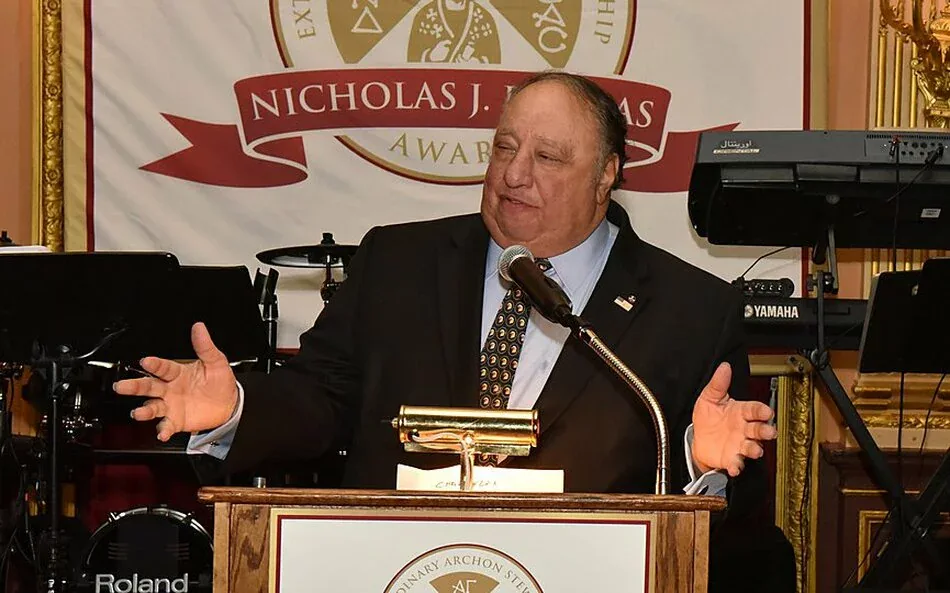
Archbishop of the Patriarchate of Constantinople, American businessman and philanthropist John Katsimatidis, a prominent figure in the Greek-American community, has been at the center of the discussion after his name appeared in the so-called “second little black book” by Jeffrey Epstein.
According to Helleniscope, John Katsimatidis’ name appears in a 1990s contact directory published by Business Insider in 2021. It is important to note that this is not a flight log or a list of criminal associates, but rather an address book of influential people.
Katsimatidis himself has publicly stated that he met Epstein only once in the 1990s through a mutual friend in real estate. According to him, during that meeting, he offered Epstein a ride to Florida on his plane, as he was heading there himself. He emphasizes the absence of any further relationship, and there is no evidence of his travels to Epstein’s private island or involvement in his crimes, as confirmed by his interview with Business Insider and an analysis of Epstein’s publicly available flight logs, which contain no mention of Katsimatidis.
However, for the Greek-American community, which values “philotimo” (honor, self-esteem), restraint, and civic responsibility, the issue is not so much about criminal guilt as it is about character and culture. Epstein’s contact lists were full of billionaires, politicians, and influential figures, many of whom later turned out to be pedophiles. These associations, according to Helleniscope, were often perceived as mundane and without consequences for the elite.
This incident raises long-standing questions within the Greek-American community itself. Critics, including in previous Helleniscope articles, have raised concerns about Katsimatidis’ judgment, accountability, and behavior, deeming it inappropriate for someone with influence in the Archdiocese. Complaints ranged from the downgrading of the parade to the use of institutional power against critics and charity that was perceived as self-promotion rather than principled assistance.
While none of this is a crime, it does point to something corrosive: an elite mindset that confuses access with virtue and popularity with moral authority. The Epstein scandal, as Helleniscope notes, not only exposed a predator, but also showed a ruling class that is comfortable operating outside of scrutiny, convinced that proximity to power exempts them from the need to observe the restraint and laws that are binding on ordinary citizens.
Thus, although there is no evidence of wrongdoing by John Katsimatidis in the Epstein case, the overall picture clearly shows that the American elite, including figures elevated in the Greek-American community, often live by a different code, where external decorum, accountability, and even the law are seen as optional aspects.
To recap, the Order of Archons of the Patriarchate of Constantinople in the United States made harsh accusations against the Ukrainian Orthodox Church (UOC), saying that it persecutes and attacks members of the OCU. This statement was made in response to a meeting of a delegation of US Orthodox churches with American politicians, where they discussed the plight of the canonical UOC.
Read also