Scientists have recovered 42 lost pages of an ancient New Testament manuscript (Codex H)
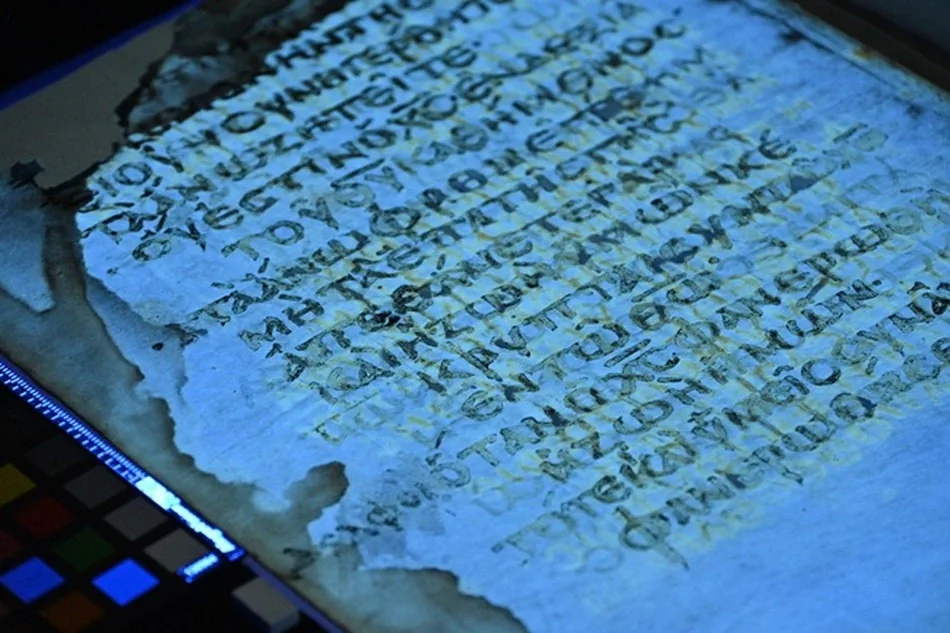
An international team of researchers led by Professor Garrick Allen from the University of Glasgow has successfully recovered 42 pages of Codex H, one of the world’s most important early manuscripts of the New Testament dating back to the 6th century. According to the official website of the University of Glasgow, these pages were thought to have been lost for centuries after the manuscript was dismantled in the 13th century at the Great Lavra Monastery on Mount Athos.
The manuscript containing the Epistles of St. Paul was recycled in the Middle Ages: its sheets were cleaned of old ink or used as binding material for other books. Thanks to modern multispectral imaging techniques developed in conjunction with the Electronic Library of Early Manuscripts (EMEL), scientists have been able to read “ghost texts” – mirrored ink impressions left on adjacent pages. Radiocarbon analysis by experts in Paris confirmed the authenticity of the parchment and its origin from the 6th century.
Professor Garrick Allen emphasized the significance of the find, “Given that Codex H is a crucial witness for understanding the Christian Scriptures, the discovery of so much new data about its original form is a monumental event.” Among the key findings, the researchers highlight the oldest lists of the chapters of Paul’s epistles, the structure of which differs radically from the modern system of text division.
Fragments of the recovered text also shed light on how medieval scribes interacted with sacred texts, making edits and annotations. To date, physical portions of Codex H have been scattered throughout libraries in Italy, Greece, France, Ukraine, and Russia. The results of this extensive research are now available to the public in digital form on the project’s specialized portal.
Read also