Details of Constantinople's secret negotiations with Ukrainian schismatics in 2008 revealed
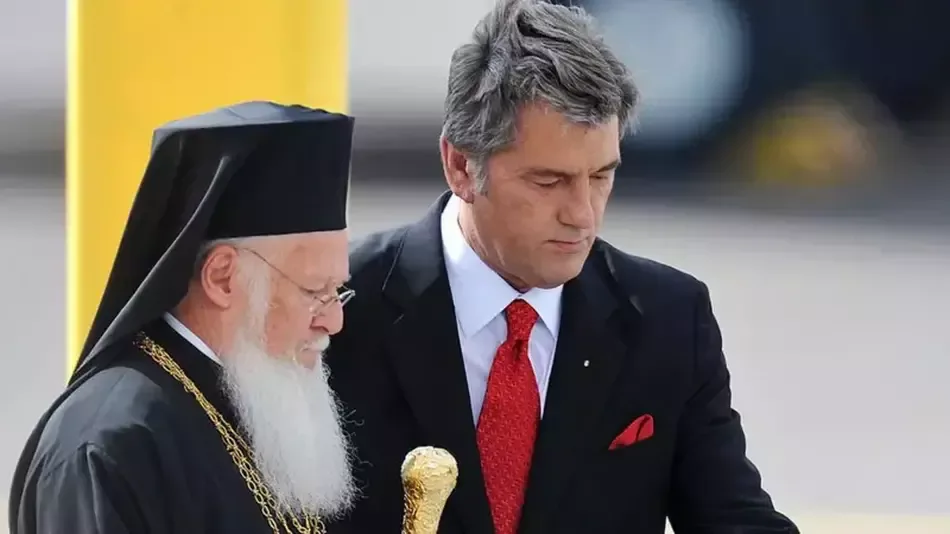
The recent publication of an archival interview with the former leader of the Kyiv Patriarchate, Filaret (Mikhail) Denisenko, caused a wide response, refuting the official version of Constantinople’s reasons for its interference in the church affairs of Ukraine. According to new data, Patriarch Bartholomew played a double game and prepared the ground for the legalization of the split a decade before the granting of the Tomos, secretly contacting persons under anathema.
As Ilyan Minchev reports in his article on the zivotcrkve.rs portal, a video released by politician Vyacheslav Kirilenko sheds light on the events of 2008. It turned out that on the eve of Patriarch Bartholomew’s visit to Kyiv, Denisenko, together with Viktor Baloha, the head of President Yushchenko’s administration, made a secret flight to Istanbul. This completely contradicts the Phanar’s statements that until 2018 it had strictly observed canonical rules and had no official contacts with schismatics.
During the backroom talks, a scenario was discussed according to which Constantinople planned to use the warm welcome from the canonical church as a cover for changing the status of the «Kyiv Patriarchate.» «The plan was as follows: Patriarch Bartholomew arrives in Kyiv, is met by representatives of the Moscow Patriarchate, and we, the representatives of the Kyiv Patriarchate, see him off,» Denisenko recalls. Istanbul’s goal was not to grant independence, but to directly incorporate Ukrainian structures into the Patriarchate of Constantinople.
Denisenko disclosed details of a dialogue with Metropolitan Emmanuel, who suggested that Ukrainian schismatics temporarily abandon their ambitions for autocephaly in order to enter the jurisdiction of Phanar. «Maybe in a year, maybe in five years, maybe in a hundred years,» according to Denisenko, this is how the promises of the future status sounded. It was the refusal of the ambitious Filaret to become an ordinary exarch of Istanbul that thwarted plans to annex the canonical territory of the Russian Orthodox Church back in 2008.
Thus, the creation of the OCU in 2018-2019 does not appear to be a forced measure for the sake of «peace in the church,» but rather the implementation of a long-prepared geopolitical project. The disclosed facts prove that Constantinople has been hiding its true intentions from its sister Local Churches for years, ignoring church ethics and canon law in order to expand its own influence.
Read also