Earlier, deputy Rostislav Pavlenko made a statement on the possible creation of an exarchate of the Patriarchate of Constantinople, which, according to the ideologues of the ban on the Ukrainian Orthodox Church, should become an alternative for the UOC after the adoption of Bill 8371. Pavlenko claims that no alternative options exist or are being considered.
The model of merging all Orthodox parishes into the OCU does not work, - Cyril Hovorun
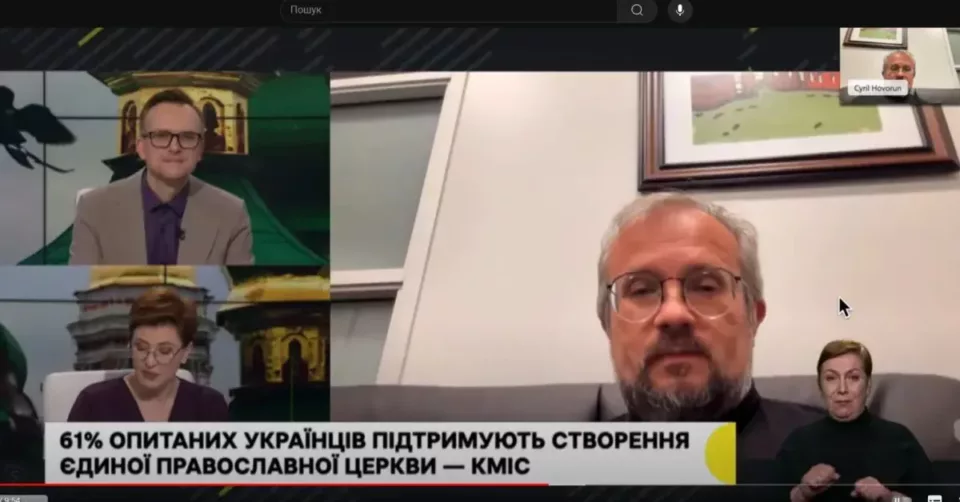
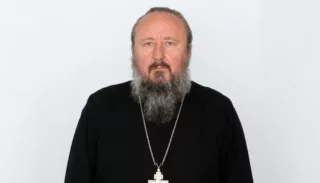
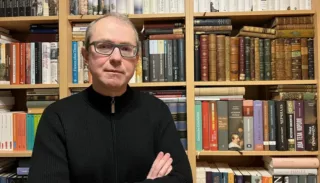
The defrocked former cleric of the Russian Orthodox Church, Kirill Govorun, said that the unification of the Ukrainian Orthodox Church and the OCU according to the scenario supported by Epiphany Dumenko’s organization is incapable of being realized. In his opinion, this is confirmed by the fact that the religious communities of the UOC do not move to the OCU even despite the anti-church law adopted by the Verkhovna Rada, so it is necessary to develop a different model for both denominations, under which the UOC and the OCU can coexist. He said this in a commentary to the Suspilne TV channel.
“Now we have a situation where there are two Orthodox churches in Ukraine, and there is a certain antagonism between these churches. Actually, this antagonism does not suit the majority of Ukrainians, as the study shows. And the paradox that you mentioned, that on the one hand, the majority wants a single church, and on the other hand, so few parishes are changing, this paradox has to do with two possible models of unification of Ukrainian Orthodoxy. The first model is when everyone joins the already existing autocephalous local Orthodox Church of Ukraine. The other model is when some form of unification is found between the existing structures,” — Hovorun said.
The ex-archimandrite added that the UOC and the OCU should, first of all, achieve a format of peaceful coexistence, as a result of which, after some time, they should begin a dialogue on unification.
“The second model is probably the only realistic one at the moment, because very few parishes are transferring. This means that the first model of merging all Orthodox parishes into the OCU does not work, even despite the war and great pressure from society. The second model remains more realistic, although difficult, when the churches themselves find a form of cooperation and coexistence. Initially, this may be a model of peaceful coexistence, and later — a structural unification, which should be the result of negotiations and dialogue between the churches. This is very difficult to realize. But such models are discussed at the political level as well. This issue also arises in dialogue with other local churches, primarily with the Ecumenical Patriarchate,” — Hovorun added.
Read also