Rector of KTA considers possible options for achieving autocephaly of UOC
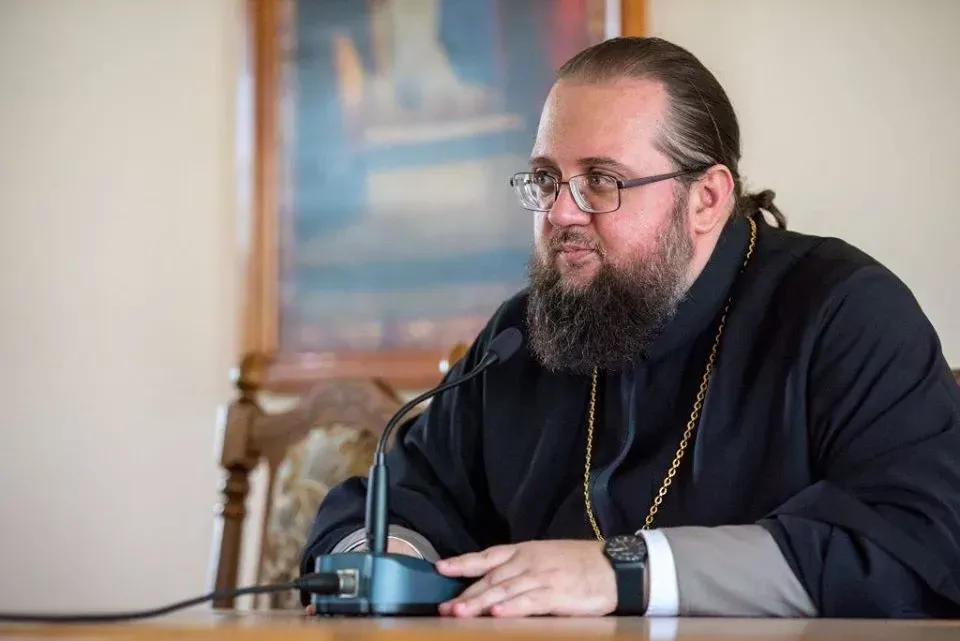
The rector of the Kyiv Theological Academy and Seminary of the Ukrainian Orthodox Church, Archbishop Sylvester (Stoychev), has considered possible options for achieving autocephaly for the UOC. The hierarch is convinced that applying for autocephalous status to the Moscow or Constantinople Patriarchates is untenable. In this regard, the rector of the KTAiS proposes to inform the representatives of other Local Churches of the decisions taken at the Council in Feofania in 2022, which, in his opinion, should agree on the autocephalous status of the UOC in the future. Archbishop Sylvester said this in his report read out during the international theological conference “Paths to Autocephaly: World and Ukrainian Contexts”.
“Since until May 27, 2022, the Ukrainian Orthodox Church recognized itself as a self-governing Church with the rights of broad autonomy within the Moscow Patriarchate, the first scenario that is sometimes proposed is an official appeal to the Moscow Patriarch with a request to grant our Church autocephaly. I consider this scenario unacceptable. Obviously, everything will be done to avoid giving a clear answer to this appeal and to put our church in a difficult position of uncertainty. In addition, there is a very important moral side to this issue, which makes it impossible to appeal to those who openly support military aggression against Ukraine,” – said the rector of the KTAiS.
Archbishop Sylvester added that a similar appeal to the Patriarch of Constantinople is also futile, since Phanar has already granted autocephaly to the OCU, which has been pursuing an aggressive policy towards the UOC for the past few years.
“Another possible scenario is a similar appeal to the Patriarch of Constantinople. However, there are obvious difficulties here as well. In 2019, Patriarch Bartholomew already issued the Tomos of autocephaly to the OCU. Therefore, from the point of view of the Patriarchate of Constantinople, the autocephalous Church in Ukraine already exists. This is the OCU. Formally, Patriarch Bartholomew called on the bishops and clergy of the Ukrainian Orthodox Church to join the OCU. But, firstly, we have reasonable doubts about the existence of apostolic succession in the OCU bishops, and although Phanar does not give up trying to justify the validity of its decisions on ordinations, referring to historical precedents (which do not stand up to criticism), the conceptual explanation itself has not been offered. And secondly, since 2019, the clergy and faithful of the OCU have repeatedly shown outright aggression against the communities of our Church. And until these problems are resolved, we cannot enter into Eucharistic communion with the OCU. In addition, as mentioned, the Ukrainian Orthodox Church has its own developed internal structure. For its full existence, we do not need to join any other Local Church. Therefore, the scenario of “joining” anyone is unacceptable to us,” – the bishop added.
Continuing his report, the hierarch of the UOC added that the best way to achieve autocephaly for the Ukrainian Orthodox Church would be to convey the decisions of the Council in Feofania to the representatives of the Local Churches, who will subsequently make a joint compromise in favor of the UOC.
“After May 27, 2022, the Ukrainian Orthodox Church already exists as a fully independent church. And we expect that other Local Churches, seeing our actual independence, will come to the conclusion that it is necessary to recognize us as an autocephalous Church. Therefore, in my opinion, today, first of all, we must establish regular communication with all other Local Churches. We must actively communicate to the Primates of all the Local Churches the decisions that were made at the Council in Feofania and explain the true meaning of these decisions. In this way, we will be able to prepare a solid foundation for future decisions at the pan-Orthodox level,” – the hierarch concluded.
Earlier, the hierarch of the Ukrainian Orthodox Church, Metropolitan Luke of Zaporizhzhia and Melitopol, proposed to develop the Amman Format to the level of a platform for ongoing consultations and negotiations between representatives of the Orthodox Local Churches. The bishop believes that active communication within world Orthodoxy will help prevent interchurch crises in the future.
Read also