The Ukrainian church crisis in the context of Russian-Ukrainian relations
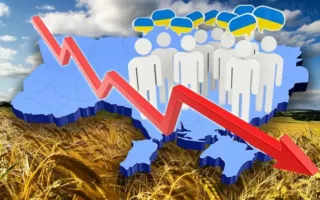
One piece of news that we published a few days ago has gone unnoticed. Forty-five percent of Ukrainians are in favor of repealing anti-church law No. 3894 if it helps to end the Russian-Ukrainian war more quickly. Since the poll was organized by the state-owned TV and radio company Suspilne, there is every reason to believe that it did not arise out of nowhere. Given that recent polls of this nature showed support for the UOC at only 4%, such a jump in loyalty to the canonical Church is extremely unusual for state sociological studies. It turns out that “yes, we are in favor of banning and expelling the UOC from Ukraine, but if it suddenly helps to end the war, then let them continue to exist.”
It is also interesting that this position of the state is not the first of its kind in recent times. For example, the same “Suspilne” channel devoted an entire broadcast to the speaker of the UOC, Metropolitan Klyment (Vecher), where he was given the opportunity to calmly express his opinion on the ban on the Church and even inform viewers and listeners that that the OCU has an officially registered diocese in Russia, but for some reason Law No. 3894 does not apply to this organization. One could add to this the proven existence of Russian passports among a number of OCU hierarchs, but that’s okay… it can be used another time.
Later, the same “Suspilne” broadcasts an interview with the former head of the State Service for Religious Affairs, Olena Bohdan, who, although never a supporter of the UOC, pointed out the obvious abuses of the current State Service and the ineffectiveness of the prohibitive law adopted by the Verkhovna Rada. By and large, she said nothing new, since all her arguments had already been repeatedly voiced by various speakers who oppose the ban on the UOC. However, it is much more interesting that she was given the opportunity to speak at all, knowing full well that she would say nothing favorable about the state’s actions against the UOC.
In addition, if we look at the situation with the ban on the UOC “from the outside,” the implementation of Law No. 3894 is extremely slow. The law, which was adopted in August last year, has not yet come into effect, and the head of the DES has already noted that it will take at least another 3-4 months before the case reaches the actual ban of any of the structural units of the UOC. Given how the courts are proceeding with the Kyiv-Pechersk Lavra, it seems that the process will be stretched out even longer. Why do we think so? Because today, nothing and no one is limiting the state’s ability to take full repressive measures against the Church, but for some reason they are not doing so.
There are several possible explanations for this. First of all, it may seem that the state is trying to wear down the Church. That is, there is a calculation that while the legal component is being worked out, some processes will take place in the UOC that will force the Church to fulfill the conditions set before it. However, this option can hardly be called realistic, given the fact that the demands placed on the UOC are knowingly impossible to fulfill. That is, some part of the clergy may still give in, but in general, the clergy and the church people are already seriously prepared for the catacombs.
Secondly, what seems more realistic to us is that the issue of the UOC is on the political agenda of Russia and Ukraine. On the one hand, representatives of the Russian Federation at the highest level have repeatedly stated recently that they will fight for the rights of the canonical Church in Ukraine. And, in principle, they can be understood, because the potential status of “defenders of Orthodoxy” looks quite noble against the backdrop of fierce fighting, where, no matter how you look at it, there are deviations from previously stated goals. In addition to military victories (conquest of territories), they also need ideological ones, and the situation with the ban on the UOC in this case is very convenient.
In addition, as we mentioned earlier, if the cause of “saving the UOC” becomes the prerogative of the Russian side alone, this will naturally strengthen the influence of the Russian Orthodox Church on the future landscape of Orthodoxy in Ukraine. If this endeavor is successful, it will put an end to any pro-autocephalous sentiments within the UOC itself, since the Church will then owe its salvation to Russian diplomacy. At the same time, it is quite possible that such a development could break the “pan-Orthodox stalemate” that occurred after Patriarch Bartholomew’s intervention in the Ukrainian church crisis.
On the other hand, in unison with Russian diplomats, the need to exchange the church issue for certain political dividends has also been discussed in the highest circles of the Ukrainian political establishment. For example, this was recently mentioned by Olena Zerkal, Deputy Minister of Foreign Affairs for European Integration. In other words, the Ukrainian side understands perfectly well that, given the current state of affairs, negotiations are practically unavoidable. Therefore, among the few arguments that the country’s authorities will be able to put forward at the negotiating table will, of course, be the church issue.
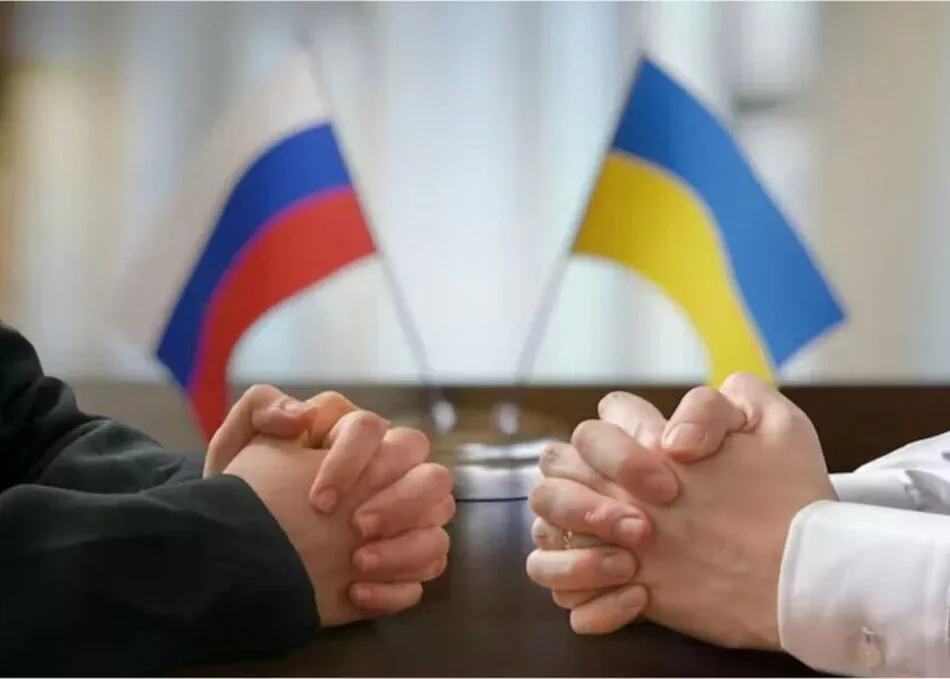
Actualy, Ukraine is currently considering two possible scenarios. The first is peace talks under pressure from the US, which will take place in the near future. At least, this scenario is already being simulated. The second is peace talks that will take place much later, with greater territorial and human losses, but which are also inevitable. In both scenarios, the UOC remains a bargaining chip and a bargaining tool.
What is also interesting, in our opinion, is that the Ukrainian authorities do not actually need the autocephaly of the UOC. Especially canonical autocephaly. If the Church somehow formalizes its autocephalous status, it will automatically cease to be the subject of negotiations and will no longer serve as a “lightning rod,” which is currently being used successfully to block any information waves when necessary. In addition, if the UOC is saved by Russia, it will also be an additional lever of blackmail and manipulation in the event of any political turmoil after the peace agreement is reached. Something like: “If you don’t give us a discount on gas, we will kick the UOC out of some Lavra.”
So, no matter how hard Yelensky and Poturaev try to convince everyone around them that they need the UOC to separate from the ROC, this is not actually the case. No matter how much they talk about this being the only way out of a critical situation, they actually want the UOC to remain part of the ROC. Therefore, as long as the UOC is an object rather than a subject of political processes, this arrangement suits both sides of Russian-Ukrainian relations.
Read also