EXCLUSIVE. “The schism perpetrated by the Romanian Patriarchate in Moldova is provoked by Romania's territorial claims,” - OCM hierarch
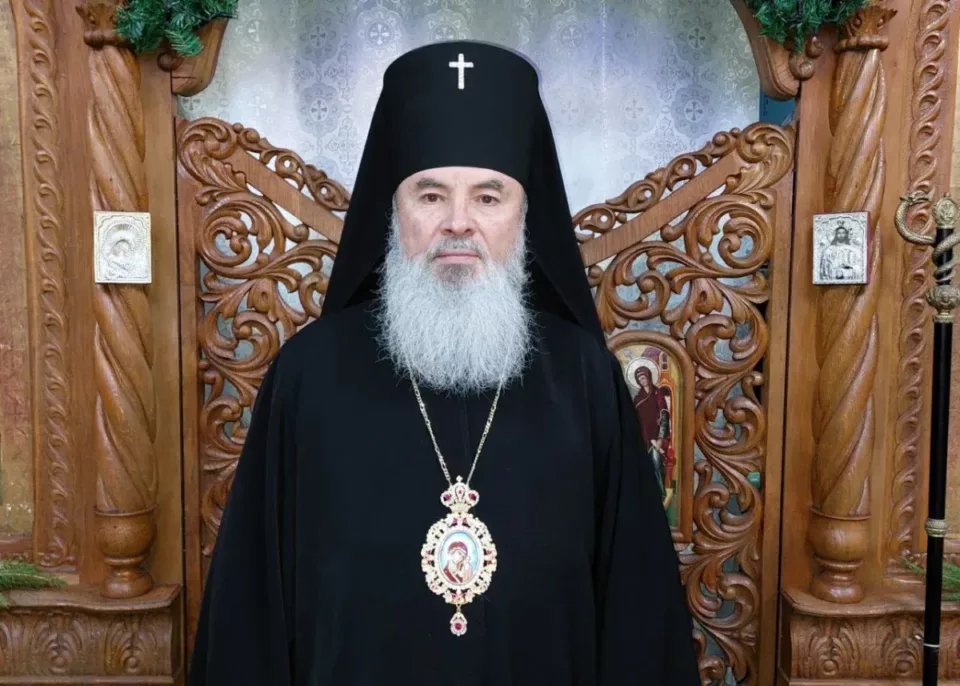
Over the past few years, the Orthodox Church of Moldova has been in the focus of church media. State pressure and interference of the Romanian Patriarchate in the internal affairs of the OCM involuntarily force us to draw parallels with what is happening in Ukraine with the UOC. And, oddly enough, in both cases, identical methods of influence can be traced, the purpose of which is to discredit and dismantle local Orthodox Churches to suit the geopolitical situation.
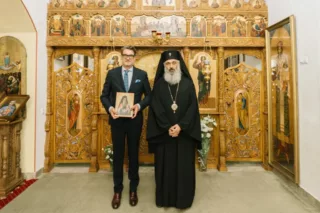
The Raskolam.net editorial team talked to the hierarch of the Orthodox Church of Moldova, Archbishop Markelle of Balti and Falesti, about the Moldovan church issue, the role of the Moldovan government and the Romanian Patriarchate in what is happening, and whether the religious crisis in Moldova and Ukraine can become a reason for solving the problems that have accumulated in world Orthodoxy.
– Bishop Markell, recently the Moldovan government has been increasingly putting pressure on the Orthodox Church of Moldova. In your opinion, what are the ultimate goals of the forces in Moldova that are now fighting the OCM, and are there any chances that they will achieve the desired results?
– Not only recently. This has been the case for quite a long period of time, but recently, as you correctly noted, the pressure of the central authorities of the Republic of Moldova on the Orthodox Church of Moldova has increased. Today, the faithful children of the Orthodox Church of Moldova need to make considerable efforts to “take their place in the sun,” and this is only because we are part of the Moscow Patriarchate. Russophobia is now very strong in Moldova, especially in the highest echelons of power, which is directed at everything Russian: the Russian language, culture, everything related to the centuries-old history of relations between Moldova and Russia, and, in particular, the Russian Orthodox Church.
It is appropriate to recall that it was the Orthodox Church of Moldova, against which these people are now rebelling, that baptized them, and provided them with spiritual guidance, and married them, and gave them communion… And now they are responding with such “European-style recognition” of their Mother Church, which does not cease to pray for them, for their salvation. In themselves, our Moldovan homegrown supostates and offenders of the Church have no goal, no task. They dutifully follow the instructions of their “European development partners” who are fighting not so much against our Orthodox Church of Moldova, but against Orthodoxy as such, seeking to “wash out” Christian spiritual and moral values from our society.
To date, they have already achieved some results: they managed to convince some clergymen to break their oath of allegiance to the Russian Orthodox Church, pronounced during their ordination, and to transfer to the jurisdiction of the schismatic Bessarabian Metropolis. They present this as a breakthrough, as a great victory. I have no illusions that they will stop there. There will surely be more weak-minded, unconfirmed and ignorant people who will follow their example, especially since the other side spares neither effort nor “thirty pieces of silver”, having a great resource potential in this regard.
Despite the complexity of the situation, the pious Moldovan Orthodox people retain sufficient potential for loyalty to the Orthodox Church of Moldova, even if the authorities outlaw it, which is not at all impossible in the current realities. Therefore, the struggle of the Church of Christ against the dark forces, which has not stopped for a minute since its creation, continues and is even gaining momentum. Some members of the Church may fall, and various scenarios are possible, but it is safe to say that the Church of Christ has always emerged victorious from such battles, accepting persecution and suffering as a purifying agent, becoming only holier, purer, and stronger.
The realization of this historical truth by believers seeking salvation serves to strengthen their firmness in the Orthodox faith. I believe that the Lord will give wisdom and strength to the Moldovan Orthodox people to preserve their Christian identity in the bosom of canonical Orthodoxy.
– How do you assess the role of the Romanian Orthodox Church in the ongoing processes?
– In answering this question, I will allow myself to cross the boundaries of sensitivity in order not to distort the truth and to convey it as it is. Some hierarchs of the Romanian Orthodox Church and politicians of the neighboring country provoked and are now inspiring a split in Moldovan society, starting with the Church. For some reason, they always find “means-arguments” to convince members of Moldovan society who are indifferent to faith, and sometimes not the best part of the clergy, to contribute to the deepening of the split.
The bulk of the clergy who came under the jurisdiction of the schismatic Bessarabian Metropolia, whose number it greatly exaggerated, were and still are under canonical bans or church court sentences for immoral behavior or disciplinary violations. Unwilling to suffer the punishment they deserve from the legitimate church authorities, they flee to schismatics who accept them into the so-called liturgical communion.
It is surprising and legitimately indignant that some diocesan bishops of the Romanian Orthodox Church allow them to serve. Moreover, the public statements of His Beatitude Patriarch Daniel of Romania that he does not recognize and invalidates the decisions of the Synod of the Orthodox Church of Moldova regarding clerics who have transferred to the Bessarabian Metropolia, even if they are defrocked, defy rational explanation. Thus, some Romanian hierarchs directly contribute to and participate in the split of Orthodoxy in Moldova, which is a grave sin on their conscience.
– Could the activities of the Bessarabian Metropolia of the Romanian Orthodox Church become a stumbling block in relations between the Moscow and Romanian Patriarchates?
– It is with great regret that I have to state that the prerequisites for this, in my opinion, catastrophe exist. I really hope that common sense will prevail in the end. God forbid that liturgical communion between the largest Orthodox Churches should break down. There is no doubt that this split is based on the base passions of sinful man: pride, desire for profit, humanity’s pleasing the powers that be, and the substitution of Christian love for the Motherland for one’s narrow national passions. This is how this split within the Orthodox Church of Moldova is understood.
I pray and hope that the Lord will reason with the schismatics, awaken in them responsibility for the consequences of this grave sin of breaking the Chiton of the Lord, which, according to the teaching of the Holy Fathers, is not washed away even by the blood of martyrs. I appeal to them! Stop! Correct your mistakes through repentance! I believe and confess my confidence that the Lord, in His rich mercy, will save Moldova and its Church from destruction, as He has repeatedly saved it. The history of my country is full of examples of God’s love for the Moldovan people, who did not cease to praise God, even when the risk of suffering for it increased at least many times. By the grace of God, through the prayers of the Most Holy Theotokos, the saints of God and our pious ancestors who have always praised the name of the Lord, the Orthodox Church of Moldova will preserve canonical Orthodoxy in our land.
– Recently, there has been increasingly frequent information that the OCM may be banned in Moldova in the same way as the UOC in Ukraine. Do you think the Moldovan government will go ahead with the “Ukrainian scenario”?
– Today, Western “development partners” are pushing the Moldovan authorities to take decisive restrictions and even repressive measures against the Orthodox Church of Moldova. Some government officials are willing to meet such initiatives, some not so much, and some resist them altogether.
Such a different approach to this problem indicates different degrees of religiousness of people. Parliamentary elections will be held in Moldova in the fall. Much depends on it today. But it is undeniable that all of us, members of Moldovan society, must look into ourselves, analyze our own Christian life. I am sure we will find that there is much to correct in it. And we should not leave it “for later.” It may be too late.
Moldovan society is under the influence of pro-European and pro-Romanian propaganda, an integral part of which is the question of our affiliation with the Russian Orthodox Church. Only a true Christian, a person who thinks soberly in the light of the Gospel, can resist extremist ideas of nationalism, politicization of the Church, and Russophobia.
We hope that the Moldovan authorities, knowing the preferences of their citizens, will refrain from making disastrous decisions regarding the Orthodox Church of Moldova. Even at the cost of resisting the persistence of the West.
– Most Local Orthodox Churches recognize the so-called Orthodox Church of Ukraine as a schismatic structure. Can a parallel be drawn between the OCU and the Bessarabian Metropolia?
– Both of these schismatic structures, which are more political than religious, grow from the same roots, which are nourished by the devil and his servants. Observing the activities of the two pseudo-churches, one can easily see the substitution of the Church’s vocation. The canonical Church of Christ fulfills the salvation mission bequeathed by its Founder, preaches the Word of God, sanctifies its children with the grace of the Holy Spirit, and fights against evil, deception, and sin.
Now let’s pay attention to the activities of these two schismatic (not to say robber) structures. They pursue only a political goal: to help politicians reformat society, ideologically isolating it from Russia, and at the same time prepare the ground for the introduction of new ideological narratives into people’s minds, for example, loyalty to sexual promiscuity or LGBT perversions. And the methods of achieving their goals are far from the canonical Church: they widely practice a cult of violence, forceful coercion instead of persuasion, bribery, betrayal, oathbreaking, meanness, schisms, and disregard for the canons. Is there even Christ and the grace of the Holy Spirit there? I doubt that these people think about their souls, about the inevitable answer at the Last Judgment. I even question whether they believe in God – “…by their fruits you will know them” (Matthew 7:20).
Their deeds indicate a non-Christian background. It is well known who has been fighting the Church for two millennia, who has been inventing heresies and provoking schisms. The devil is behind the pack that caused these schisms with his wiles. Therefore, both the split of the “Bessarabian Metropolis” in Moldova and the split of the OCU in Ukraine are the fruit of the same “director”.
– A few years ago, a meeting of the Primates of individual Local Churches was held in Amman, which caused a positive response. However, after that, there were no more such events. In your opinion, can Orthodoxy begin processes to resolve situations such as in Moldova and Ukraine, and who could lead them?
– The current situation in world Orthodoxy, which did not arise yesterday, was very accurately described by His Holiness Patriarch Kirill at this historic meeting. He noted that “today the Orthodox Church is facing the threat of divisions the likes of which have not been seen for almost a thousand years: the borders of canonical territories are being unilaterally revised; church documents dating back centuries are being abolished…” His Holiness also pointed out that the reason for this crisis is seen in the loss of a common understanding of the structure of the Church and the nature of primacy in it.
It seems to me that then, in Amman, it was His Holiness Patriarch Kirill who exhaustively outlined the program of our further actions, that is, what we should agree on, what we should solve. “First, there is the problem of understanding primacy in the Church; attempts to justify claims to universal supremacy with the help of theological arguments created specifically for this purpose; the lack of a system of conciliar control over the actions of the First See, the denial of the need for consensus in decision-making on a pan-Orthodox scale. These issues need to be reflected upon in a pan-Orthodox way. The second is the threat to the institution of autocephaly in the Church; the absence of a pan-Orthodoxly recognized, unquestioned mechanism for granting autocephaly; attempts to introduce inequality between the “older” and “younger” autocephalous Churches. The third is the ongoing attempts to challenge the canonical boundaries of the autocephalous Churches, to revise and cancel the once-adopted documents of historical importance that define these boundaries. Fourthly, the claims of the first among the equal Primates in the family of Local Orthodox Churches to the right to accept appeals from any Church and the threats to use these appeals as a tool for interfering in the internal life of other Local Churches also, I am deeply convinced, require reflection and discussion. The fifth is the emergence of an anomalous situation when a first hierarch, contrary to the basic principles of canon law, acts as a judge in a case where he is one of the parties, imagining himself to be the last instance in the consideration of this case. And the sixth is the problem of creating so-called “stavropegia” in the territories of other Local Churches without their consent or against their will” (From the speech of Patriarch Kirill in Amman – ed.).
The Holy Fathers of the Church have long warned of the inevitable coming of such times. The world has come to this point, but we have not been sufficiently prepared for it. It is with bitter regret that we must admit that some of those who bear the responsibility and duty to preserve the purity of Orthodoxy, the integrity and unity of the Church before God, unfortunately, were not sufficiently faithful to God’s Providence for each soul and each Local Church.
Such misunderstandings, disagreements, and conflict situations should be resolved on the basis of the holy canons, naturally, at councils and meetings such as the meeting of the Primates of individual Local Churches held in Amman in 2020. This meeting was a good initiative, had a great resonance and inspires some hope and optimism.
The situation in Moldova and Ukraine reveals many problems, the solution of which requires a special approach and considerable effort. If there is a dialog between the parties involved in the conflict, the reasons for their occurrence and, I am sure, the way to solve any problem will certainly be revealed. Who could lead this process does not seem important to me. The approach to joint decision-making, which is based on strict adherence to church canon law, seems to be fundamental.
In inter-Orthodox dialogue, the key point is to justify the positions of the parties, but it is equally important to take into account the socio-political background against which a conflict takes place. Speaking about Moldova, the naked eye can see that the split caused by the Romanian Patriarchate in Moldova was provoked by the territorial claims of representatives of the Romanian state authorities, who do not hide their desire to absorb my country, Moldova. And since the political leadership of Romania has a great influence on the Orthodox Church, the clergy of the Romanian Orthodox Church, especially the high ranking ones, succumbed to the pressure of the authorities and violated the canons.
They created a schism – the “Bessarabian Metropolia” – justifying this invasion of the canonical territory of the Orthodox Church of Moldova by the desire to unite the Romanian ethnic group, i.e., by the ideas of nationalism. In fact, the reason for the split in Moldova lies in two areas: in politics, it is Romanian nationalism, and in the spiritual sphere, it is the heresy of ethnophilism, condemned at the Council of Constantinople in 1872. The Council then proclaimed: “We reject and condemn tribal divisions, that is, tribal differences, national strife and disagreements in the Church of Christ, as contrary to the Gospel teaching and the sacred laws of our blessed fathers, on which the Holy Church is founded and which, by beautifying human society, lead to divine piety.”
We will also have to fight for the unity of Orthodoxy. The resolution of the differences that have arisen between the Local Churches is possible only through discussions. This process must be continued. It also requires a personal feat of faith on the part of all participants in this dialogue, spiritual inner work. Success in this endeavor is possible only if, in order to achieve peace and unity, everyone entrusted with governance in the Church renounces their personal interests and ambitions, but acts within the framework of church canon law, in a spirit of humility and love.
Read also