“It’s like having a community here subordinated to an ISIS emir” — Estonia explains the ban on the EOCC
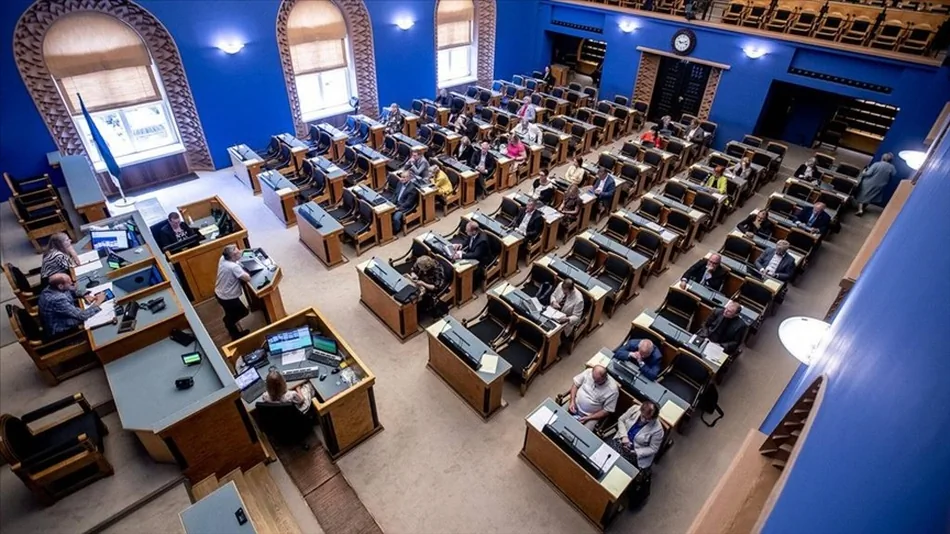
Estonia continues to actively debate a law aimed at terminating the activities of church structures subordinated to the Moscow Patriarchate. In this context, members of the Estonian Parliament have spoken in support of the bill that requires the Estonian Orthodox Christian Church (EOCC) to sever ties with the Russian Orthodox Church. Stefan Ilon Freyman, a cleric of the Estonian Apostolic Orthodox Church (under the Ecumenical Patriarchate), published a translation of the MPs’ speeches from Estonian on his Facebook page.
According to MP Ando Kiviberg, the law does not violate freedom of religion:
“There is absolutely no violation of freedom of religion here. In this case, it’s solely and specifically about ending subordination to those who have openly stated that the independence of Estonia, Latvia, and Lithuania is temporary, and that these countries should be re-conquered by Russia.”
He emphasized that only the State Court has the right to give a final legal assessment of the bill.
MP Kalev Stoicescu, in turn, named national security as the main motivation for the legislative changes:
“The main reason for the change is none other than the threat to national security, which must not be underestimated — especially in the context of psychological warfare and propaganda coming from Russia.”
However, in his view, the issue of ecclesiastical subordination is even more crucial:
“To me, the more important issue is the subordination of the Estonian Orthodox Christian Church — formerly the Estonian Orthodox Church of the Moscow Patriarchate — to Moscow.”
“This can be compared to a situation where we would have a religious community subordinated to an ISIS emir, and we would be forced to tolerate it,” the MP said.
He also stated that Estonia must not accept the existence on its territory of a church
“…which, on a nationwide scale, is directly subordinated to the Moscow Patriarchate, which has blessed the aggression against Ukraine and declared a ‘holy war’ against the democratic West, and is itself controlled by the FSS and Putin’s criminal regime.”
As a reminder, the Estonian Parliament (Riigikogu) has passed the second reading of an updated Law on Churches and Congregations, which prohibits legal and economic ties between religious organizations and foreign spiritual centers if they pose a threat to the country’s security or constitutional order. The law may particularly affect the operations of the Estonian Orthodox Christian Church if it fails to break its canonical ties with Moscow.
Read also