Alaska, the UOC, and the DESS: How Putin and Trump's talks will affect relations between the Ukrainian government and the Church
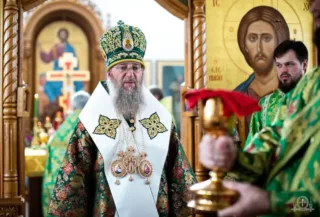
The Kyiv Metropolis of the UOC published a statement signed by the Primate, which clearly and unambiguously states that the Ukrainian Orthodox Church will NOT comply with the absurd demands of the State Service of Ukraine for Ethnic Policy and Freedom of Conscience, imposed on the Church under anti-church law No. 3894. Recall that the DESS demanded that the UOC “sever relations with the Moscow Patriarchate,” although the DESS still cannot clearly explain how to do this and what exactly is required of the UOC itself.
What next? The Kyiv Metropolis of the UOC has indicated that the Church has filed several lawsuits, which, as we predicted earlier, will delay the process of banning the UOC. Interestingly, in the last few days, the DESS has launched several protocol interviews in various media outlets, where Yelensky practically begged the UOC to at least hint that the Church is ready to proclaim autocephaly. If earlier the official claimed that the UOC would have to send a letter to Moscow about breaking with the ROC, now even this requirement has been refuted by Yelensky himself. Be that as it may, the UOC has made it clear that it will not comply with the state’s demands.
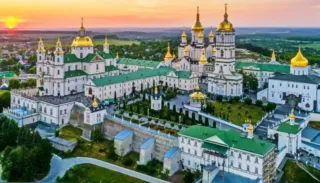
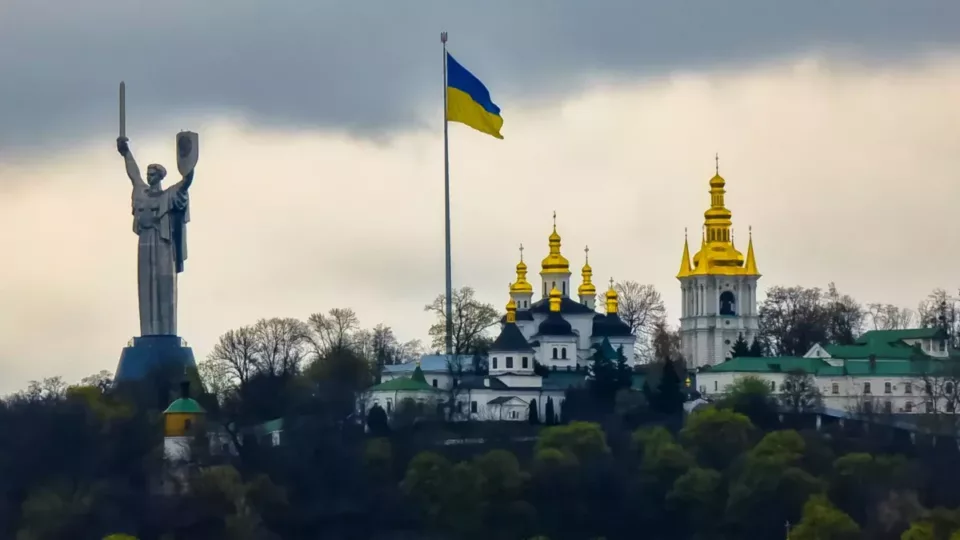
To predict further developments, it is worth analyzing the situation in the context of the political crisis in Ukraine in general and the change in the attitude of “Western partners” in particular. Today’s talks between Trump and Putin in Alaska give an understanding that the authorities will not be concerned with the UOC at the moment. Of course, the government may launch some kind of anti-crisis measure, such as expelling UOC monks from the Kyiv-Pechersk Lavra. However, under the current circumstances, the courts are unlikely to risk making any anti-church decisions, understanding that after the change of power, judges will most likely have to bear responsibility, including for unconstitutional decisions regarding the UOC. In turn, it has recently become clear that inflating the church issue only has a short-term effect, which does not produce the desired results. Simply put, the topic of the Church is no longer capable of overshadowing other news stories.
At the same time, as we have repeatedly stated before, Russia will, one way or another, exchange the “church issue” for part of the Ukrainian territories that were not a priority, or for some political and economic interests that are now, to one degree or another, limited. It is fundamentally important for Putin to resolve the humanitarian issue in Ukraine, which is why he constantly equates the Russian language with the rights of the UOC. In fact, if he succeeds in doing so, he will secure his status as the defender of Orthodoxy and the Russian language and culture abroad, comparable to the exploits of the Russian emperors of the 18th-20th centuries. And this is without taking into account the gain of new territories through the capture of the Donetsk, Luhansk, Zaporizhzhia, and Kherson regions and Crimea.
The Kyiv Metropolis of the UOC understands that although it is not entirely to their advantage when the church is associated with Russian interests, this is already happening and no one asked them about it. Therefore, all that remains for the UOC is to seize the opportunity and squeeze the most out of the situation. The Church has sensed the weakness of the authorities and the lack of a systematic approach to the issue of banning the UOC, which means that the ban process will be delayed as long as possible. Until when? Until Russia and Ukraine sit down at the negotiating table and sign a peace agreement.
Read also