Metropolitan Anthony (Pakanych): Autocephalous movements in twentieth-century Ukraine were conditioned by political context
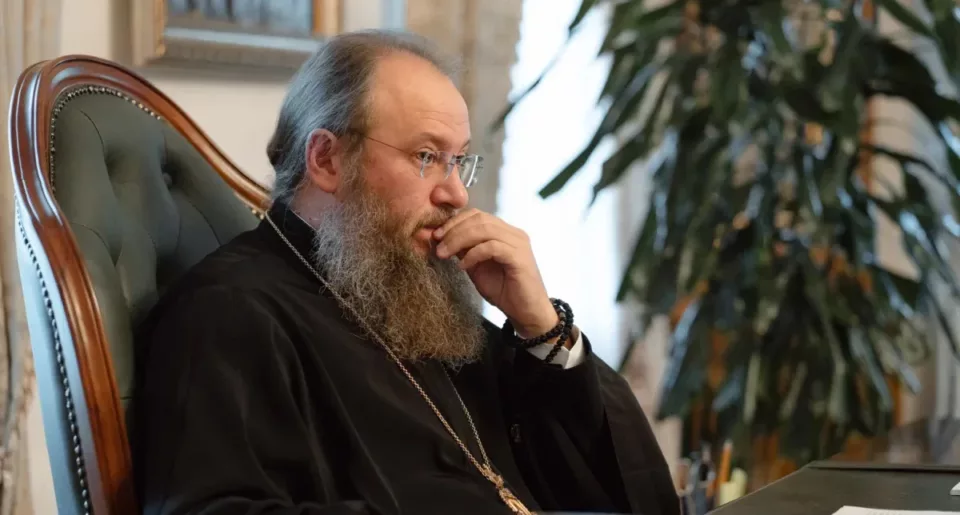
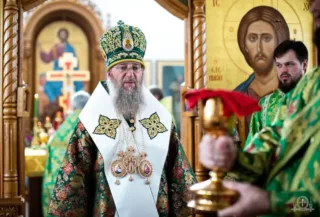
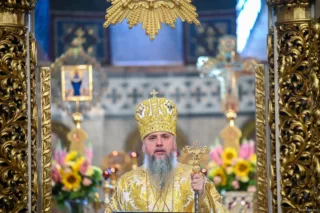
Metropolitan Anthony (Pakanych) of Boryspil and Brovary, Chancellor of the Ukrainian Orthodox Church, presented an analysis of the history of autocephalous movements in Ukraine in the twentieth century, concluding that they were invariably associated with political shifts rather than internal church needs. According to the hierarch, the desire for autocephaly was seen mainly as an attribute of statehood, not as a means of salvation, which led to splits and historical instability.
Analyzing the first stage of the autocephalous movement that emerged in 1917, Metropolitan Anthony notes that it was initiated by the political circles of the Ukrainian People’s Republic. “In the church environment, the idea of autocephaly was not supported by Orthodox hierarchs and wide circles of the clergy,” he emphasizes. The initiative was promoted by the Central Rada, which recognized the self-created All-Ukrainian Orthodox Church Council. The culmination of this process was the “First All-Ukrainian Church Council” of 1921, which was held without the participation of any bishop and led to the so-called “self-sacred” schism, as its participants performed “episcopal ordinations” without apostolic succession.
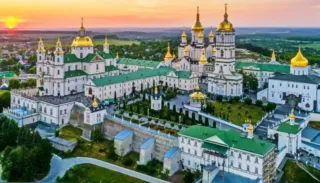
The second wave of the autocephalous movement, according to the Metropolitan, occurred during World War II and the German occupation. The occupation authorities actively supported schismatic groups, seeking to fragment the Orthodox Church. In 1942, a council was held in Pinsk, which legalized the hierarchy of the self-sanctioned structure. However, as Bishop Anthony emphasizes, this structure was not recognized by any Local Orthodox Church, and most believers in the occupied territories remained faithful to the canonical autonomous Church, restored at the Council in the Pochayiv Lavra in 1941.
The third stage of aspirations for autocephaly unfolded in the late 1980s against the backdrop of the collapse of the USSR. This process was again closely linked to politics and the development of Ukrainian statehood. The activities of the former Metropolitan Filaret (Denysenko), who fell into schism, became one of the main factors in the upheavals of that time. In response, the 1992 Kharkiv Bishops’ Council of the UOC elected His Beatitude Metropolitan Volodymyr (Sabodan) as Primate and decided that the issue of autocephaly should be resolved peacefully and canonically, not through violence.
Throughout the 1990s, the Councils of the Ukrainian Orthodox Church repeatedly reaffirmed the untimeliness and inexpediency of granting autocephaly, citing the lack of unity among the clergy and faithful, as well as the constant interference of state authorities in church affairs. “The problem arises when the political factor dominates the theological factor and when autocephaly is perceived not as a means of salvation but as a symbolic attribute of statehood,” concludes Metropolitan Anthony. According to him, it was the political conditionality of the autocephalous movements that caused their instability and schisms in Ukrainian Orthodoxy in the twentieth century.
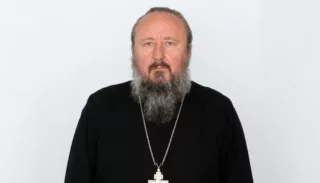
Earlier, Archbishop Sylvester (Stoichev) of Bila Tserkva, vicar of the Kyiv Metropolis and rector of the Kyiv Theological Academy of the UOC, published a detailed theological and historical justification of the idea of autocephaly. In his opinion, the desire for full administrative independence is a natural and normal state for every Local Church, and not synonymous with a split, as is often imagined. The hierarch presented his theses as a response to questions that arose after his participation in a podcast on the future status of the Ukrainian Orthodox Church.
Read also