Metropolitan Anthony on the trials of the UOC: "The tribulations we are experiencing today are not a punishment but a sign of election"
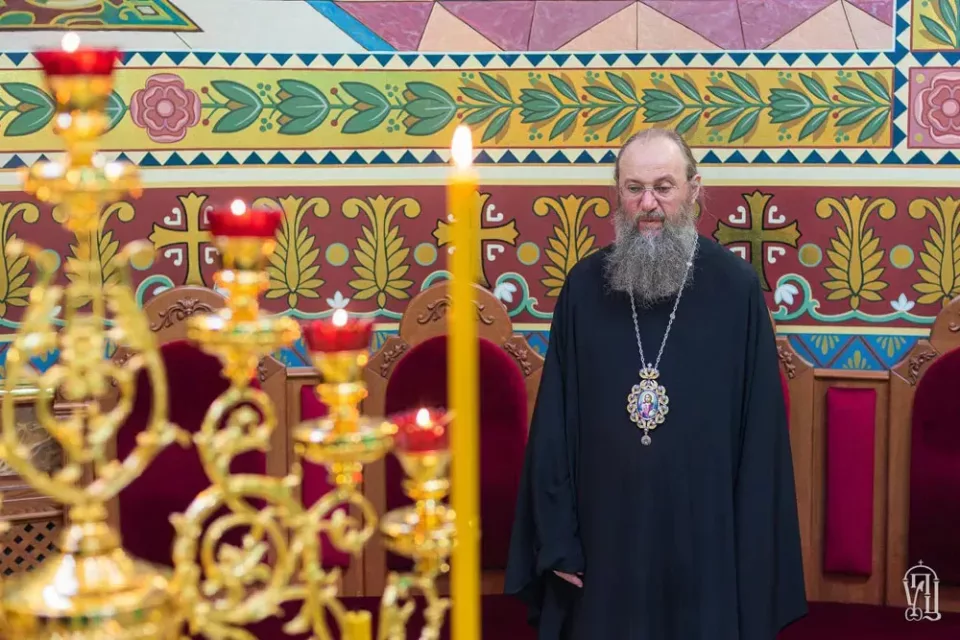
Metropolitan Anthony (Pakanych), Chancellor of the Ukrainian Orthodox Church, has offered a profound reflection on the path of the UOC, from its revival after the collapse of the Soviet Union to its current challenges. In his publication, as reported by Pravlife.info, he emphasizes the Church’s historical contribution to the culture and education of Ukraine, its steady growth, as well as the unprecedented pressure from the state, which is expressed in accusations, raider seizures of churches, persecution of the clergy and attempts to “rewire” religious consciousness, calling for spiritual fortitude and loyalty.
Bishop Anthony’s reflections begin with memories of the late 80s of the twentieth century, when, despite the atheistic government, the 1000th anniversary of the Baptism of Rus was celebrated. This event became the starting point for a spiritual awakening, the opening of thousands of parishes, theological schools, and monasteries, including the Kyiv Cave Monastery. People thirsty for a return to the Orthodox faith contributed to the rapid development of church life, which had been limited for almost a century.
With the collapse of the USSR and the adoption of the Constitution of independent Ukraine, the democratic principle of separation of the church from the state and non-interference in its life was declared. The UOC, as Metropolitan Anthony notes, has been growing in quantity and quality for 30 years, decorating the Ukrainian land with thousands of gilded domes. However, despite the constitutional guarantees, the new government immediately began to interfere in religious life, actively supporting the emerging schism. Nevertheless, thanks to the courage of the bishops at the Kharkiv Council of 1992, principles were approved that ensured the recognition of the UOC by all Local Orthodox Churches as the only canonical Church in Ukraine.
Bishop Anthony emphasizes that the Ukrainian Orthodox Church has never behaved aggressively toward other faiths. He recalls the words of the former head of the State Service for Ethnic Policy, Mr. Yelensky, said in 2012: “…to the credit of the UOC, despite its size and current capabilities, it does not oppress the Kyiv Patriarchate and does not take away their churches.” This behavior, which is based on the Gospel commandments of love, is in stark contrast to the current actions of some denominations that use aggressive physical force, deception, and slander with the support of state institutions.
According to the Metropolitan, the Church was created by Christ as a guide to eternal life, with a clear delineation of responsibilities with earthly authorities: “Render unto Caesar the things that are Caesar’s, and unto God the things that are God’s.” The UOC has always preached the preservation of Ukraine’s multiculturalism and offered partnership on the path to creating a true civil society, insisting on adherence to the constitutional principle of non-interference in its internal affairs.
However, about ten years ago, the situation changed dramatically. The Ukrainian Orthodox Church was turned into an enemy of Ukraine, creating fakes about weapons possession, refusal to perform funeral services for soldiers, and other slander. Under the cover of armed men and law enforcement agencies, the so-called “raider seizures” of churches began, leading to violence, beatings of priests and parishioners, and the destruction of families and communities. The Metropolitan asks a rhetorical question: “Who is the author of this experiment? Who is responsible for this criminal adventure that has brought so much evil and tears to our homes?”
According to him, in 2018, a project was implemented to create a single autocephalous church in Ukraine, which ignores church canons and traditions. In order to hold the so-called “Unification Council,” state services exerted pressure on the bishops of the UOC. Bishop Anthony places special responsibility for this lawlessness on the Primate of the Patriarchate of Constantinople, who, according to him, promised in 2018: “I will never hurt the Ukrainian Orthodox Church.” Today, hundreds of clergymen and parishioners of the UOC are being persecuted: Metropolitan Arseniy of Sviatohirsk has been in jail for more than a year, Metropolitans Pavlo of Vyshhorod, Theodosius of Cherkasy, Luka of Zaporizhzhia, and many others are under investigation or have been deprived of their citizenship. Dozens of priests have been beaten, hundreds of parishioners have been injured, and many churches have been taken away and are empty.
“What can we say about the holy relics of the ascetics of the Kyiv Cave Monastery, to which millions of people have resorted with prayer… and now they seem to be under arrest and are undergoing some kind of experiments and research,” the Metropolitan laments. He warns that the eradication of the sacred attitude to the Church will lead to the renunciation of God and the loss of one’s own identity, recalling the resilience of the ancestors after 1596, when the Orthodox Church was also banned.
Modern ideologues are engaged in “rewiring” brains, but a person lives not only with consciousness, but also with the soul and genetic memory. The proposal to “formally answer” church questions is disingenuous, because Christianity categorically rejects formalism and insincerity. It is about the most important canonical norm of relations with the Kiriarchal Church, the violation of which can lead to a “canonical vacuum” and “lawlessness.”
Metropolitan Anthony emphasizes that the UOC has been independent and self-governing since the 1990s, according to the Letter of Patriarch Alexy II. Decisions were made exclusively in Kyiv, based on the internal needs of the Church. However, to accuse the UOC, the law introduced the concept of “affiliation,” which has nothing to do with classical jurisprudence. The Metropolitan calls the accusations of concealing information from parishioners strange in the age of technology, pointing out that the documents are posted on the official website of the State Department of Economic Development and Trade.
The metropolitan calls the promise “You will live as you used to live” an illusion, noting that society has changed a lot. He also regrets the silence of the All-Ukrainian Council of Churches and Religious Organizations regarding the persecution of the UOC. The war is certainly a catastrophe, but, as Vladyka emphasizes, the oppression of the rights of UOC believers began much earlier than 2022, and the war only accelerated and intensified these measures.
Currently, everyone is waiting for the court’s decision, and the UOC will use all available legal means to protect its rights both nationally and internationally. However, the Metropolitan urges not to be afraid, quoting the Lord: “Fear not, little flock!” and St. Basil the Great: “Do not fear the hatred of the world, for it is short-lived. But seek the love of Christ, for it is eternal.” He concludes his reflections with the words of St. Hilary of Pictsava: “The Church wins when it is harmed, “ urging believers to be grateful for all trials, maintaining patience, courage, and church unity.
Earlier, we reported that an extraordinary meeting of the Holy Synod of the Orthodox Church in the Czech Lands and Slovakia was recently held in Bratislava. The agenda included issues of inter-Orthodox relations, the situation with the Ukrainian Orthodox Church, the canonization of new saints, as well as internal issues, including the financial recovery of the Prague Diocese. The Synod emphasized the importance of unity in the Orthodox world and expressed solidarity with the persecuted believers in Ukraine.