U.S. House passes bill to ban gender procedures for minors
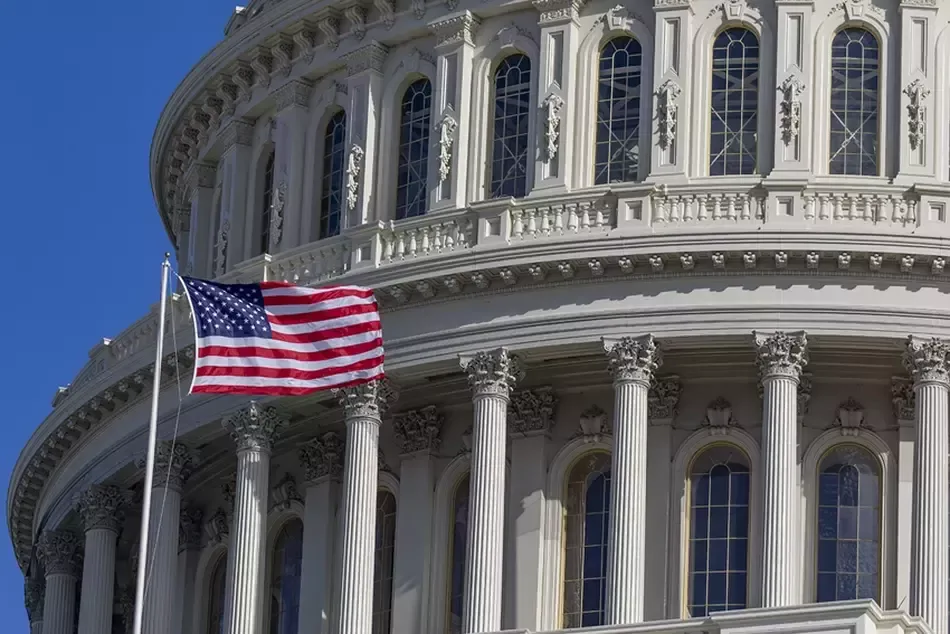
The US House of Representatives has passed a bill banning so-called sex reassignment procedures for minors, including surgeries, puberty blockers and cross-breeding hormones. However, despite approval in the lower house, the bill’s continued passage in the US Senate, where 60 votes are required for passage, remains highly questionable. The initiative reflects growing concerns about the long-term effects of such interventions, which has already led to similar laws in 27 states and revised approaches in several European countries.
According to The Christian Post, the lower chamber’s Republican majority voted 216 to 211 in favor of the Protect Children’s Innocence Act on Wednesday. The bill provides a fine and possible jail time of up to 10 years for anyone who “knowingly performs or attempts to perform genital or body mutilation on another person who is a minor.” Those who facilitate such procedures are also penalized. In addition to banning sex reassignment surgeries that remove healthy body parts that match one’s biological sex and the creation of artificial body parts that match one’s claimed gender identity, the bill also bans “chemical castration” in the form of puberty blockers and cross-breeding hormones.
Support for the bill largely ran along party lines, with most Republicans supporting it and most Democrats opposing it. The bill would need 60 votes to pass in the Senate, making its passage highly unlikely given the current balance of power, where Republicans hold 53 of the 100 seats and seven Democratic senators are not expected to support the measure.
To date, twenty-seven states have already passed laws banning some or all types of gender reassignment procedures for minors, citing concerns about their long-term effects. These states include Alabama, Arizona, Arkansas, Florida, Georgia, Idaho, Indiana, Iowa, Kansas, Kentucky, Louisiana, Mississippi, Missouri, Montana, Nebraska, New Hampshire, North Carolina, North Dakota, Ohio, Oklahoma, South Carolina, South Dakota, Tennessee, Texas, Utah, West Virginia, and Wyoming.
Medical experts have raised serious concerns about side effects. The American College of Pediatricians (American College of Pediatricians) states that side effects of puberty blockers can include “osteoporosis, mood disorders, seizures, cognitive impairment and, in combination with cross-hormones, infertility.” In turn, cross-talking hormones can cause young people to have “an increased risk of heart attacks, strokes, diabetes, blood clots, and cancers throughout their lives.”
The long-term side effects of sex reassignment surgery was the main topic of a press conference organized by the U.S. Department of Health and Human Services (HHS), where a girl who underwent the procedure, Chloe Cole, shared the emotional pain she experienced as a result of undergoing life-altering procedures as a teenager that she later regretted. Because she had her mammary glands removed as a teenager, Cole said she would never be able to breastfeed her baby and condemned the surgeries as “unscientific medical abuse that violates every principle of medical ethics”. She added: “This ideology is spreading at an unimaginable rate in our hospital systems, our culture, our communities and too many of our own families. There are tears that I don’t show the world. Every day I carry my grief with me in silence. The only thing that makes me angry is knowing that this continues to happen to children across the United States and around the world.”
Health and Human Services Secretary Robert F. Kennedy Jr. announced at a press conference Thursday that his agency has submitted a proposed rule that would strip federal funding from hospitals that perform sex reassignment procedures on minors. The Trump administration has made stopping the performance of these life-altering procedures on minors a top priority. Just a week after taking office, Trump signed an executive order that sets U.S. policy to “not fund, sponsor, promote, assist, or support the so-called ‘transition’ of a child from one sex to another” and to “strictly enforce all laws prohibiting these devastating and life-altering procedures.”
Laws prohibiting gender reassignment procedures on minors have withstood constitutional scrutiny. Earlier this year, for example, the U.S. Supreme Court in United States v. Skrmetti ruled that Tennessee’s ban on gender procedures on minors did not violate the U.S. Constitution.
In recent years, European medical organizations, such as those in the UK, Sweden and Norway, have revised their approaches to treating children with gender dysphoria. Last year, the UK’s National Health Service (NHS) instructed gender clinics to suspend primary care appointments for children under 18 following a formal review of how the public service treats young people with gender dysphoria by Dr. Hilary Cass, former president of the Royal College of Pediatrics and Child Health. Cass concluded that “there is no convincing evidence of long-term outcomes of interventions to manage gender-related distress.”
As a reminder, we previously reported that York University was at the center of a major scandal caused by an LGBT student production called A Gay in a Manger. The play, which portrayed Jesus as the coming “Gay King” and his parents as “lesbian couple Mary and Joe,” sparked a wave of outrage and accusations of sacrilege from Christian students.
Read also