New report: Thousands of Christians killed or kidnapped because of their faith in the last two years
The U.S. nonprofit organization Global Christian Relief has released its latest report, known as the Global Christian Persecution Red List 2026. According to the document, in the past two years – from November 1, 2023 to October 31, 2025 – there have been nearly 2,000 murders and nearly 3,000 cases of Christians around the world being kidnapped or attacked because of religious violence. The report points to Africa as the epicenter of systemic violence, often linked to jihadist groups.
Christian Today reports that the data for the Red List was compiled by a team of persecution experts and based on information from the Violent Incidents Database maintained by the International Institute for Religious Freedom (IIRF). The report notes that the causes of religious violence vary from country to country, but common factors include the presence of groups linked to the “Islamic State,” weak state protection, and a lack of accountability for perpetrators.
Nigeria was the most dangerous country for Christians, with 590 murders documented. However, the report emphasizes that these numbers may not reflect the full scale of the violence because in many parts of Africa, religious identity is often underestimated, many areas are inaccessible, and incidents cannot always be independently confirmed. Global Christian Relief field researchers who visited Nigeria found “repeated, coordinated attacks on Christian populations in which pastors and churches were deliberately targeted and survivors reported being attacked specifically because of their faith.”
The researchers concluded that “the cumulative impact on Christian communities [in Nigeria] – through targeted attacks on leaders, places of worship, and homes – reflects a continuum of persecution rather than isolated criminal activity.” The report cites the testimony of Nigerian pastor Rev. Yakubu Mutona, who described the night Fulani militants killed nine people in his parish. “We heard their noise, we heard their screams before they killed them. And they killed them. They cut them into pieces. They burned them,” he recounted.
The Democratic Republic of Congo (447 killings) and Ethiopia (177 killings) follow Nigeria in terms of casualties. Russia, where Islamic State-linked cells are also active, ranked fourth with 167 killings. Mozambique, which continues to suffer from an insurgency by Islamic State-Mozambique militants, was fifth with 94 killings and the country with the most Christians displaced because of their faith (13,298 confirmed cases of displacement).
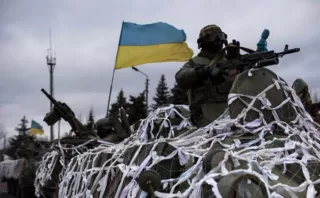
Rwanda leads in violence and intimidation of churches (7,700 incidents), including preventing worship together through restrictive government closures of churches under the pretext of “infrastructure compliance.” Rwanda was followed by Mozambique, Myanmar and Nicaragua. Ukraine ranked fifth, where many churches have been destroyed amid ongoing conflict with Russia.
The report also documented an increase in nonlethal persecution in countries such as China, where the Communist Party is increasingly spying on Christians and establishing state control over religion. China distinguished itself with the highest number of arrests of Christians, with 709 confirmed cases, which the report said was “a leading example of extensive religious control enforced through registration requirements, surveillance, and mandatory conformity to state ideology.” China is followed by Russia, Iran, Vietnam, Nicaragua and Vietnam in the number of Christians arrested because of their faith.
Mexico leads the world in the number of kidnappings and attacks on Christians (376 confirmed incidents), although such violence is usually linked to criminal governance rather than religious ideology. Drug cartels with power in Mexico have targeted Christian pastors, parish leaders and youth workers because their drug prevention and community organizing efforts are seen as a threat to cartel control.
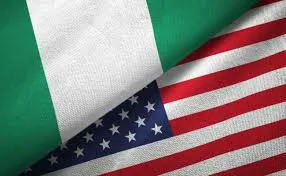
The report also notes a “dramatic and unequivocal” shift in the tone of the U.S. under the Trump administration regarding the global persecution of Christians. Vice President J.D. Vance’s speech at the Munich Security Conference last February, which drew attention to the erosion of religious freedom in the West, is cited as a “watershed moment.” In his speech, Vance rebuked European leaders for suppressing free speech and discriminating against Christians, condemning restrictions on public prayer and silent protests outside abortion clinics in Britain and elsewhere.
The report also recognizes the impact of the U.S. State Department’s official update of Nigeria’s status as a “Country of Particular Concern” last November, a month before the U.S. military used force against Islamic State militants in the country on Christmas Day.
Brian Orme, president and CEO of Global Christian Relief, said modern-day persecution sometimes manifests itself in subtle ways. “Persecution today doesn’t always manifest itself in obvious or dramatic ways. It often unfolds quietly, through pressures that restrict worship, through laws that narrow religious space, or through systems that steadily undermine the ability of Christians to live openly as followers of Jesus, ” he said. “Global Christian Relief’s Red List exists to share the realities of the global Christian church and to be a resource for those working together to advance religious freedom around the world. It remains critical for analyzing the drivers of persecution because it reflects the real impact of violence on communities whose vulnerability stems from both who Christians are and where they live.”
Recall that according to the annual World Watch List 2026 (WWL) report published by Open Doors, North Korea is the most dangerous country in the world for Christians, while Nigeria is recognized as the deadliest. The annual report also indicates that the number of Christians experiencing high levels of persecution for their faith has risen to 388 million in the last year – an increase of 8 million from the previous WWL. These figures mean that one in seven Christians worldwide, two in five in Asia and one in five in Africa face persecution.
Read also