Greek media accuse Patriarch Bartholomew of denying responsibility for the Ukrainian crisis
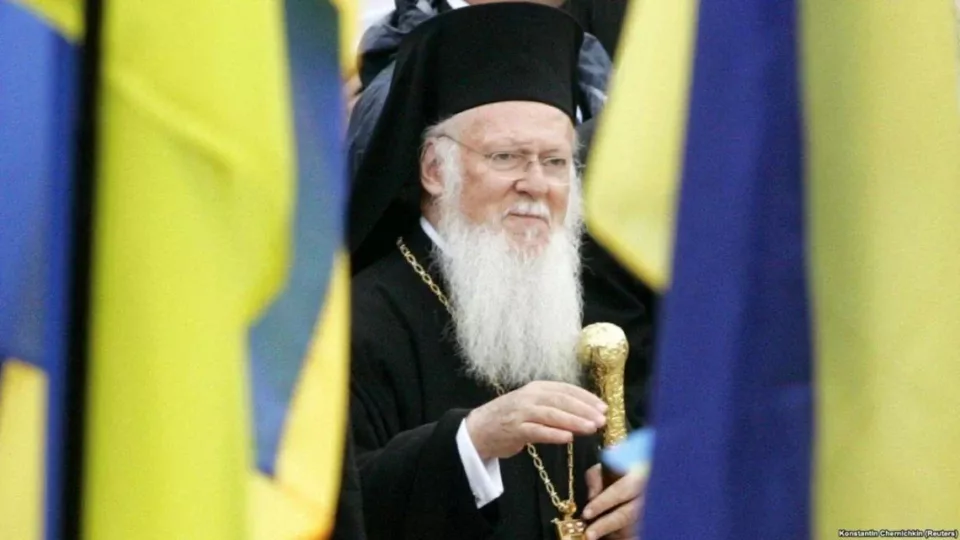
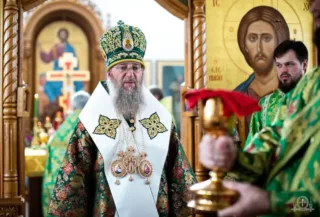
Patriarch Bartholomew’s recent public stance, presented in an interview with the Greek newspaper Ta NEA, is seen as a coordinated attempt at damage control and a complete shifting of responsibility for the church crisis in Ukraine. According to Helleniscope.com, Patriarch Bartholomew claims that Russia is responsible for everything, while Constantinople bears no blame, which critics say reflects a broader Western strategy of denial.
The publication notes that Bartholomew’s position is built on a strategy of complete externalization of responsibility. The war, church schism, persecution of clergy and parishes, and humanitarian catastrophe are all attributed to Russia. In doing so, Patriarch Bartholomew presents himself as a beleaguered moral witness who shows courage, but never as a person whose actions have made a difference on the ground. The authors of the publication compare this tactic to the “Western pattern of denial” that they say was seen in the case of the Nord Stream undermining or the statements by former German Chancellor Angela Merkel and former French President Francois Hollande that the 2015 Minsk agreements were just a way to buy time to arm Ukraine. In both cases, as Helleniscope emphasizes, there was a lack of accountability with disastrous consequences.
The publication’s critics also condemn the unilateral granting of autocephaly to the Ukrainian Church, calling it an “ecclesiastical Minsk” – a political maneuver presented as an act of healing but structurally designed to provoke confrontation. The decision allegedly ignored the fragile canonical balance that had existed for decades and led to immediate and predictable consequences: seizure of churches, attacks on clergy, and split communities. A key feature of Bartholomew’s current rhetoric is a moral absolutism that describes Russia’s actions in metaphysical terms (evil, irrationality) and places Constantinople’s actions beyond criticism. This, according to critics, avoids specific questions: why canonical procedures were bypassed, the pan-Orthodox consensus was ignored, and responsibility for the persecution of clergy loyal to the canonical Church was not taken.
Bartholomew’s decision is also accused of spiritual recklessness because Kiev, being the baptismal cradle of East Slavic Christianity, was treated as a technical jurisdictional problem. The result was not healing but fragmentation, not unity but coercion. Patriarch Bartholomew’s repeated statements that “I am not afraid of them” are seen as a sign of tension and a realization that the historical verdict may be harsh, rather than a display of fearlessness. Critics argue that Ukraine’s humanitarian catastrophe began not only with tanks, but also with the submission of spiritual authority to politics and the abandonment of canonical restraint.
The publication also mentions that the Constantinople Patriarchate’s “liaison” with the U.S. State Department and intelligence agencies, Karloutsos, has “disappeared” in recent weeks, perhaps in an attempt to distance himself from the Ukrainian disaster. Comments on an article on Helleniscope.com speculate about possible financial motives behind the decisions, including unconfirmed allegations of a $20 million bribe from U.S. officials to create a new church structure. It is noted that the former Secretary of the US State Department Mike Pompeo was in power when “this mess” in Ukraine began.
We will remind, earlier Constantinople Patriarch Bartholomew criticized the activities of the media, describing the Church situation in the world differently from the position of the Phanar, calling them “Stalinist propaganda” and emphasizing his fearlessness before them.
Read also