Ternopil region prosecutor's office demands return of OCU monastery to state

The Chortkiv District Prosecutor’s Office filed a lawsuit demanding that the Bilche-Zolotets village council be obliged to register the «ownerless» cells of the Basilian monastery in the village of Monastyrok. This is an architectural monument of national importance, which is currently in poor condition. This was reported by the Prosecutor’s Office of the Ternopil region on Facebook
Prosecutors found that the local authorities, knowing that there was no legal owner of the property, had not taken steps to register the property for years. Due to this bureaucratic conflict, the village council has no legal grounds to allocate funds for the protection and preservation of the historic building.
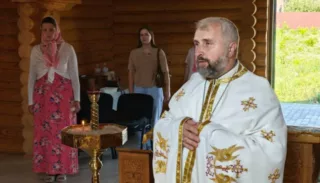
In fact, the ancient cells, located next to the cave sanctuary, are looked after by parishioners of the local Church of the Exaltation of the Holy Cross, where the OCU holds «services.» However, the community is apparently unable to maintain the monastery complex in proper condition, and so the prosecutor’s office had to take care of its fate.
The monastery complex has a long history: the monastery was founded in 1600 by Stefan Potocki, and the current cells and stone church were built in 1772 by Jan Potocki. in 1793, the monastery was abolished by the Austrian government for debts, after which the church became a parish church, and the cells began to decay. Currently, the Ternopil District Administrative Court has opened proceedings in a case that should decide the fate of the crumbling shrine.
As we reported earlier, while a wave of expropriation of church property from the Ukrainian Orthodox Church is taking place across the country, in Galicia, local authorities are transferring another property to Ukrainian Greek Catholics. In the Ternopil region, the historical complex of the Bernardine monastery of the seventeenth and eighteenth centuries was transferred to the local UGCC community. The decision to transfer the property free of charge for a period of 10 years was made by the Ternopil Regional Military Administration after approval by the Ministry of Culture of Ukraine.
Read also