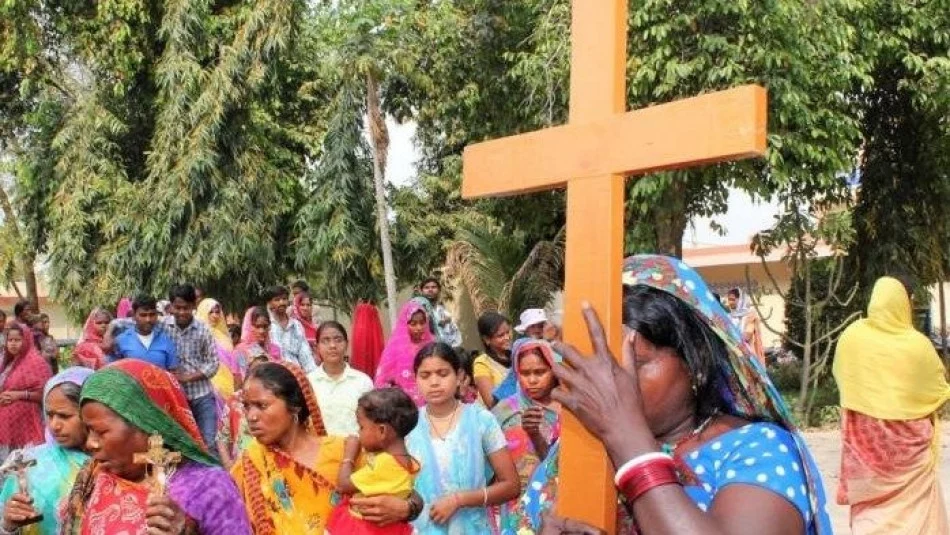
Pew: Religious Hostility Around the World Has Been on the Rise for the Third Consecutive Year
In 2023, the number of countries with high or very high levels of religiously motivated social hostility rose to 55, compared to 45 the previous year. According to Christian Today, citing a new study by the Pew Research Center, this marks the third consecutive year of growth and is linked, in part, to increased pressure on religious minorities, as well as to the international repercussions of Hamas’s attack on Israel on October 7 and the subsequent war in Gaza.
The Pew study covers 198 countries and territories and assesses the situation based on two key indicators: the government restrictions index, which reflects laws, policies, and government actions that restrict religious freedom, and the social hostility index, which takes into account persecution and violence by private individuals, organizations, and extremist groups.
Christians faced persecution most frequently: incidents were recorded in 165 countries. Muslims were persecuted in 143 countries, and Jews in 98 countries—an increase from the previous year, when such cases were reported in 90 countries.
Physical pressure on religious communities has also become more widespread. According to the study, at least one form of physical persecution of religious groups was recorded in 151 countries, compared to 145 in 2022. The most common form was damage to religious property—such incidents occurred in 120 countries. In Europe, such incidents were particularly frequent: damage to religious property was recorded in 78% of the region’s countries. Physical attacks were reported in 96 countries, and religiously motivated killings in 48.
At the same time, government restrictions on religious freedom remain near record levels. In 2023, high or very high levels of such restrictions were identified in 58 countries, only slightly below the 2022 record of 59. Persecution of religious groups by authorities was reported in 185 countries, and interference in religious practices reached a new high, affecting 175 countries and territories.
Such restrictions included denials of permits to build or use places of worship, restrictions on funeral practices, and restrictions on the right to refuse military service on grounds of religious or moral convictions.
According to Pew’s estimates, about 78% of the world’s population lives in countries with high or very high levels of government restrictions, social religious hostility, or both. Among the countries with the strictest restrictions are China, Iran, Afghanistan, Indonesia, Syria, and Uzbekistan.
At the regional level, the Middle East and North Africa continue to show the highest median level of government restrictions on religion, while social hostility in the region has also increased. In Europe, both indicators—state restrictions and social hostility—have increased. The only region where both indices declined overall was Sub-Saharan Africa, although Nigeria retained the world’s highest level of social hostility.
Among the world’s 25 most populous countries, the highest combined levels of restrictions and social hostility in 2023 were recorded in India, Egypt, Pakistan, Iran, and Indonesia. The lowest combined scores among this group were recorded in South Africa, the United States, Japan, the Philippines, and the United Kingdom.
Six countries fell into the category of very high levels of social and religious hostility in 2023: Nigeria, Israel, India, Pakistan, Syria, and Bangladesh. Israel and Bangladesh were new entrants to this category. In Israel, the index rose from 7.1 to 8.4 following the events of October 7 and the ensuing conflict, while in Bangladesh, it rose from 6.1 to 7.8, partly due to attacks on members of the Ahmadiyya Muslim community, which resulted in two deaths and significant damage to homes, a mosque, and a medical clinic.
The study also notes an increase in the number of countries that have moved into the category of high social hostility: in 2023, there were 12 such countries. These include Belgium, Norway, Russia, Spain, and Sweden, as well as Turkey, Thailand, the Democratic Republic of the Congo, Sudan, and Guatemala.
In a number of countries, the increase was linked to high-profile incidents. In Spain, the rise in the social hostility index from 2.8 to 3.7 is attributed to attacks on Jehovah’s Witnesses, a machete attack on two churches in Algeciras, and a surge in anti-Muslim and anti-Semitic incidents following October 7. In Norway, the index rose from 3.2 to 4.2 amid physical attacks on Jehovah’s Witnesses and an increase in hate speech directed at Jews and Muslims.
Sudan saw one of the most significant jumps—from 3.5 to 5.7. This is linked to the ongoing conflict between the Sudanese Armed Forces and the Rapid Support Forces, during which Coptic Christians were attacked, mosques and churches were used as military bases, and Christians were forced to convert to Islam.
Read also