Drabinko on Law No. 3894: Dialogue Needed to Preserve Unity in Society
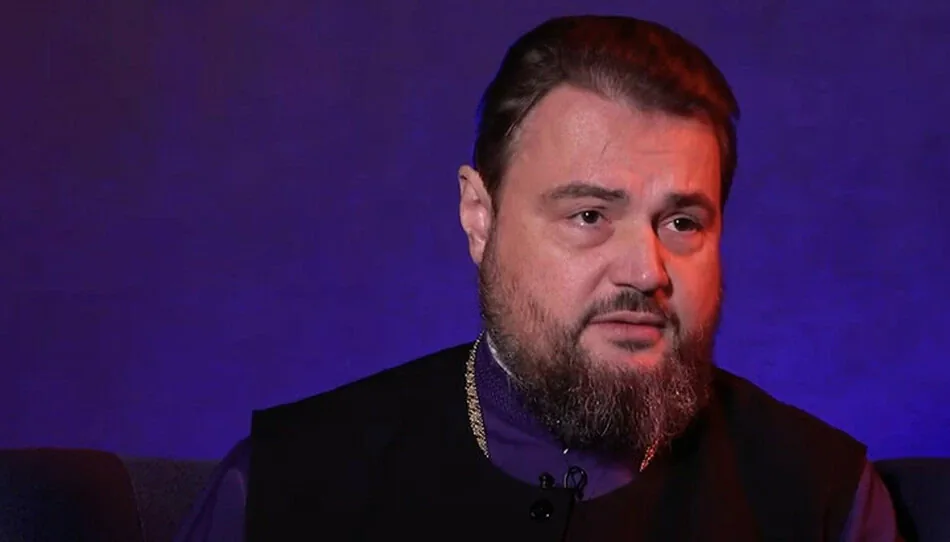
OCU hierarch Alexander Drabinko expressed concern about the consequences of implementing Ukraine’s Law No. 3894 on the Protection of the Constitutional Order in the Sphere of Religious Organizations’ Activities. According to the hierarch, this law may deepen divisions within Ukrainian society. He made these remarks in an interview with the YouTube channel “Viche.”
“As for whether this will bring division into Ukrainian society — yes, certainly, to some extent it will,” Drabinko noted.
He also predicted that court proceedings against parishes of the Ukrainian Orthodox Church could drag on for years, and their number may reach 12–15 thousand instead of the officially stated 6 thousand. According to Drabinko, there will be “underground resistance” at the local level against positive decisions to ban the activities of UOC religious organizations.
The hierarch expressed doubts about the practical implementation of the law: “I don’t understand, will it be the deregistration of a legal entity? The closure of a church? Or a ban on parishioners gathering to fulfill their religious needs?”
He emphasized that the state should have established constructive dialogue between the parties in search of unity, rather than applying categorical measures, and reminded that the nine months allocated to resolve legal and canonical issues should have been used to organize negotiations between the leaders of the UOC and OCU.
“We will have a hidden center of dissatisfaction with state policy because they will consider themselves persecuted. And this will not lead to constructive dialogue in the future,” Drabinko concluded.
Recall that on May 9, 2025, the Cabinet of Ministers of Ukraine adopted Resolution No. 543, which sets the procedure for examining religious organizations for signs of affiliation with foreign religious organizations whose activities are banned in Ukraine. This mechanism is part of the implementation of the anti-church Law No. 3894 — “On the Protection of the Constitutional Order in the Sphere of Religious Organizations’ Activities.”
Read also