Coercion to autocephaly?
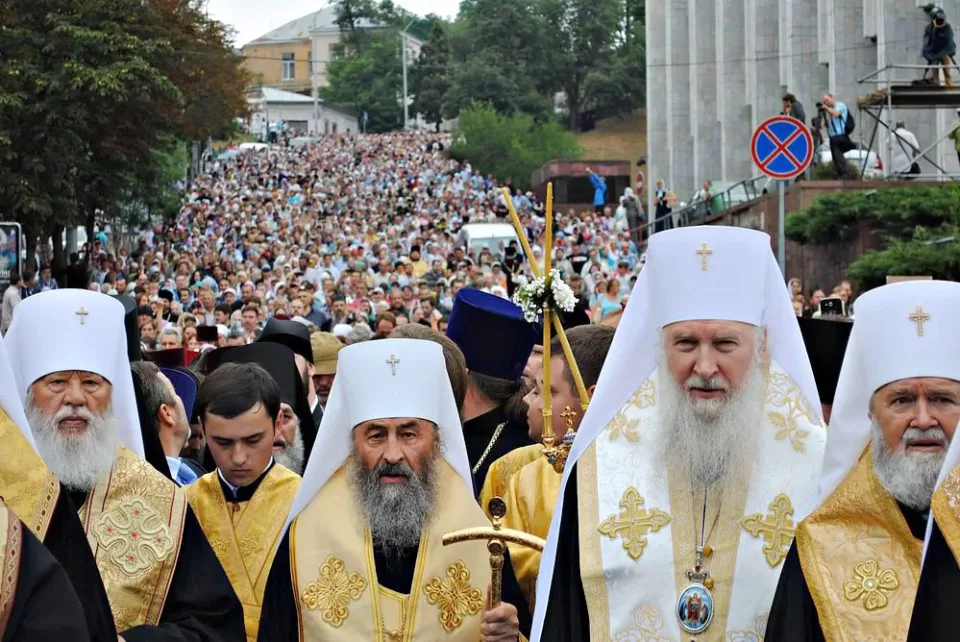
So, three years after Feofania, the Primate of the UOC published a new statement on the future of the Church in the current circumstances. According to our information, a meeting of the UOC episcopate is scheduled for May 27, 2025, in Kyiv, which has every chance of turning into a bishops’ council of the UOC.
Many people are wondering why this statement appeared now, and not last year or the year before. In our opinion, its appearance is directly related to two important factors: the end of the war and the implementation of Law No. 3894 (On the Prohibition of the UOC).
The end of the war actually concretizes new territorial realities that may not be recognized de jure, but they cannot be avoided de facto. That is, the preservation of Ukrainian statehood fixes the certainty of the canonical territory of the UOC, which is important in the context of Ukrainian dioceses that have fallen to the Russian Orthodox Church in non-government controlled areas. Roughly speaking, the end of the war shows what the UOC remains after the conflict.
At the same time, the announcement by the State Service for Ethnic Policy and Freedom of Conscience that the Kyiv Metropolis of the UOC will be inspected for affiliation with Russia (in the context of Law 3894) raises the question of its continued existence as such. The state, which is unlikely to change its attitude toward the UOC as a result of peace negotiations, clearly hints that the UOC has very little room for maneuver. The very tone of the UOC Primate’s address suggests that the Kyiv Metropolis is well aware of this.
However, it is premature to look for a “betrayal” at this point, as we need to, first, observe what happens next, and second, wait for the reaction of the Moscow Patriarchate. What, in our opinion, may happen in the future.
First of all, we have no doubt that the celebration of the third anniversary of the Council in Feofaniya, to which all the bishops of the UOC were called by the circular, will develop into a format of a Council of Bishops or, at least, a meeting. Although this is not stated in the circular, it is logical. Let’s make a reservation right away: the UOC bishops will not risk proclaiming unauthorized autocephaly. Based on the text of the appeal, it is likely that during this event the text of an appeal to the Primates of the Local Orthodox Churches will be proposed with a request to at least express their opinion on how the UOC can develop in the current circumstances. The maximum that can be squeezed out of such an appeal is to recognize canonical independence.
But here is the question. What does “canonical independence” mean? If we are talking about the status in which the UOC is now (as is mentioned in His Beatitude’s address), then this will be only an attempt to gain recognition of the current de facto independent way of life of the UOC, but not autocephaly. Roughly speaking, such an appeal is an appeal to the Local Churches with the expectation of their approval, by which the UOC will try to prove to the state its independence from the ROC.
If the concept of “canonical independence” means autocephalous status (although the Primate’s address does not say a word about it), then, of course, there are additional risks that have either already been agreed upon with all the main participants in this process or will require a long time to resolve all contradictions.
First of all, will the kyriarchal Church recognize such autocephaly? It is unlikely that the Russian Orthodox Church will be among the recipients of such a letter, which will be received by all other Local Churches. Among others, such a letter is also unlikely to go to Phanar and other Local Churches that have recognized the OCU. The Russian Orthodox Church will not write in order not to give the SLC a reason to consider the UOC part of the Moscow Patriarchate, and the Phanar will not send a letter because of the previous statements of Patriarch Bartholomew, who finally recognized the OCU as the only canonical jurisdiction in Ukraine.
If the issue of autocephaly does come up, all unbiased churches will naturally seek clarification of the ROC’s attitude to this issue. And the reaction and tone of the responses to such a request from the UOC will help us to understand the attitude of the Moscow Patriarchate to this topic. In fact, this is a kind of analog of shuttle diplomacy in the church environment. Yes, some speakers in the MP will express categorical views on this topic, but in this case, it is not emotions that will have an impact, but the objective reality that everyone will have to get used to after the war in Ukraine ends.
Above, we mentioned the Ukrainian dioceses that have actually fallen under the control of the Russian Orthodox Church due to the expansion of the frontline for a reason. Please note that the UOC has never spoken out on this issue at the official level. As we wrote earlier, it is likely that this issue will become a kind of bargaining chip that can satisfy the full-fledged secession of the UOC from the ROC on the terms of autocephaly. In other words, the UOC does not make claims as to how the above-mentioned dioceses were transferred to the ROC, and the ROC, in turn, does not show an impulsive reaction to the issue of autocephaly of the UOC.
Of course, the scenarios we have outlined are based solely on our observations and cannot claim to be one hundred percent accurate. However, it seems to us that if it does come to the proclamation of autocephaly, the algorithm will be something like this: a written survey of the Local Churches on this issue, and only after that – a request for autocephaly addressed to the Russian Orthodox Church. Not vice versa! The Church is being pushed to this development of the situation by circumstances that, unfortunately, it could not influence in any way.
Read also