The UOC Will Determine Its Own Church Policy – Yelenskyi
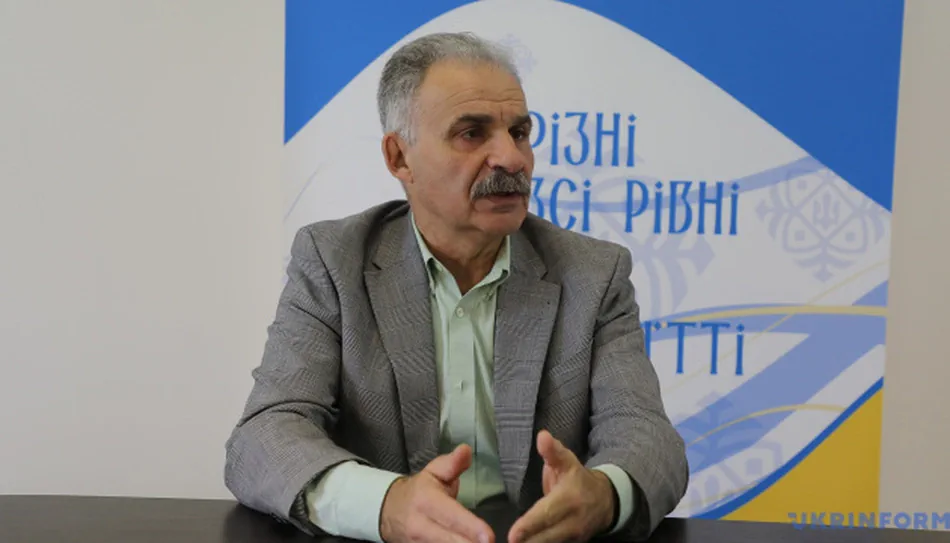
The Head of the State Service of Ukraine for Ethnopolitics and Freedom of Conscience, Viktor Yelenskyi, stated that the Ukrainian Orthodox Church has the full right to independently determine how to build both its internal and external ecclesiastical relations. He said this in an interview with the news agency Ukrinform.
According to the official, the issue of ecclesiastical order does not fall within the competence of the state. At the same time, answering a question about the future of the UOC in case of its “final distancing from the Moscow Patriarchate,” Yelenskyi emphasized that the choice of whom to maintain relations with lies solely with the Church itself.
“It seems to me that this Church will decide for itself with whom to communicate, and with whom not to, how to build its internal and external relations,” he noted.
At the same time, the head of the State Service believes that the UOC faces serious challenges in its relationship with Ukrainian society — something, he says, even some of its clergy acknowledge.
In this context, Yelenskyi cited historical examples of ruptures between Local Orthodox Churches:
“The Church of the Moscow Tsardom was in a break with the Mother Church for 141 years — and, as we are assured, nothing terrible happened; people were saved within it,” the official said.
He also recalled that the UOC itself had earlier severed Eucharistic communion with several Local Churches — the Ecumenical Patriarchate, as well as the Churches of Alexandria, Cyprus, and Greece.
“The final decision on whether grace is present or absent, on salvation or lack thereof, does not belong to Patriarch Kirill or to any other patriarch, but to God alone,” Yelenskyi stated.
It is also worth recalling that the former head of the State Service of Ukraine for Ethnopolitics and Freedom of Conscience, Olena Bohdan, criticized the current leadership of the agency for attempting to establish the UOC’s affiliation with Russian centers using Russian, rather than Ukrainian, documents. Bohdan noted that if the decision to ban the UOC is based on the statutory documents of the Russian Orthodox Church, this may lead to legal consequences at the international level.
Read also