Church-state “concessions” as a way to remove the UOC from under attack
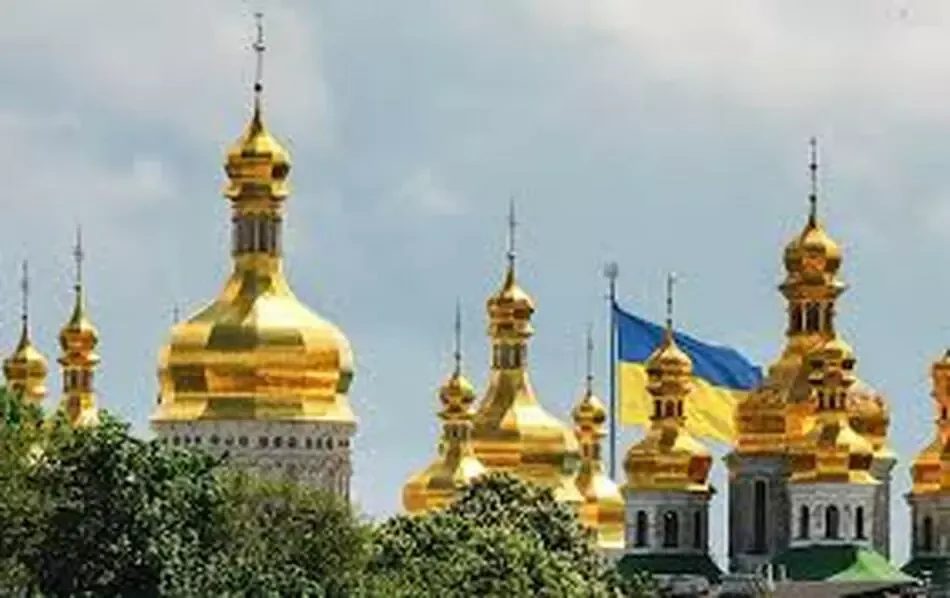
The media has published the results of another sociological survey on religious topics. Over the past few years, we have become accustomed to the Ukrainian press writing either negatively or not at all about the Ukrainian Orthodox Church. However, the trend observed recently indicates that there has been a slight warming in attitudes toward the Church. This is also the case this time, when the SOCIS Research Center publishes information that, although not directly, is nevertheless complimentary to the UOC.
The numbers do not lie
So, according to the results of a recent sociological study, it turns out that:
– ONLY 34.7% of Ukrainian society is in favor of banning the UOC;
– 31.7% would like the authorities not to interfere in the affairs of the Church and leave everything as it is;
– 22.9% do not know/are not interested in this issue at all;
– ONLY 10.8% are in favor of uniting the UOC with the OCU.
Thus, according to the data obtained, two-thirds of society either do not understand the issue at all or believe that the state should not interfere in the affairs of the Church. At the same time, one-third are in favor of banning the UOC or uniting the Church with the OCU, which is significantly less than those who oppose interference in church affairs or are not interested in this topic at all.
In addition, the same poll unexpectedly included a question about religious leaders trusted by Ukrainian society. It is noteworthy that the Primate of the UOC was included in the poll, and the percentage of people who voted for Metropolitan Onufriy is at odds with previous results on this topic. Thus:
– 46% of respondents trust the head of the OCU;
– 45.3% trust the head of the UGCC;
– 23% trust the Primate of the UOC.
The “icing on the cake” of this poll is the religious self-identification of the respondents. First, it is important that 70.2% call themselves ORTHODOX. At the same time, 46.5% identify themselves simply as Orthodox, 37.2% belong to the OCU, and 18.3% belong to the UOC.
Now, for comparison, let us recall the data from last year’s poll with almost identical questions, conducted by KMIS. 80% were in favor of banning the UOC. 6% identified themselves as belonging to the UOC. 6% expressed trust in Metropolitan Onufriy. 56% identified themselves as belonging to the OCU.
Thus, when comparing these two sociological studies, it turns out that over the course of a year:
– the desire for a complete ban on the UOC fell by 45.3%;
– interest in the OCU fell by 18.8%;
– interest in the UOC increased by 12.3%;
– the level of trust in the Primate of the UOC has increased by 17%.
Isn’t this a strange metamorphosis? Of course, all these sociological surveys are very approximate and extremely unreliable, especially given that all sociological research centers belong to one political circle or another. However, the latter fact indicates that the era of “demonization” of the UOC is probably coming to an end.
Law No. 3894 – a way to let off steam
But what, in that case, should be done about the ban on the UOC? After all, Law No. 3894 has already been passed and is unlikely to be repealed in the near future. Yes, Law No. 3894 will indeed not be repealed. However, at the moment, there is no indication that it can be fully implemented. To be more precise, the result of this law will not be what many expect, and here’s why.
Let’s say that the DESS will soon publish the results of its examination of the Statute of the Kyiv Metropolis of the UOC, which will state that the Church is affiliated with the Moscow Patriarchate. What will happen after that? Legal battles. Long and exhausting, just like in the case of the Kyiv-Pechersk Lavra. Yes, there will be constant situations similar to those that occurred in Cherkasy and Chernivtsi. However, the ban on the entire structure of the UOC will not happen anytime soon, if it ever happens at all.
Thus, Law No. 3894 is a scare tactic, thanks to which the authorities, as we have repeatedly written before, distract public attention from more pressing issues and, at the same time, find a way to let off steam for the radical part of society. We have banned the “Moscow Church,” so to speak, but we must do everything according to the law so that we are not criticized from abroad, which is why everything is going through the courts and taking so long.
Most importantly, while this “cauldron” is slowly boiling its “porridge,” society’s attitude toward this issue is changing from hatred to indifference. This is exactly what the “architects” of the UOC ban are counting on, deliberately dragging out the process. As a result, both the sheep will be safe and the wolves will be fed. But the most interesting thing is who is the ultimate beneficiary of what is happening.
Qui prodest?
Of course, no one is saying that in the near future the pressure on the UOC will be significantly weakened or cease altogether. State-church relations in Ukraine will remain in a state of “neither peace nor war,” since the religious question in the country has always been and remains one of the levers of mass control.
However, the Church is a convenient and universal bargaining chip, and Russia’s interest in “saving Orthodoxy” is obvious. In view of this, it is extremely interesting that the attitude towards the UOC began to change for the better precisely after the first round of new peace talks between Ukraine and Russia. Yes, we affirm that the peace process is already underway, although it is not yet as obvious as we would like it to be.
It seems that the Russian side, which, among other things, voiced the need to restore the rights of the UOC, has been heard in Ukraine, and as a result, they are gradually loosening their grip, releasing one poll after another that clearly show an improvement in the UOC’s position in society. At least, that is what they are trying to convince everyone around them of. At the same time, anti-church laws and initiatives will remain in force as a means of pressure on the UOC in case the Church feels any excessive independence.