Religious scholar explains absence of mention of Metropolitan Onufriy's Russian passport in SSEFC conclusion
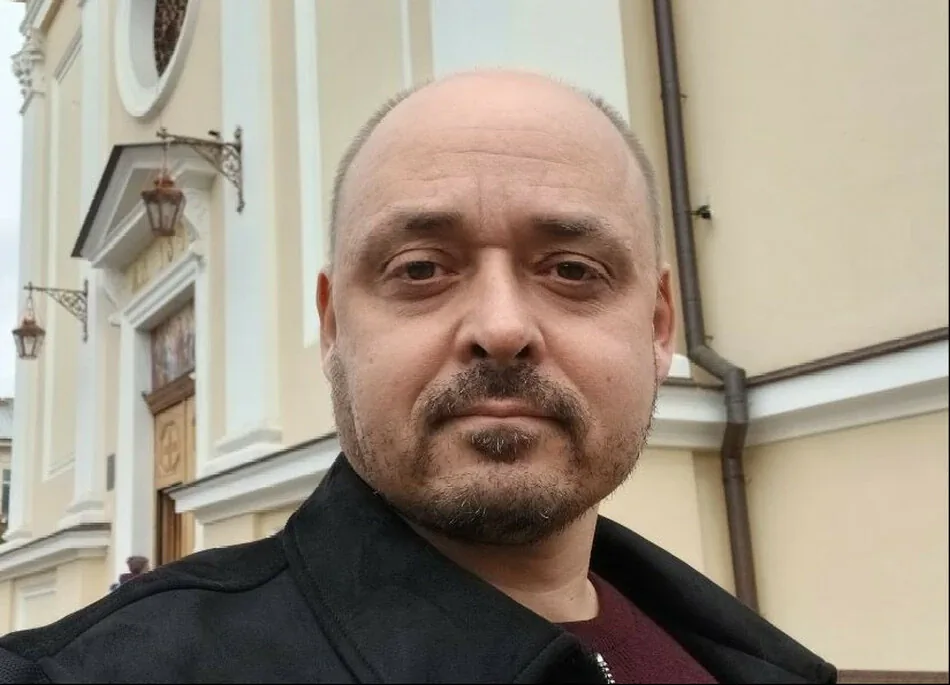
Following the publication of a report by Ukraine’s State Service for Ethnopolitics and Freedom of Conscience (SSEFC) identifying signs of affiliation between the Kyiv Metropolis of the Ukrainian Orthodox Church (UOC) and the Russian Orthodox Church (ROC), religious scholar Oleksandr Brodetsky commented on why Metropolitan Onufriy’s Russian citizenship was not mentioned. The statement was reported by RISU.
According to Brodetsky, the issue of the passport is more of a moral concern than a legal one.
“The passport story is primarily a moral issue. Even today, during wartime, holding Russian citizenship is not a legal basis to exclude a person from Ukrainian society,” he said.
He cited the example of April 2025, when Metropolitan Onufriy awarded an order to Vladimir Kantaryan, head of the Moldovan Orthodox Church, who openly identifies as a ROC hierarch and participates in its Synods. However, the scholar noted that such acts are symbolic rather than legal.
“These gestures are significant in terms of values and meaning — they help people make informed choices. But can the state base purely legal decisions on such symbolism?” he asked.
Brodetsky acknowledged that under wartime conditions, the government may adopt a so-called political-legal approach, making decisions not strictly by the letter of the law but guided by morality and security. However, he believes SSEFC opted for a strictly legal strategy.
He also predicted the UOC’s legal defense strategy:
“Representatives of the UOC-MP will argue that, from a legal standpoint, there is no formal registration of their organization as a Russian structure. (…) In their appeals, they will claim a substitution has occurred — replacing a mystical connection (which is internal to the Church) with a legal-social one. And, they will argue, that is beyond the state’s jurisdiction,” he explained.
Brodetsky further referenced a specific wording in the 1990 Tomos by Patriarch Alexy II, which he believes could be used as a legal argument in defense of the UOC. The document states that the Church is already “connected” to the fullness of Orthodoxy — as a completed fact — rather than being “connected through” the ROC.
“This can be interpreted to mean that the Russian Church once linked the Ukrainian Church to the broader Orthodox world by granting it independence. Now, the UOC is already connected and may communicate with others directly,” he suggested.
In conclusion, the scholar stated that the UOC’s position in court will likely be based on political-legal reasoning rather than strictly legal formalism.
We also recall that the hierarch of the UOC, Metropolitan Theodosius of Cherkasy and Kaniv, recorded a video message in support of the Primate of the Ukrainian Orthodox Church, His Beatitude Metropolitan Onufriy of Kyiv and All Ukraine. The bishop noted that he, like other bishops of the Church, could not support the recently published Appeal of the UOC bishops to Volodymyr Zelenskyy with a request to return Ukrainian citizenship to the Primate of the UOC due to disagreement with the form and certain theses of the text. Nevertheless, Metropolitan Theodosius expressed his personal support for His Beatitude Metropolitan Onufriy and assured that in the event of the deportation of the Primate of the UOC, he and his associates would do everything to ensure that no one in Ukraine could impose the election of a new head on the Church.
Read also