UOC hierarch accuses ROC of unsuccessful attempts to overcome church schism in Ukraine
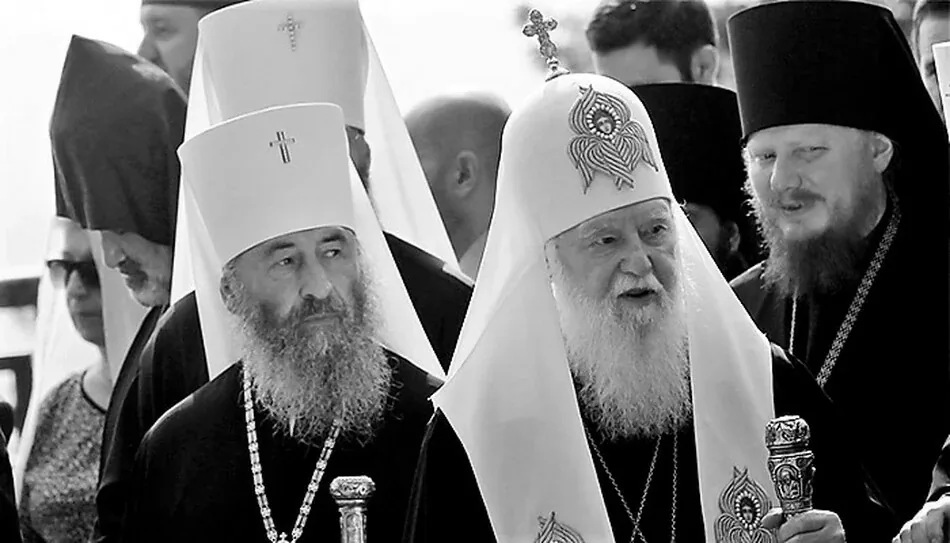
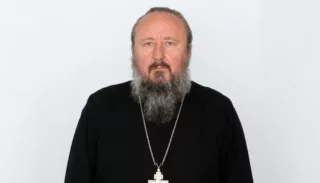
The rector of the Kyiv Theological Academy and Seminary of the Ukrainian Orthodox Church, Archbishop Sylvester (Stoichev), presented a detailed reflection on the ninth day since the death of Filaret Denisenko. In his address, the hierarch analyzed the “historical role” of the deceased, his contribution to the “struggle for autocephaly,” and also revealed the reasons for the failed attempts to overcome the church division in Ukraine, placing the responsibility on the leadership of the Russian Orthodox Church. He wrote about this on his Facebook account.
Explaining the use of the title “patriarch,” Archbishop Sylvester noted that this is a natural rule of courtesy in interchurch dialogue, although this status was not officially recognized by the Ukrainian Orthodox Church or other Local Churches of the world. As emphasized in the text, even the Patriarchate of Constantinople, after the lifting of the canonical bans in 2018, continued to consider Filaret not a patriarch but “the former Kyiv Metropolitan in retirement.”
According to Archbishop Sylvester’s analysis, back in 1991, Filaret realized the “tectonic shift” in society and made a choice in favor of autocephaly, which seemed like a utopia to many at the time. However, the strong and strong-willed nature of the leader also had a downside: his inability to compromise with his opponents was a key reason for the deep conflict in the UOC episcopate in 1992, which led to many years of division. At the same time, the deceased was constantly looking for ways to cancel the church punishments imposed on him, filing appeals to Constantinople.
The rector’s publication pays special attention to the episode of 2017, when Filaret sent a letter to the Bishops’ Council of the Russian Orthodox Church asking for forgiveness, signing it simply “Your Brother Filaret.” Archbishop Sylvester argues that this showed a willingness to compromise for peace, but the leadership of the Russian Orthodox Church, represented by Patriarch Kirill, allegedly showed no interest in real reconciliation. The hierarch notes that Moscow’s diplomacy on the “Ukrainian direction” has failed, as the creation of a single recognized Local Church in Ukraine has always been regarded as a threat in the Russian Orthodox Church.
“Since 1992, we have constantly heard from the leaders of the Russian Orthodox Church (and in particular, from the mouth of Metropolitan and later Patriarch Kirill) that overcoming the split in Ukraine is a priority for them. But for some reason, as soon as there was even a hint of reconciliation on the horizon, the leadership of the Russian Orthodox Church did everything to prevent this reconciliation from happening. I remember at least two such cases. The first one concerns the aforementioned attempt to start a dialogue in 2009. Then, due to the harsh interference of the Moscow Patriarchate, the dialogue between the UOC and the UOC-KP was disrupted. And the second case is the strange story of Filaret’s letter in 2017. It is quite obvious that this letter was the result of previous informal agreements with the leadership of the Russian Orthodox Church. However, the letter did not achieve its goal. Both of these cases occurred at a time when Patriarch Kirill was the head of the Russian Orthodox Church,” Archbishop Sylvester wrote.
In conclusion, the Archbishop called for prayer for the newly deceased, emphasizing that now his earthly path is being evaluated at the Judgment of God.
“So, let us ask our Lord Jesus Christ to show His mercy to the newly deceased. And let us hope that when we ourselves appear before God, the Lord will show His mercy to us. Let us remember the words of the Apostle James: “judgment is without mercy to the one who has not shown mercy; but mercy surpasses judgment” (James 2:13),” the UOC hierarch summed up.
Earlier, we reported that Archbishop Sylvester (Stoichev) commented on the future development of relations between the UOC and the Russian Orthodox Church and the Patriarchate of Constantinople. According to the hierarch, the Ukrainian Church will never return to the Russian Orthodox Church, but, in his opinion, the UOC needs to develop relations with the Patriarchate of Constantinople.
Read also