Earlier, Mykola Kniazhytskyi, a member of the Ukrainian parliament from the European Solidarity party, confirmed that the Verkhovna Rada of Ukraine adopted the scandalous anti-church law No. 3894, aimed at banning the activities of the Ukrainian Orthodox Church, which was adopted, among other things, in order to take away churches from the UOC. Knyazhytsky believes that since not all settlements in Ukraine have churches of the OCU, people may not realize that their “priests have ties to Moscow.” Thus, the law banning the UOC is aimed at correcting this.
“Ukraine's policy in the religious sphere is not to take away churches from the parishioners of the Moscow Patriarchate,” - Yelenskyy
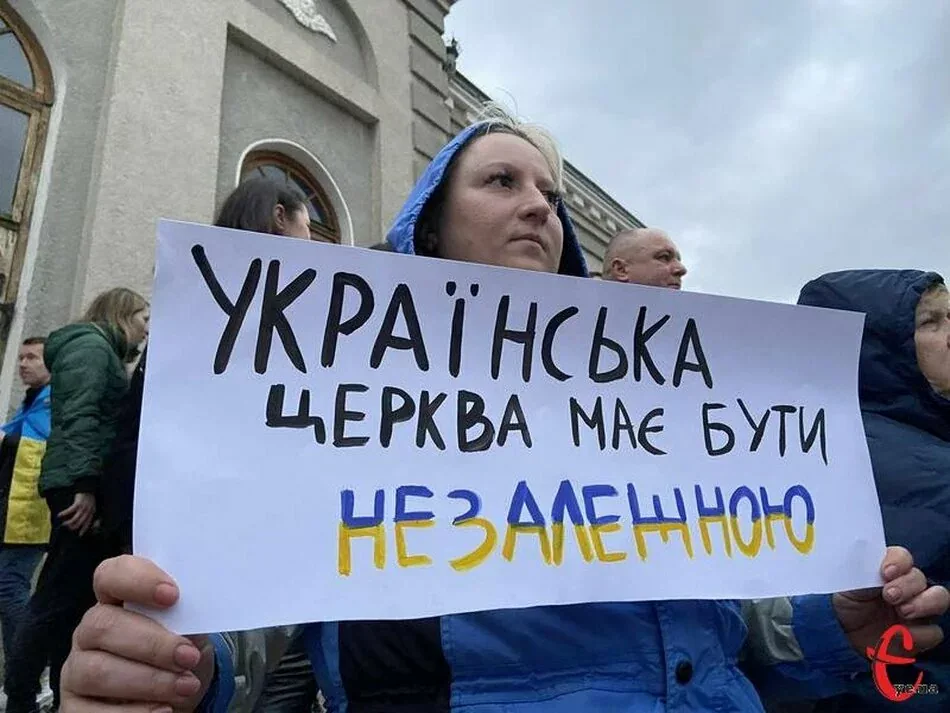
The head of the State Service of Ukraine for Ethnic Policy and Freedom of Conscience, Viktor Yelensky, claims that all the anti-church measures taken by the state against the Ukrainian Orthodox Church are not aimed at taking away all the churches from the Church. The state wants the UOC to sever ties with the Russian Orthodox Church, and this is why the scandalous anti-church law No. 3894 was adopted. He said this in an interview with Suspilne.Chernivtsi.
“The Ukrainian Orthodox Church remains in the unity and composition of the Russian Orthodox Church, despite the fact that its hierarchy tried to take a step away from Moscow. It is to a large extent the successor of the Ukrainian exarchate of the Russian Church in Ukraine during the Soviet era. And there is an inertia of tradition, when people go to the church they have, and from time to time they think about what kind of church they go to and why they go there. But very often they go there traditionally. They say, “We go to this priest, and he has never said anything bad to us, we have known him for a long time, and so on. But we have seen how these transitions take place and how people proclaim their absolute disagreement and rejection of the Moscow Patriarchate. This applies even to those who were loyal to the Moscow Patriarchate to the last,” – the head of the SSEPFC reasoned.
The official is outraged by the claims that there is no grace in the OCU. He considers this argument untenable and a product of propaganda. In turn, Yelensky justifies the state pressure on the UOC by the need to separate the UOC from the ROC.
“For many, religious transition is not easy. I was shocked when I heard narratives in Bukovyna that the OCU is graceless. That is, it is gracious for the first and second thrones in the Orthodox world, but for the Moscow Patriarchate, which obviously distributes grace through the pipes of Gazprom, it loses grace. Ukraine’s policy in the religious sphere is not to take away churches from the parishioners of the Moscow Patriarchate. Moreover, ordinary parishioners, priests, and even bishops do not know that the Ukrainian state does not require them to change the liturgical language or calendar, or to become part of another church. All that is needed is to break ties with the Moscow Patriarchate and the Russian Orthodox Church, which, to quote a resolution of the Parliamentary Assembly of the Council of Europe, “has become an ideological continuation of Putin’s criminal regime and is an accomplice to his crimes,” – Yelensky added.
Read also