In Ternopil, a hierarch of the OCU is accused of destroying a 16th century church
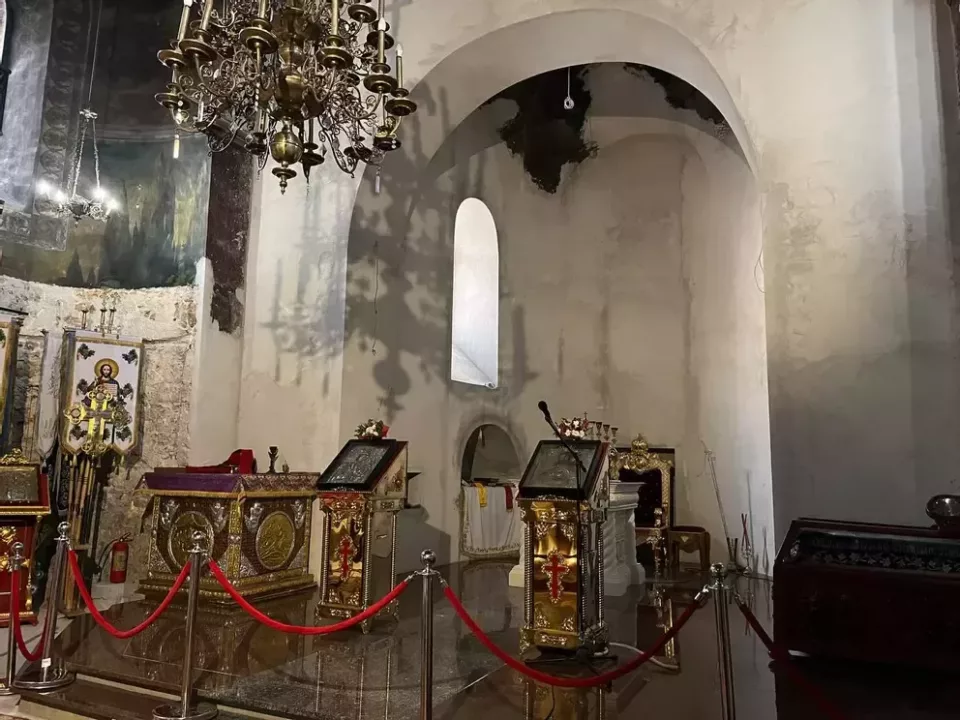
In Ternopil, the iconostasis was dismantled and sections of wall paintings were painted over in the historic Church of the Nativity of Christ (citizens call the temple “Green Church” – ed.), which is used by representatives of the OCU. The diocese states that this is“planned restoration work”, but the timing of completion and performers have not yet been disclosed. The process is led by the scandalous hierarch of the OCU Tikhon Petranyuk, who is a citizen of the “LPR”.
As reported by 20 Khvilin, citizens noticed changes in the temple and expressed concern about the possible large-scale reconstruction of the monument of national culture of the XVI century. Local residents, including Ternopil resident Halina, contacted the editorial office, pointing to the disappearance of the iconostasis and whitewashing of the frescoes under the dome.
on September 17, journalists visited the church and confirmed the absence of the iconostasis. Part of the walls and ceiling, where there used to be images, is now spackled and looks white. According to the saleswoman of the church shop, repair work is underway in the building, she did not provide details.
In turn, Tikhon Petranyuk explained that since last year the church has been undergoing restoration work: the electrical wiring has been replaced, new switches and outlets have been installed. A significant crack was found in the wall, the building was previously reinforced from the outside, now it is being reinforced from the inside. According to Petranyuk, before starting the work, specialists checked the condition of the paintings: some of them fell off the base and crumbled, so the surface was first cleaned, then cemented, pre-fixed fragments for later restoration. Icons from the iconostasis, as the hierarch of the OCU said, are temporarily stored in his office, and the iconostasis itself is planned to be restored because of cracks and delaminations.
At the same time, Petranyuk did not give exact dates for the completion of the work and information about specific restorers, noting only that the volume of tasks is large and requires substantial investments.
The publication also provides a historical reference: according to the data published by the diocese, the stone church was built in 1602-1608 years and was consecrated on Christmas Day in 1609. In the XVII-XIX centuries the church was repeatedly rebuilt, received elements of defense, in the early XIX century – the bell tower and the western extension. In 1937 the church was restored; during the Soviet period the complex was closed and gradually destroyed, later it was returned to the community of believers. At different times, memorial signs and plaques were erected near the temple.
The topic has caused a wide public resonance: residents of Ternopil actively discuss what is happening and express their expectation of transparency of works and preservation of the historical appearance of the temple.
We shall remind you that on July 24 the Economic Court of the Ternopil region partially satisfied the claim of the Kremenets-Pochayiv State Historical and Architectural Reserve against the Holy Epiphany Nunnery of the Ternopil diocese of the Ukrainian Orthodox Church. The court ruled to oblige the monastery to return the property.