The presidents of the Orthodox Churches prefer to avoid the topic of persecution of the UOC - Greek journalist
While the international community is focused on military operations and geopolitical balance, another deeply disturbing situation is unfolding in Ukraine: systematic pressure on the canonical Ukrainian Orthodox Church (UOC) under the leadership of Metropolitan Onufriy of Kyiv and All Ukraine. As vimaorthodoxias.gr reports in an exclusive report by Yannis Papanikolaou, this crisis affects not only Ukraine but the entire Orthodox world, and the silence of many Primates is becoming deafening.
In recent years, especially after 2024, the UOC has found itself at the center of state policies that are presented as a matter of “national security” but in practice lead to administrative and physical repression. Law 3894-IX has become an institutional tool, but its application has gone beyond mere legal regulation.
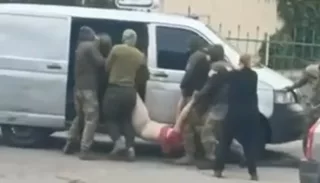
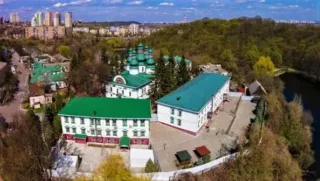
Raids on churches and monasteries, removal of clergy, and pressure on parishes to change their ecclesiastical jurisdiction have been recorded in many regions of Ukraine. The frames that have reached international organizations are more like a coercive operation than an administrative procedure. The issue was even raised at OSCE forums, where representatives of human rights organizations warned that references to security cannot justify collective punishment of religious communities. Of particular symbolic significance is the case of the Kiev-Pechersk Lavra, one of the most sacred centers of Orthodox tradition. The brethren faced eviction orders and access restrictions, with the monks refusing to leave the grounds, emphasizing that it is not state property, but a living spiritual organism.
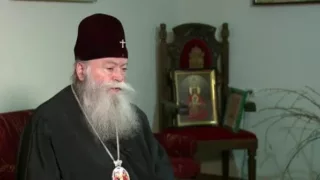
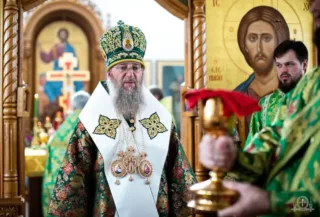
In this situation, Metropolitan Onufriy’s position takes on special significance. Despite the deprivation of citizenship and public attacks, he remains in Kyiv, avoiding any political confrontation. His words remain pastoral, with an emphasis on peace and conflict prevention. For millions of believers, Onuphrius is not an “obstacle to national unity,” as officials present him, but a point of reference in an era of general instability. His adherence to the canonical order and his refusal to legitimize divisions through state coercion make him uncomfortable for those seeking a quick “church reorganization.”
In parallel, the structure under Epiphanius, recognized by the Phanar but not accepted by all Orthodox Churches, is being strengthened by state interventions. Temples and monasteries taken from the UOC are transferred to this structure, often without the consent of local parishes. This fact deepens the schism and turns the church issue into a social conflict in which believers find themselves confronting each other.
The most disturbing element is the position of a significant part of world Orthodoxy. Many Primates prefer silence or vague formulations about “peace”, avoiding to name persecution directly. The reasons for this are manifold:
- Fear that any criticism of Kiev will be interpreted as political support for Moscow.
- A frozen climate in pan-Orthodox relations that does not allow for a collective response.
- The adoption of the “state sovereignty” narrative, which takes the issue beyond the Church’s responsibility.
However, this position sets a dangerous precedent: if the canonical Church can be pressured or dissolved by a state decision, what guarantee is there for the rest?
This situation has not gone unnoticed in human rights circles. Reports have reached the Office of the UN High Commissioner for Human Rights, and there are low-key discussions in the European Parliament. Nevertheless, there is still no overt political pressure on the Ukrainian government. Religious freedom, a fundamental European value, seems to be retreating before geopolitical interests.
Metropolitan Onufriy’s church has not disappeared. Despite bans and pressure, the faithful continue to pray, often in temporary premises, basements or courtyards. This steadfastness shows that the issue cannot be solved by decrees. The question now at hand concerns not only Ukraine, but also the future of Orthodoxy: will it remain a Church of freedom and conscience, or will it tacitly accept that state considerations can determine its canonical order? The Primates will sooner or later be called upon to answer it.
Read also