Non-Biblical Evidence: How Ancient Historians Confirm the Existence of Jesus
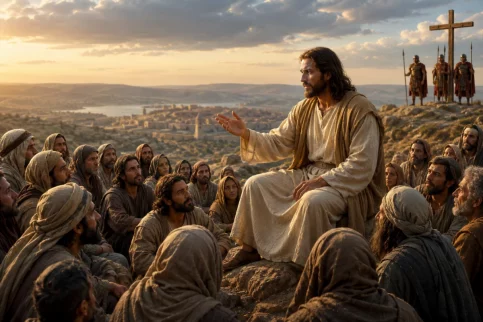
The question of the historicity of Jesus of Nazareth remains one of the central topics for the academic community. Historians rely not only on New Testament texts but also on independent accounts by ancient authors who document Jesus’ presence in the context of first-century history and his execution by order of the Roman authorities. This is reported by Arkeonews.
A key source is the Roman historian Tacitus, who in his *Annals* (circa 116 CE) mentions “Christ” in the context of Emperor Nero’s persecution of Christians. The significance of this testimony lies in Tacitus’s openly hostile attitude toward early Christians: he did not attempt to support their teachings, but merely explained the origins of a group he despised. Tacitus confirms that the movement’s founder was executed by the procurator Pontius Pilate during the reign of Emperor Tiberius.
Another crucial source is the Jewish historian Josephus. In his work *Antiquities of the Jews*, he mentions James, referring to him as “the brother of Jesus, who was called Christ.” Scholars emphasize that this detail appears incidental and supplementary, which makes it historically significant—Flavius had no need to prove Jesus’ status; he merely identified James through a historical figure known to his contemporaries. Although another passage from Flavius’s works, known as the Testimonium Flavianum, was subject to later Christian alterations, most researchers agree that its core contains reliable information about a real teacher who was executed by the Romans.
It is important to note that none of the ancient critics of Christianity—whether Roman officials or Jewish authors—ever argued that Jesus did not exist at all. Given the intense religious and ideological struggles of that time, denying the very reality of the figure of Jesus would have been the simplest way to discredit the faith. The absence of such claims in ancient sources convincingly confirms that Jesus was perceived as a real historical figure even by his opponents.
Read also