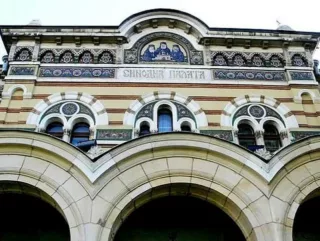
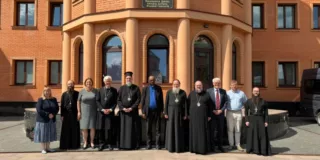
Recall that on August 20, 2024, in the building of the Bulgarian Patriarchate in Sofia, the Primate of the Bulgarian Orthodox Church, His Holiness Patriarch Daniel, met with a delegation from the U.S. Embassy in Bulgaria, headed by the Ambassador of the United States to the Republic Kenneth Mertens. The parties discussed a number of topical issues, among which the topic of persecution of the Ukrainian Orthodox Church was mentioned.
Patriarch Kirill addressed the Primates of the Local Churches on the ban of the UOC
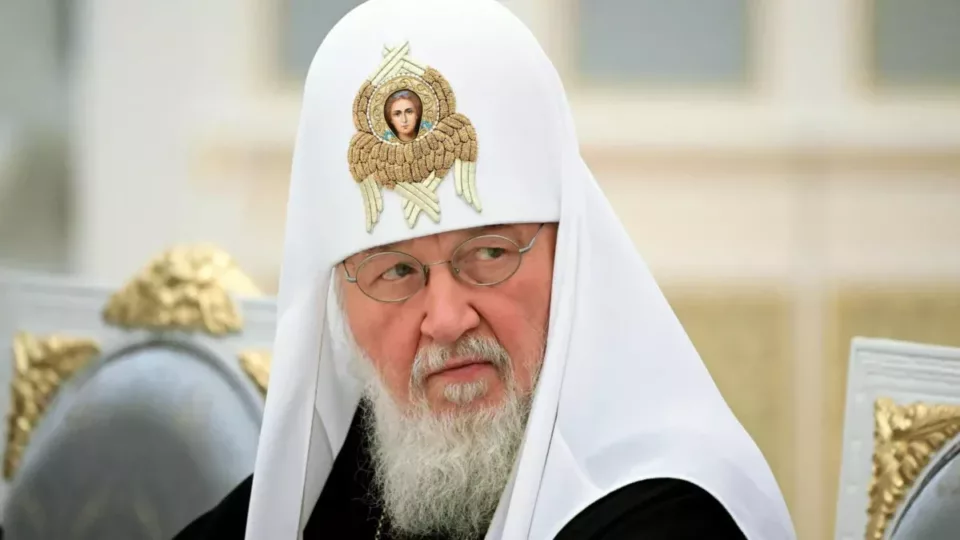
Patriarch Kirill of Moscow and All Russia has sent a message to the Primates of Local Orthodox Churches, leaders of religious organizations of the world and international human rights institutions, in which he reported on the adoption by the Verkhovna Rada of Ukraine of a law that aims to effectively ban the activities of the Ukrainian Orthodox Church. In it, the hierarch called for a response to the blatant violation of religious freedom in Ukraine. This is reported by the website Patriarchia.ru.
It is reported that the Primate of the Russian Orthodox Church addressed the Primates of the Local Orthodox Churches, Pope Francis, Catholicos of the East His Holiness Basil Mar Thomas Matthew III, Catholicos-Patriarch of the Assyrian Church of the East His Holiness Mar Ave III, Catholicos of the Great House of Cilicia of the Armenian Apostolic Church His Holiness Aram I, His Beatitude Beshare Boutros al-Rai, Maronite Patriarch of Antioch and All the East, His Holiness Garegin II, Supreme Patriarch and Catholicos of All Armenians, His Holiness Tavadros II, Pope of Alexandria and Patriarch of the See of St. Mark throughout Africa and the Middle East, President of the Billy Graham Evangelistic Association Franklin Graham, Head of the Anglican Communion Archbishop of Canterbury Justin Welby, Secretary General of the World Council of Churches Dr. Jerry Pillay, Secretary General of the United Nations António Guterres, OSCE Secretary General Helga Maria Schmid, Council of Europe Secretary General Marija Pejčinović-Burić, UN High Commissioner for Human Rights Volker Türk, OSCE High Commissioner on National Minorities K. K. Abdrakhmanov, OSCE High Commissioner on National Minorities. K. K. Abdrakhmanov, UN Human Rights Council Special Rapporteur on contemporary forms of racism, racial discrimination, xenophobia and related intolerance K.P. Ashwini, UN Human Rights Council Special Rapporteur on freedom of religion or belief Nazila Ghani, Director of the OSCE Office for Democratic Institutions and Human Rights Matteo Mecacci.
“It is with a sense of deep concern that I inform you that on August 20, 2024, the Parliament of Ukraine adopted the law “On Protection of the Constitutional Order in the Sphere of Activities of Religious Organizations”, the actual purpose of which is the legislative prohibition of the Ukrainian Orthodox Church. Blatant contradictions of the provisions of this law to the norms of the Constitution of Ukraine, its international agreements, human rights and fundamental principles of law have been repeatedly stated in the documents of major international human rights organizations,” the message reads.
Patriarch Kirill addressed the Primates of Orthodox Churches with a fraternal request “to offer holy prayers for the strengthening of the Orthodox archpastors, shepherds and believers in Ukraine and to raise their high-priestly voice in their defense.” In his addresses to the heads of non-Orthodox Churches and inter-Christian communities, the Primate of the Russian Orthodox Church, in particular, noted: “For many years the Ukrainian Orthodox Church has been persecuted by the Ukrainian state authorities. A slanderous anti-church campaign has been launched against its clergy and believers in the media, aimed at defamation of canonical Orthodoxy, as well as provoking and justifying violence, beatings of believers and clergy and mass seizures of churches, called “voluntary conversions”. A number of archpastors, priests and laymen were arrested and imprisoned in fabricated criminal cases. Having failed to weaken the canonical Church in Ukraine, having failed to shake its unity, the authorities decided to ban it completely. As a result of the adoption of the current law, hundreds of monasteries, thousands of communities, millions of Orthodox believers in Ukraine will find themselves outside the legal framework, losing their property and their place of prayer. Blatant contradictions of the provisions of this law to the norms of the Constitution of Ukraine, its international agreements, human rights and fundamental principles of law have been repeatedly stated in the documents of major human rights organizations. The anti-church policy of the Ukrainian authorities has been criticized by the international community for many years. The Moscow Patriarchate has repeatedly testified to the plight of Ukrainian believers and the persecution that has been launched against them”.
Read also