Feofaniya-2025: expectations and reality
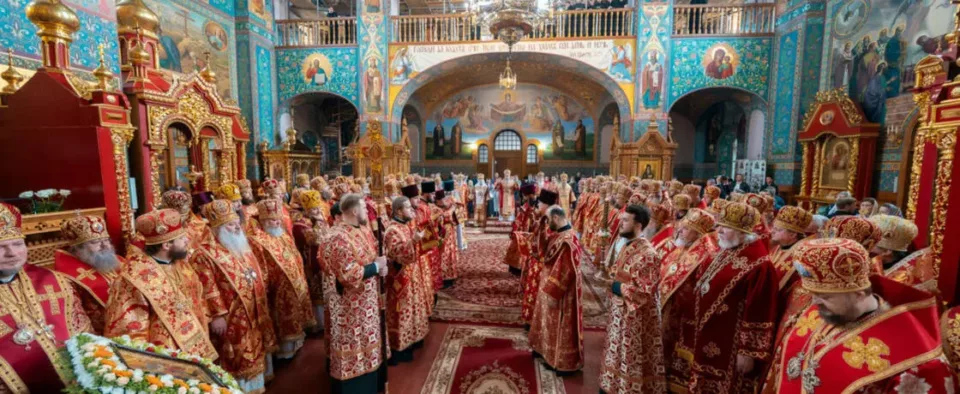
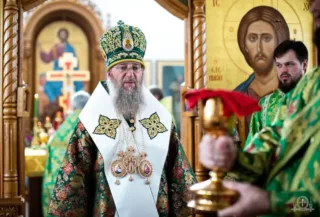
On May 27, 2025, celebrations were held in Feofaniya on the occasion of the third anniversary of the UOC Council in Feofaniya. The celebration was limited to a joint service of the bishops of the Church, after which the Primate of the UOC read out an address prepared on May 20. The content of Metropolitan Onufriy’s address did not differ from the decisions of the Council in Feofania either in spirit or in letter, although the forecasts of church analysts, including ours, indicated that Feofania-2025 could initiate new steps towards the autocephalous status of the UOC. Why did it turn out differently? Let’s try to figure it out.
Pre-conciliar trends
The Council in Feofania in 2022 divided the church community into two camps. Every year after it, closer to the cherished May 27, the pro- and anti-autocephalous itch begins in the church media. Some accuse the Primate and the bishops of the UOC of schism in advance, while others rub their hands together, expecting a “break with Moscow” and an arbitrary declaration of autocephaly. The year 2025 was no exception. Closer to the date, insights began to appear that the UOC would break with the ROC. As in previous years, we wrote that there would be no break and no autocephaly.
However, the agenda of the event this year changed almost every day. According to our information, many bishops of the UOC went to Kyiv, at least for a meeting, and at most to participate in the Bishops’ Council. Unfortunately, they were disappointed in Feofania, as nothing new or extraordinary happened. They served a service. His Beatitude read the text that was published at the previous conference on May 20. They exchanged views on the sidelines and left. Some representatives of the bishops returned home with a certain amount of misunderstanding of the purpose of the trip. They said that they expected to discuss where to go next, but in fact, there was nothing to discuss.
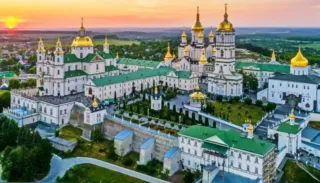
We also wrote that there could be a discussion. This was also indicated by a conference at the KDAiS held a few days before the meeting, which allegedly determined drafts for further development of this topic. In addition, the so-called representatives of the conditional pro-autocephalous wing of the UOC made a trip to the Pochayiv Lavra (it is possible that they were somewhere else), apparently expecting to receive support for their ideas from the abbot of the monastery, Metropolitan Volodymyr. For his part, Metropolitan Anthony, an obvious opponent of the idea of autocephaly, published a whole text on his page devoted to strict observance of canonical unity (though it does not say with whom exactly).
Unexpectedly for both camps, the Primate of the UOC “extinguished” the hopes of the former and the latter. What was planned as a breakthrough came to nothing and was held in the format of a protocol event for such events. If we think in the wake of the logic of both camps, the Council of Bishops is really overdue, because there are a lot of questions. It is quite possible that the Primate did not agree to hold the council, realizing that such an event could only intensify the contradictions. However, in our opinion, the “third force” played an important role in this situation, which in our case is the Ukrainian state.
The Khmelnytsky factor
The participation of a representative of the DESS in a conference on the future of the UOC three years after the Council in Feofaniya, organized by the CAAiS, indicated that the state still does not remain indifferent to the processes within the UOC. According to our sources, who attended the event, the representative of the DESS addressed the conference participants (including Metropolitan Onufriy) with a hint that the UOC needs to clarify its position on the topic of its “canonical independence” more clearly.
There is a version that the authorized persons asked the Primate of the UOC to take some demonstrative and media-significant steps that could pacify the state’s rhetoric towards the Church. Such a step, according to unverified information, could be interviewing the heads of the Local Churches on the subject of the possible acquisition of autocephalous status by the UOC. This idea, we recall, was laid down at the Council in Feofania in 2022.
The situation may well have been radically influenced by what happened the next day in Khmelnytsky. The disruption of the Primate’s visit to the city, apparently initiated “with the blessing” of the government, seems to have changed His Beatitude’s attitude to the question of whether the state should take any steps to meet him.
It is difficult to say what exactly happened in Khmelnytsky. Either the responsible characters wanted to show their power, or they did not persuade His Beatitude to agree to all the proposed conditions and decided to “punish” him in this way… Some sources even report that the disruption of the visit of the Primate of the UOC was a personal order of the head of the OCU. However, the intimidation not only did not work, but had the opposite effect. That is why, in our opinion, Feofania-2025 did not become a breakthrough.
No one to talk to
Khmelnytsky, Chernivtsi, Cherkasy, and other sluggishly ongoing processes of pressure on the Church indicate only one thing: there is no force opposite the UOC that can be regarded as negotiable. Speaking of the OCU, against the backdrop of all that is happening, the topic of dialogue with Ukrainian schismatics has been frozen not just for decades, but for centuries. If there are still those in the UOC who believe in an adequate dialogue and normalization of relations, it is only until some brave OCU “chaplain” takes away their church.
As for state policy toward the UOC, everything is much more complicated. First of all, the struggle against the Church has always served to create information pretexts that can cover “holes” in other areas. In addition, there are increasingly frequent claims that the church issue will be the subject of negotiations between Russia and Ukraine. Thus, relations between the state and the UOC are in a state of “neither peace nor war.” The Church is faced with obviously impossible tasks, to which the UOC itself reacts in a predictable manner.
Given the combination of factors, we can conclude that the Ukrainian Orthodox Church simply has no one to build a dialogue with that could meet the expectations of the Church itself. In this regard, until the church issue is resolved at the international level, the UOC will be torn away piece by piece, city by city, diocese by diocese. Yes, this is not for the better, because the Church will have to lose a lot of real estate. At the same time, the model of behavior chosen by the Primate of the UOC in this case clearly removes the Church from any canonical consequences and risks of “hitting the mud.”
Read also