All-Ukrainian Council of Churches and Religious Organizations Supports Measures Against the UOC and Calls for Further Oversight
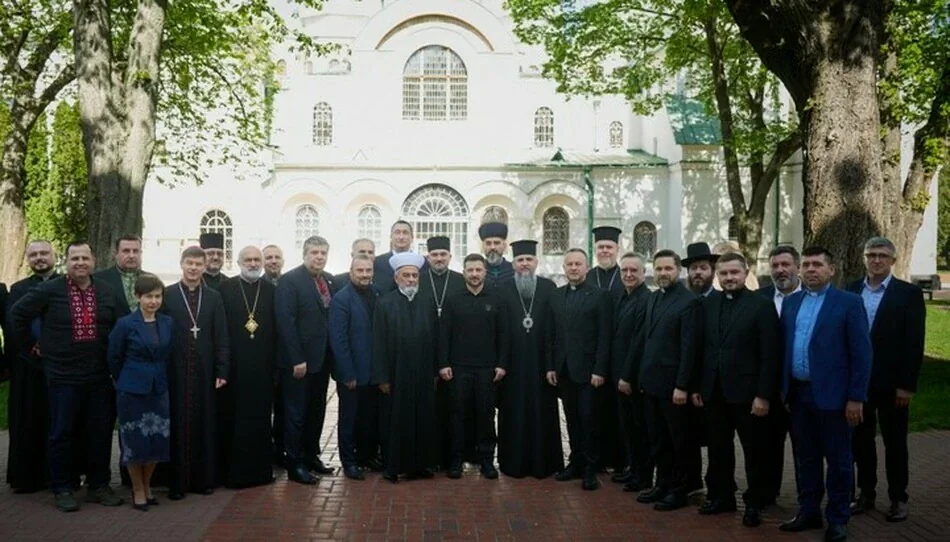
The All-Ukrainian Council of Churches and Religious Organizations (AUCCRO) issued a statement in response to media reports about alleged demands by Russian President Vladimir Putin during his meeting with U.S. President Donald Trump on August 15, 2025. According to the reports, Putin allegedly insisted on guarantees for “granting the Russian language official status in Ukraine and ‘security for Russian Orthodox churches’.” The statement was published on the organization’s website.
The authors of the statement emphasized that “since the beginning of its state independence, Ukraine has been known worldwide for high standards of religious freedom, which are maintained and respected even under martial law.”
AUCCRO praised the adoption in August 2024 of the anti-church law No. 3894, “which establishes legal procedures for reviewing organizations associated with the aggressor country, in particular the Russian Orthodox Church.”
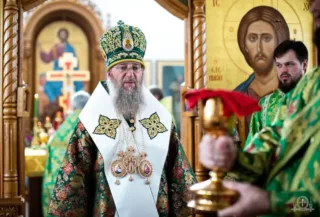
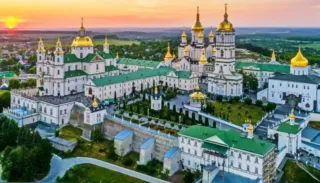
“Currently, the State Service of Ukraine for Ethnopolitics and Freedom of Conscience (SSEFC) has conducted a study and determined that the religious association Ukrainian Orthodox Church (UOC), through its central governing body – the Kyiv Metropolis – retains characteristics defined by law as affiliation with the ROC. Accordingly, the SSEFC issued an order to the Kyiv Metropolis of the UOC to eliminate violations of the law… On August 15, 2025, the Kyiv Metropolis responded to the SSEFC that the requirements of the order do not apply to the UOC and ‘cannot be implemented.’”
AUCCRO also stated that “Russia uses religion, in particular the Russian Orthodox Church, as a tool to achieve its neo-imperial objectives… In fact, the ROC’s leadership structure is a Russian state structure fully integrated into the Kremlin’s aggressive policy system.”
At the same time, the council members stressed the inadmissibility of “imposing ‘asymmetric’ obligations regarding the special status of the Russian language, culture, the Russian Orthodox Church, participation or non-participation in international organizations,” noting that “Ukraine and the Ukrainian people have earned the right to independently choose their path of further development and cooperation with international partners.”
AUCCRO also “blesses” efforts aimed at achieving “a genuine, just, and lasting peace in Ukraine, based on respect for the principles of the UN Charter and international law.”
Earlier reports noted that UOC lobbyist in the media, Andriy Kovalyov, highlighted a potential problem that, in his view, could arise if the Ukrainian Orthodox Church were completely banned. Kovalyov stated that surveys on UOC and OCU support in society do not reflect reality, and that a ban on the canonical Church in Ukraine would create millions of people convinced they are living in a period of religious persecution.
Read also