Rector of KTAiS: The UOC's desire for independence is a historical pattern, not a policy
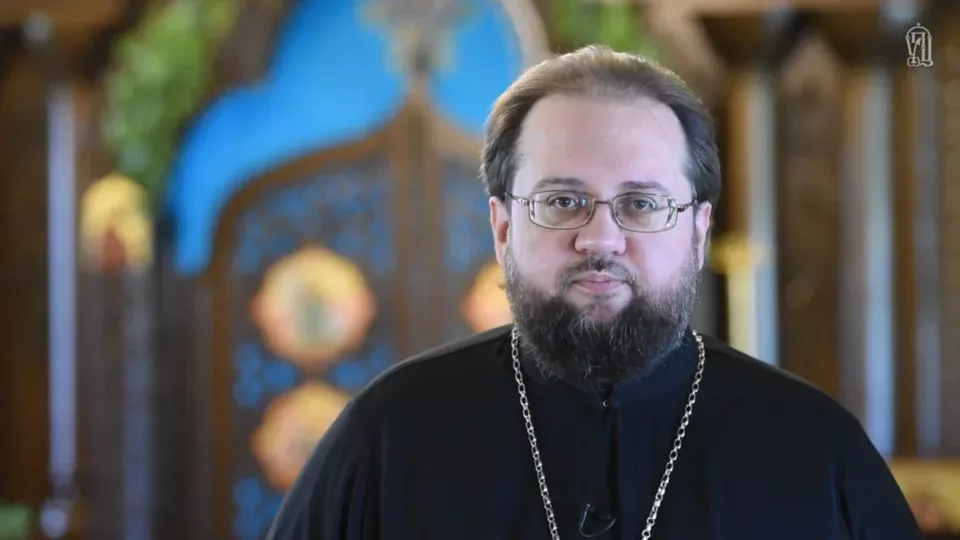
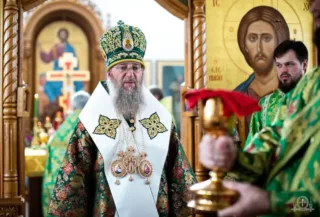
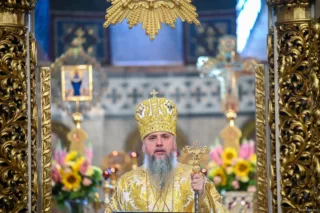
The rector of the Kyiv Theological Academy and Seminary, Archbishop Sylvester (Stoychev), gave a detailed explanation of the position of the Ukrainian Orthodox Church on the issue of full independence. He emphasized that the desire for autocephaly is a historically natural process for the Church in a sovereign state, and not a consequence of political conjuncture. According to him, this movement started “from below” – from priests and laity, and its critics ignore both the decisions of the Council in Theophany and the realities of Russian military aggression.
Archbishop Sylvester noted that the connection between the acquisition of political sovereignty by the state and the beginning of discussions about church independence is a historical rule. “All church history tells us about it,” the hierarch stated. As examples, he cited Bulgaria, Serbia, Greece and Romania, where gaining independence naturally gave rise also to the desire for an independent church structure. This process, he said, was observed even in countries where the Orthodox were not in the majority, such as Poland, Albania or the Czech Republic and Slovakia. “It is not surprising that discussions about the status of the Church are closely linked to the struggle for state and cultural identity,” he stated.
As one of the key arguments, the archbishop cited the position of the Russian Orthodox Church itself. He recalled that in 1948, at the celebration of the 500th anniversary of the autocephaly of the Russian Orthodox Church, Patriarch Alexy I (Simansky) explained its proclamation by the fact that the Russian Church was in “another state, huge in territory, completely independent of the state of its Church-Mother,” and its members belonged to another people with a different language and customs. “As we see, according to the criteria formulated in 1948 by the Moscow patriarch, the Ukrainian Orthodox Church has everything necessary for independent existence,” concluded the rector of the KTAIS.
The hierarch paid special attention to the decisions of the Council of the UOC in Theophany on May 27, 2022, which, in his opinion, are undeservedly ignored by opponents of autocephaly. He emphasized that the Council was a direct consequence of the mass refusal of UOC parishes to commemorate the name of the Moscow patriarch after the full-scale invasion began. “The movement towards autocephaly, fixed by the decisions of the Council in Theophany, began precisely from below, and was not imposed from above by bishops or politicians,” the archbishop said. He also cited the words of the Primate of the UOC, His Beatitude Metropolitan Onufry: “After May 27, 2022, we are no longer part of the Moscow Patriarchate. The Council clearly stated the aspiration of our Church to full canonical independence.”
In conclusion, Archbishop Sylvester expressed bewilderment at the fact that supporters of maintaining canonical subordination to Moscow avoid talking about Russian military aggression and its support from the Moscow Patriarchate. “We have a real war with colossal losses of human lives!” – he emotionally emphasized, noting that the current events are not internal political processes, but a brutal reality. According to his conviction, to advocate for autocephaly means to take responsibility for his flock in his land, and many opponents of this step “are simply afraid of this responsibility”.
We would like to remind you that Metropolitan Anthony (Pakanich) of Boryspil and Brovary presented an analysis of the history of autocephalous movements in Ukraine in the twentieth century, concluding that they were invariably connected with political shifts rather than with the needs of the church. According to the hierarch, the desire for autocephaly was seen primarily as an attribute of statehood rather than a means for salvation, which led to schisms and historical instability.
Read also