In Estonia, the controversy surrounding the law on religious organizations has reached the point where a case may be brought before the European Court of Human Rights
A legal dispute continues in Estonia over amendments to the legislation on churches and parishes that restrict religious organizations’ ties with foreign entities when there is a threat to national security. On June 8, 2026, the Estonian Supreme Court ruled that the amendments were constitutional; however, the decision was not unanimous and drew criticism from church leaders and human rights advocates.
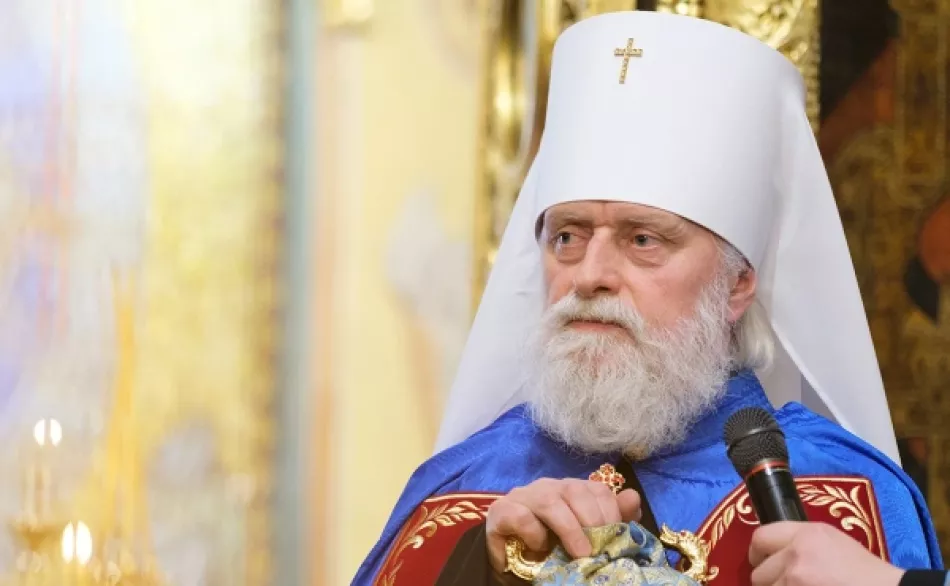
According to Helleniscope, the situation surrounding the Estonian Christian Orthodox Church unfolded against a backdrop of pressure related to its former canonical affiliation with the Moscow Patriarchate. After the war in Ukraine began, the church leadership, as the publication notes, took a number of steps to distance itself from Russian associations: in 2022, the invasion was publicly condemned, and Patriarch Kirill was barred from entering Estonia.
The article states that in August 2024, the church unilaterally severed ties with the Moscow Patriarchate. Later, following legal disputes over its name, it was registered in March 2025 as the Estonian Christian Orthodox Church. At the same time, the Church refused to join the Estonian Apostolic Orthodox Church under the jurisdiction of the Patriarchate of Constantinople as a vicariate, citing the need to preserve its canonical integrity.
According to the article, in April, the Estonian parliament passed a law prohibiting ties with the Russian Orthodox Church, and in the months that followed, measures were implemented which, according to the authors of the publication, affected the financial support and internal structure of religious organizations. Specifically, these changes concerned amendments to charters, administrative structures, and mechanisms of state oversight.
A key milestone was the decision of the Estonian Supreme Court on June 8, 2026. All 17 justices participated in the case, and by a majority vote—11 to 6—the court ruled that the amendments to the Law on Churches and Parishes, adopted by parliament in September 2025, were constitutional. These changes prohibit religious associations from maintaining ties with foreign religious organizations if the state deems such ties a threat to national security or the constitutional order.
The article devotes special attention to the position of Estonian President Alar Karis. The head of state twice refused to sign the law, citing disproportionate restrictions on freedom of association and potential constitutional issues. After Parliament re-enacted the law, the president referred the matter to the Supreme Court for review.
Despite the court’s final ruling, the decision, as noted, contained attempts to narrow the interpretation of the law: the majority of justices indicated that the ban should apply to administrative and organizational ties, rather than matters of doctrine. However, six judges issued a dissenting opinion, drawing attention to the vagueness of the term “connection” and the risks of arbitrary application of the provision.
The article also cites the position of the international human rights organization Justice pour Tous Internationale, which prepared a legal analysis of the ruling. According to the organization, the problem lies in legal uncertainty: the law could allow virtually any contact with a foreign religious organization to be interpreted as a potential threat.
According to the publication, the Estonian Christian Orthodox Church has announced its intention to appeal the ruling to the European Court of Human Rights. The church’s statement emphasizes that its activities and commitment to Christian ideals do not pose a threat to the Estonian state.
The controversy surrounding the law has become part of a broader debate about the balance between national security requirements and guarantees of freedom of conscience and religion. The Supreme Court’s ruling, the judges’ ambiguous stance, and the president’s prior objections indicate that the legal implications of the new regulations may remain a subject of further review both within Estonia and at the international level.
Read also