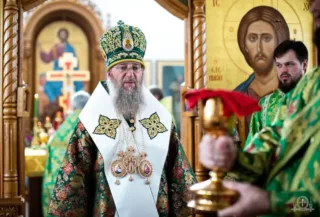
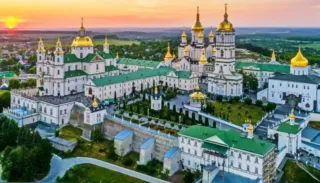
Earlier, we reported that the International Human Rights Organization Human Rights Watch criticized Law No. 3894 (formerly No. 8371), aimed at banning the activities of the Ukrainian Orthodox Church. The organization believes that the law banning the UOC grossly violates human rights to freedom of conscience and, according to its provisions, will make it impossible for Ukraine’s largest religious denomination to function. Human Rights Watch called on the Ukrainian government to stop the implementation of Law No. 3894 and send it to the Venice Commission for legal expertise.
Commentary of the Candidate of Law on Law No. 3894, aimed at banning the UOC
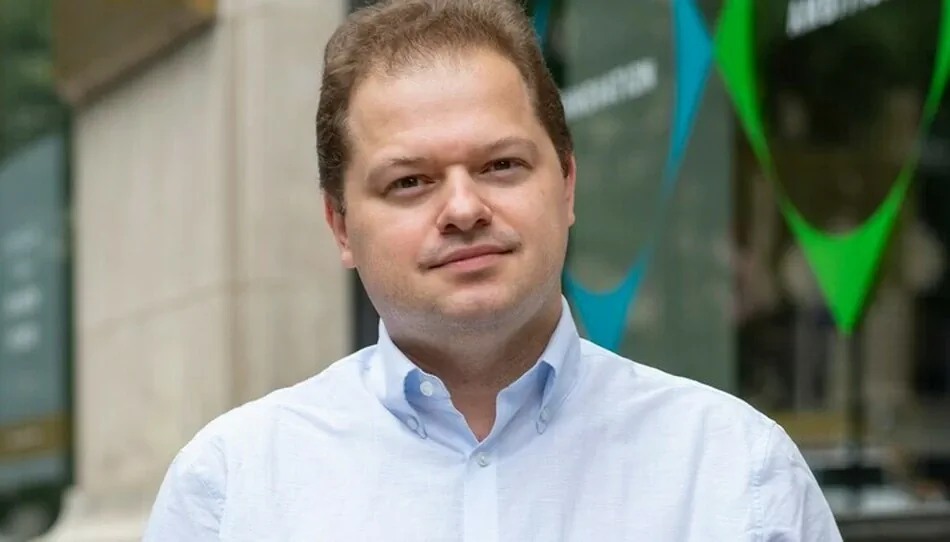
Dmytro Vovk, Associate Professor, Candidate of Law, Head of the Center for Rule of Law and Religion Studies, commented on the scandalous law No. 3894 adopted by the Verkhovna Rada aimed at banning the Ukrainian Orthodox Church. The expert is convinced that the law does not comply with international human rights standards and is aimed at the domestic audience to imitate the fight against everything “pro-Russian.” The commentary is provided in full.
“The law was adopted against the backdrop of a consensus among Ukrainians on the need to ban or significantly restrict the activities of the Ukrainian Orthodox Church (UOC), which is historically and canonically linked to the Moscow Patriarchate. Although the law is interpreted as a measure to protect national security (the concept of “spiritual independence”), it is aimed at a domestic Ukrainian audience and is a continuation of measures to rid Ukrainian public space of ties to Russia (such as renaming place names or changing school curricula).
The main problem with the law is that it does not comply with international human rights standards, which make it impossible to ban religious organizations on the basis of religious (canonical) ties. Instead, it provides that a ban is possible as a reaction to the illegal behavior of such an organization. At the same time, the state must prove the fact of institutional unlawful behavior, not the offenses of certain members of the organization.
To date, Ukrainian courts have handed down about 50 verdicts against current or former priests of the UOC, most of which are related to illegal expression: spreading hate speech or justifying Russian aggression. The usual scenario is the dissemination of certain messages in a private chat or in a conversation with believers. Although there are several verdicts that prove collaborationist activities. Under such circumstances, a complete ban on the UOC, which has almost 8,000 communities (in the territory controlled by the Ukrainian government) and 10,000 priests, is not a proportionate measure, although the state can and should prosecute certain priests or believers for criminal offenses, particularly in the field of national security. Therefore, the law has already been criticized by international organizations concerned with freedom of religion or belief.
The law also contains a number of problematic provisions in the area of the rule of law (e.g., a simplified judicial procedure for liquidation of religious communities) and will lead to a significant increase in the state’s discretionary power in regulating religion. In addition, if the UOC is liquidated, the religious landscape of Ukraine will change significantly. The formation of a single Orthodox Church, if it happens, could increase pressure on religious minorities, which is present to some extent in all Orthodox-majority countries and which Ukraine has avoided due to the split and competition within the Orthodox Church. It is also already clear that the law serves as a signal to local authorities and civic activists that UOC communities are effectively banned, and is exacerbating conflicts in the religious environment. These conflicts can also be a significant challenge for the state,” – Vovk believes.
Read also