Will the Mukachevo diocese of the UOC succeed in reviving the Carpathorusskaya Orthodox Church?
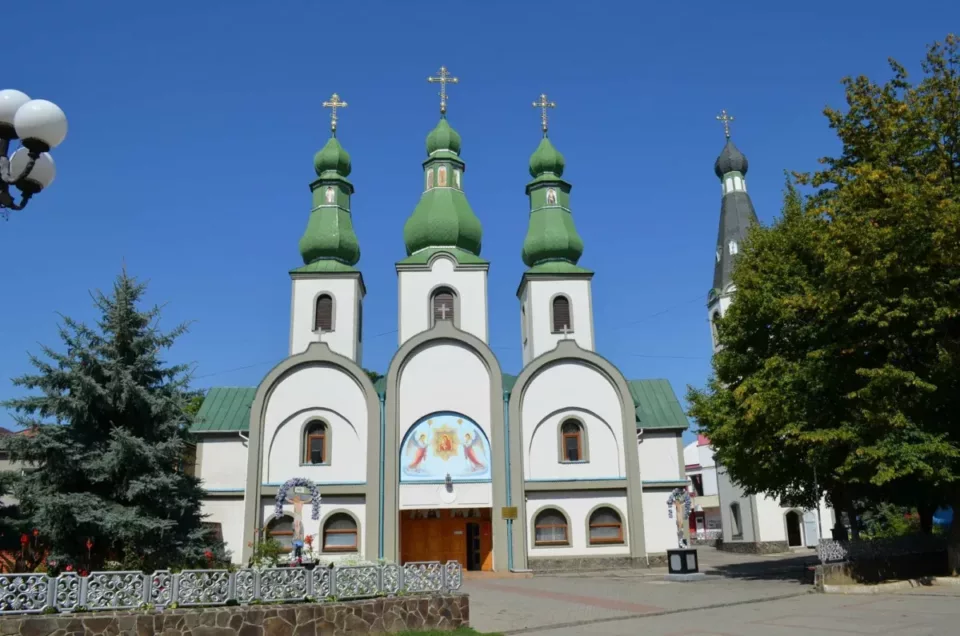
The Mukachevo diocese of the UOC published (and then deleted – ed.) a release by the diocesan legal service regarding the upcoming ban by the state of the Kyiv Metropolitan Church of the UOC. The essence of the text boils down to the fact that before the Soviet Union came to the territory of Transcarpathia, the Carpathorussian Orthodox Church (COC) of the Ruthenians operated in the region, which they can return to existence in order to avoid all the litigation and trouble that awaits the UOC.
At the same time, legally everything is presented in such a way that the Carpathorussian Church became part of the ROC after Transcarpathia became part of the USSR. And since the UOC is the heir of the Russian Church on the territory of Ukraine, it turns out that the ban of the UOC automatically cancels the previous decisions on the liquidation of the CPC and actually reanimates this structure. We will leave aside the legal and historical arguments presented by the Mukachevo diocese of the UOC. At the same time, we would like to draw attention to the reality in which the Ukrainian church crisis is now rapidly developing.
First of all, will the state allow such a possibility? Yes, according to Victor Yelensky, the head of DESS, the dioceses and parishes of the UOC can choose any jurisdiction other than the Russian Orthodox Church, and the legislation in no way restricts the creation of new associations, such as the one that has been actively discussed in Transcarpathia for the past two years. However, should we believe Yelensky? When last year the Verkhovna Rada adopted Law No. 3894, the head of DESS told us that it would not affect the UOC. The same “mantra” was picked up by the official spokesmen of the Church. However, – which was clear even then – now the state bans the UOC. Moreover, even without the right to self-defense in court.
Secondly, it is unlikely that such an association as the Karpathorussian Orthodox Church, if established, will become a full-fledged and independent structure. If we follow the historical logic, the COC should become a part of the Serbian Patriarchate. At least, in different periods of the history of Orthodoxy in Transcarpathia, it was like that. Accordingly, the COC will have to request patronage from foreign jurisdictions, which, most likely, will not be possible for several reasons. One is the position of the state. Another is the position of the Phanar.
The attitude of the state to the formation of other jurisdictions on the territory of Ukraine is, to put it mildly, negative. A perfect example of this is the situation with the refusal to register the Romanian Orthodox Church in Ukraine, which, according to the Romanian Patriarchate, could have included parishes of the UOC in Bukovina, after the ban of the UOC itself. As much as Romanian Patriarchate officials were indignant, and at whatever levels they raised this issue, the Romanian Patriarchate remained adamant: first the recognition of the OCU, and then the vicariate within the OCU. One can have no doubt that the same fate awaits the Transcarpathian initiative.
Naturally, the Patriarchate of Constantinople will not give any attempts to develop something alternative. The head of the Phanar made it clear just last week that the OCU is all that he can offer in the Ukrainian church issue. He is not going to cancel the Tomos. He does not care about the ban of the UOC. Why then should he make any concessions in this case? Patriarch Bartholomew will hardly allow any other Local Church to enter the territory of Ukraine, no matter how plausible the reasons may be.
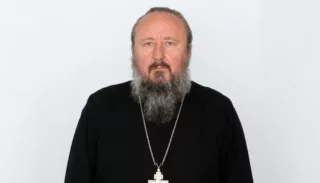
Thirdly, we should not forget where the very idea of resuming the activities of the COC comes from. Its leading preacher is an authoritative UOC priest in Transcarpathia, Dmytro Sidor. His figure is firmly associated with the separatist pro-Hungarian movement in the region. He has even been repeatedly prosecuted on this occasion. And this convenient moment will be used, of course, if the topic suddenly starts to gain momentum. In the current political situation, it will not be difficult to do this, because Hungary maintains friendly relations with Moscow, which is extremely irritating to Kiev. Therefore, it is quite likely that the establishment of the COC will be “sold” to the masses as a pro-Russian project with the aim of tearing away Transcarpathia in favor of Hungary. And don’t ask – where is the logic here.
In this regard, with almost one hundred percent certainty we can say that the Carpathorussian Orthodox Church is an a priori unpromising project. Maybe it can be presented somehow in the masses of Transcarpathian Ruthenians, however, it will hardly become an argument for those who build on the territory of Ukraine one state religious structure, which today is the OCU. They do not need any canonical or any other alternatives here.
Read also