Head of OCU is wishful thinking, - religious scholar
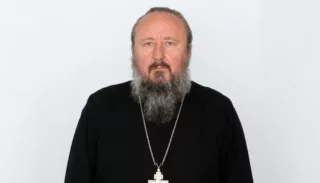
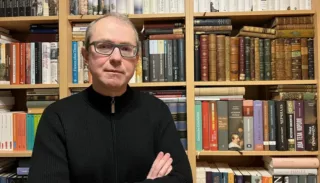
Associate Professor of the Department of Religious Studies of the Faculty of Philosophy of Taras Shevchenko National University of Kyiv Oleksandr Sarapin took part in the International Scientific and Practical Conference “State and Confessional Relations in Ukraine: Status and Challenges”, where he delivered a report on the problem of relations between the OCU, UOC and UOC-KP. Sarapin criticized the position of the OCU on a number of issues, pointing out that the organization often does not meet the declared level of development. The religious scholar’s report was published in the media.
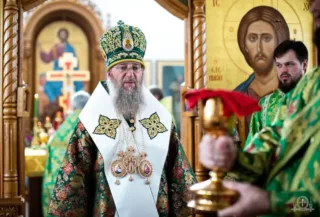
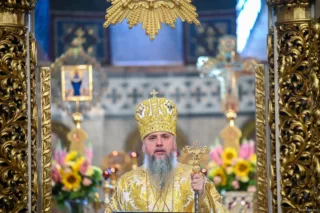
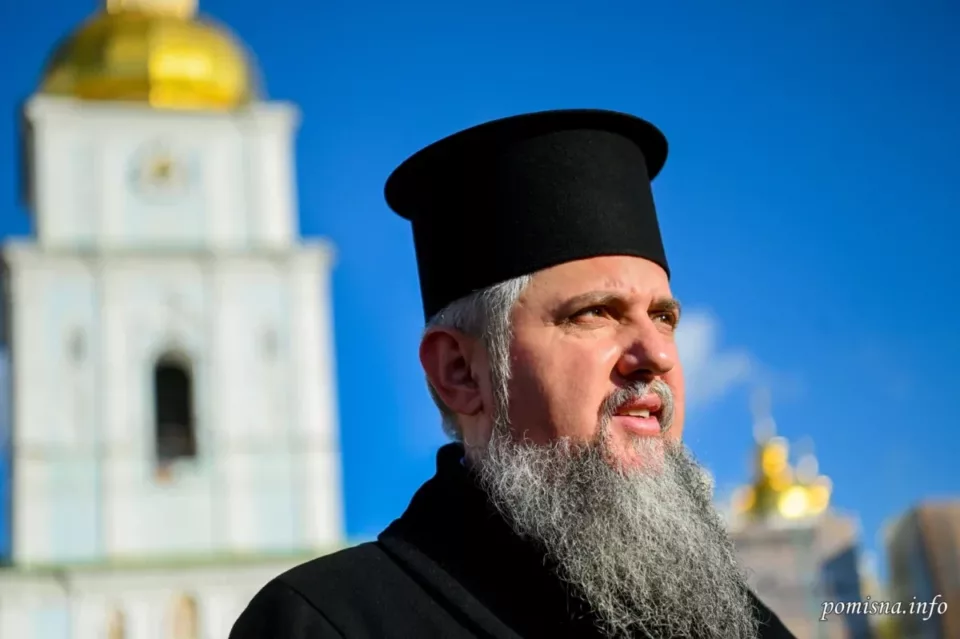
“The OCU also identifies itself as the only canonical Orthodox institution in Ukraine. In the words of Metropolitan Epifaniy: “From the canonical point of view, the period of division of Ukrainian Orthodoxy ended in 2018 thanks to the decision of the Ecumenical Patriarchate and the Unification Council, which resulted in the receipt of the Tomos of autocephaly. Since then, the Orthodox Church of Ukraine has been the only canonically formed Orthodox jurisdiction in Ukraine.” However, the head of the OCU is wishful thinking. Since the UOC and the UOC-KP also claim the canonical territory. The latter is de jure liquidated, but de facto still exists. In addition, Metropolitan Epifaniy’s declarations about the OCU as the largest confessional organization in Ukraine in terms of the number of communities should be questioned. For example, he states: “The Orthodox Church of Ukraine has taken place and is successfully establishing itself: it is now the largest religious association in our country, first of all, in terms of the level of self-identification with it of our fellow citizens and public trust, but also in terms of the number of communities that make up our single spiritual family.” However, according to the State Statistics Service, as of January 1, 2024, there were 8295 religious organizations of the OCU and 10919 religious organizations of the UOC (MP). Such statements hide an indication of the exclusivity of the OCU as the only canonical jurisdiction in Ukraine. Of course, from this position, it seems impossible to have a constructive dialogue on the unity of Ukrainian Orthodoxy. In addition, negotiations from the position of demonstrating superiority over competitors from the UOC are unlikely to be productive,” – the report says.
The religious scholar added that the OCU treats competing denominations with arrogance, which affects the prospects for the unification of Orthodox churches in Ukraine. He added that the Patriarchate of Constantinople has already drawn attention to the situation, which raises certain questions about the prospects for the existence of the OCU itself.
“For example, Metropolitan Epifaniy stated: “The presence of the structures of the Moscow Patriarchate on the territory of Ukrainian dioceses – both in the form of the so-called Kyiv Metropolis, headed by Metropolitan Onufriy (Berezovsky) of the Russian Church, and in the form of dioceses in the Kremlin-occupied territories of southern and eastern Ukraine, directly subordinated to Moscow – is an anomaly, a violation of the canonical order.” In this case, the statement about the prospects for the existence of a single Orthodox structure in the confessional field of Ukraine represented by the OCU should be recognized as problematic. At least at the meeting of the Holy Synod of the Patriarchate of Constantinople (November 25, 2024), which discussed the report of the three hierarchs who met with the leaders of Orthodox structures in Kyiv, there were not very encouraging suggestions and even critical remarks. In particular, the members of the Synod generalized about the absence of any prospects for dialogue between the two sides in Ukraine, since both Metropolitan Epifaniy and Metropolitan Onufriy “do not want to retreat from their positions in order to find a common language for understanding.” By the way, the head of the OCU often uses the same rhetoric that has long been characteristic of the UOC leadership. It is about implementing an attitude based on accession, not reunification,” – Sarapin added.
Earlier, we reported that a supporter and lobbyist of the OCU in the media, religious scholar Yuri Chernomorets, said that despite the ongoing pressure on the Ukrainian Orthodox Church, the churches of this denomination are visited by many more people than the religious buildings belonging to the OCU. The religious scholar noted that the OCU has a large number of internal problems that the organization continues to ignore. In addition to the low attendance of the OCU churches, Chernomorets also noted the problem of the recognition of the Ukrainian schism by the Local Churches, which has actually stopped.
Read also